
Listen to this podcast in the app for free: Download for free in the App Store
radio.net
Sleep timer
Save favourites
243 episodes
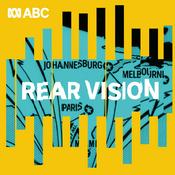
How an obsession with time has come to enslave us
23/10/2026 | 29 mins.The English language is dotted with expressions that betray a distrust of time – we talk of “racing against time” or we express a frustration that “time is not on our side”. In this episode of Rear Vision, we look at the history of time as a concept. Why time from the Industrial Revolution onwards became wedded to ideas of progress and productivity. And how at both a personal and societal level time became a means of constraint as much as organisation.
Guests:
Dr Adrian Bardon – Professor of Philosophy, Wake Forest University
Dr Emily Thomas – Professor and Head of the Department of Philosophy, Durham University
Dr Iwan Rhys Morus – Professor of History and Welsh History, Aberystwyth University
Judith Shulevitz – American journalist, editor and culture critic
Dr David Henkin – Professor of History, University of California, Berkeley
Tom Greene – Atlanta-based syndicated columnist and podcasterThe American Israel lobby – powerful political force or antisemitic fiction
16/10/2026 | 29 mins.Depending on who you talk to the American Israel Lobby is either one of the most powerful forces in US politics or an anti-Semitic conspiracy theory.
In this Rear Vision we explore the history and ask if the Israel Lobby exist? And if it does what impact it may have had on US politics and US foreign policy in the Middle East.Ebola – a fifty-year history of outbreaks, fear and misunderstanding
09/10/2026 | 29 mins.Once again communities in Central Africa are plagued by Ebola and the current outbreak shows no sign of being brought under control any time soon. What have medical researchers and practitioners learnt about the nature of the virus over its fifty-year history and just as importantly, how it’s spread? Given its deadly nature, why isn’t there more concern about the possibility of global transmission?
Guests:
Dr Holly Seale – Professor of Social Science, School of Population Health, University of New South Wales
Dr Seth Judson - Assistant Professor-in-Residence, Division of Infectious Diseases, University of California Los Angelos
Dr Paul Griffin – Professor of Infectious Diseases and Microbiology, University of QueenslandPacific pit-stop: cannabis to cocaine
02/10/2026 | 29 mins.Drug trafficking across the Pacific. Why is it increasing and can it be stopped?Alberta Separatists and the grey hand of foreign interference
25/09/2026 | 29 mins.Separatist sentiments are stirring in the Canadian province of Alberta. Voters will soon cast their ballots in a referendum on whether to begin moves to formally separate from the rest of the nation. We look at the history of separatism in Canada and at the pernicious impact of foreign interference.
Guests:
Marcus Kolga - Director of DisinfoWatch. Senior fellow, Macdonald-Laurier Institute
Robert Currie – King’s Counsel. Professor of Law, Schulich School of Law, Dalhousie University
Randy Boissonnault - former Member of the Canadian Parliament for Edmonton Centre
Dr Ryan Griffiths – Professor of Political Science, Syracuse University
More History podcasts



Trending History podcasts















About Rear Vision — How History Shaped Today
Move beyond the headlines to see how the past defines our world. Whether it's a local or international story, Rear Vision's expert analysis gives you the background you need to understand today's news.
Podcast websiteListen to Rear Vision — How History Shaped Today, The Rest Is History and many other podcasts from around the world with the radio.net app
Get the free radio.net app
- Stations and podcasts to bookmark
- Stream via Wi-Fi or Bluetooth
- Supports Carplay & Android Auto
- Many other app features
Get the free radio.net app
- Stations and podcasts to bookmark
- Stream via Wi-Fi or Bluetooth
- Supports Carplay & Android Auto
- Many other app features

Rear Vision — How History Shaped Today
Scan code,
download the app,
start listening.
download the app,
start listening.
Rear Vision — How History Shaped Today: Podcasts in Family
 Australia