
Listen to this podcast in the app for free: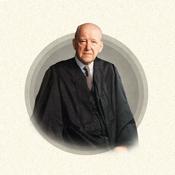 Download for free in the App Store
radio.net
Sleep timer
Save favourites
50 episodes
Christ in the Heart
27/10/2026The indwelling of Christ in the hearts of believers that Paul speaks of in Ephesians 3:17 is not referring to Christians receiving Christ in their hearts at salvation. In this sermon on Ephesians 3:17 titled “Christ in the Heart,” Dr. Martyn Lloyd-Jones says it is Christ manifested in the hearts of those who already believe. This kind of manifestation of Christ is fundamentally different from what happens in regeneration when the believer becomes united to Christ in faith and the Holy Spirit. This is a continual indwelling whereby Christ is always present throughout the life of the believer by comforting and guiding them. This is one of the most important truths of the Christian life, for in it is seen all the working and striving as a result of Christ who Himself is working in and through the believer to accomplish all these things. When the Christian understands who Christ is and what he has done for them, it is vain and fruitless to fight sin and temptation with one’s own strength and power. This comforting truth presented by Dr. Lloyd-Jones both humbles and encourages by showing just how weak people are on their own. It shows how great Christ is who indwells and empowers the Christian to live as He has called them.The Importance of Spiritual Growth
26/10/2026In this sermon on Ephesians 3:16 titled “The Importance of Spiritual Growth,” Dr. Martyn Lloyd-Jones seeks to answer the question of why it is so important that the Christian grow spiritually. He says that the inner self must be continually strengthened because of the continual battle against sin that all Christians experience as they live in a fallen world. There are many forces that Christians must always fight against and some of these come from within, such as sinful desires and the flesh. Others come from without, such as the world and the temptations of the devil. It is evident when Christians fail to grow spiritually and into maturity. They are beset by sins that they are unable to overcome, and they show a lack of interest in God’s word. They are often unable to understand God’s word because, as Paul says, they are babes and are not able to eat meat. This is why, Dr. Lloyd-Jones says, it is so vital that Christians continually seek and pursue Christ and His word. Christians must fight sin not only by fleeing what is evil, but by growing in Christ as mature believers who desire the holy and good things of Christ more than they desire the evil and sinful things of this world.The Inner Man
25/10/2026In this sermon on Ephesians 3:16 titled “The Inner Man”, Dr. Martyn Lloyd-Jones expounds on the profound importance of the transformed inner man. He begins by pointing out Paul’s manner of prayer for the Ephesians. Paul begins by praying for the spiritual needs of the Ephesians and then goes on to pray for specific things that the Ephesians need. He does not pray that his own circumstances would be changed, nor that the circumstances of the Ephesians would be changed. Instead he focuses on spiritual need and specific needs. Dr. Lloyd-Jones then expresses the importance of the inner man and the heart, the center of the believer. For if the center (the thinking) and the heart of a person is set right, then everything else will fall into place. Dr. Lloyd-Jones points out that it is not that when one becomes a Christian that suddenly everything in the world is set right. The world is fallen and sinful, consequently full of disease and tribulation of many kinds, so that cannot be. Rather, when one becomes a Christian, they are being renewed daily in the inner man though the outer man is wasting away (2 Corinthians 4:16). The joy of the Lord is now their strength no matter the circumstance or the state of his outer self.Praying to the Father
24/10/2026In this sermon on Ephesians 3:14–15 titled “Praying to the Father,” Dr. Martyn Lloyd-Jones stresses the importance of prayer and its practice from Paul’s example. Dr. Lloyd-Jones discusses prayer in three important principles from this passage. First, it is important that the apostle Paul is praying for the Ephesians. Even in the midst of his imprisonment he is praying. Prayer is a vital necessity for every believer in every circumstance. Second, Dr. Lloyd-Jones looks at the manner in which Paul is praying. He is praying with reverence. Though he has just mentioned earlier in the chapter that one can come to God in prayer with boldness, he shows here a heart of humility in how he approaches God in prayer. The Christian should be careful to evaluate how they come to God in prayer. It is not necessarily about the outward posture, but does the inward posture show humility in spirit before the Holy God when He is approached in prayer? Lastly, Dr. Lloyd-Jones points out the importance for Paul’s description of God here in the passage. He speaks of Him as being the Father of all. Jews and Gentiles alike are now fellow heirs, children of God, bearing the name of God and addressing Him as their Father.Prayer: Boldness and Access
23/10/2026In this sermon on Ephesians 3:12 titled “Prayer: Boldness and Access,” Dr. Martyn Lloyd-Jones discusses the privilege and importance of prayer. The apostle Paul makes the point that Christians have access to God in prayer through Christ and can come with boldness and confidence. Dr. Lloyd-Jones also shows the importance of doctrine and practicing in one’s prayer life. If Christians focus on doctrine only, they will miss the point. But if all doctrine is abandoned and one simply hopes to “practice,” then the point is missed again. Rather one must know what God says about the Christian life, prayer, and faith in Christ and then apply those things in practice. How can one expect to come to God with boldness if they do not first understand how? Christians can boldly approach the throne of grace in prayer through faith in Christ; He has made the way. He is the access to God. Dr. Lloyd-Jones gives two principles to think about in prayer life. First, when coming to God in prayer, Christians must not rely on feelings, mood, or state of being to inform how to pray or if they pray at all. They must realize that these can be tools used by the devil to keep the Christian from prayer, to plague them with doubts, and remind of their sins. Secondly, Christians must preach to themselves. They must remind themselves over and over of the truths of Scripture. They must remind themselves in the throes of doubt that Christ is the redeemer and mediator. He is faithful to forgive and the Christian can boldly approach God in prayer through Him. Dr. Lloyd-Jones concludes with this great reminder, “Draw nigh unto God and He will draw nigh unto you.”
More Christianity podcasts










Trending Christianity podcasts

















About Sermons of Dr. Martyn Lloyd-Jones
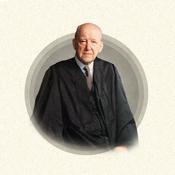
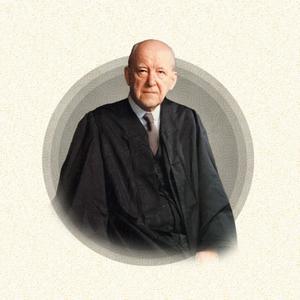
The MLJ Trust presents original audio recordings of the sermons of Dr. Martyn Lloyd-Jones (1899-1981). Dr. Lloyd-Jones was a Welsh minister who preached and taught in the Reformed tradition. He is considered by many evangelical leaders today to be an authority on biblical truth and the sufficiency of Scripture. Dr. Lloyd-Jones’ principal ministry was at Westminster Chapel, in central London, from 1939-1968, where he delivered multi-year expositions on books of the bible such as Romans, Ephesians and the Gospel of John.
Podcast websiteListen to Sermons of Dr. Martyn Lloyd-Jones, The Bryce Crawford Podcast and many other podcasts from around the world with the radio.net app
Get the free radio.net app
- Stations and podcasts to bookmark
- Stream via Wi-Fi or Bluetooth
- Supports Carplay & Android Auto
- Many other app features
Get the free radio.net app
- Stations and podcasts to bookmark
- Stream via Wi-Fi or Bluetooth
- Supports Carplay & Android Auto
- Many other app features

Sermons of Dr. Martyn Lloyd-Jones
Scan code,
download the app,
start listening.
download the app,
start listening.
 Australia