

Listen to this podcast in the app for free: Download for free in the App Store
radio.net
Sleep timer
Save favourites
319 episodes
The long border dispute between science and religion
09/10/2026 | 54 mins.In 1927, a Catholic priest told Albert Einstein the universe was expanding. Einstein though that was a crazy idea. But the priest was right.
And when the Pope claimed this as proof of creation, the tables were turned again. The priest told the pontiff, keep your religion out of my physics.
There’s the simple idea that we had religion to explain the world, until we upgraded to science, which did the trick far more effectively.
But as the priest and Einstein anecdote illustrates, that simple idea does not explain the very complex story: the relationship between science and religion.
Nick Spencer is Senior Fellow at the London think tank Theos. His latest book is The Landscapes of Science and Religion – What are we disagreeing about?
Peter Harrison is Professorial Research Fellow at the University of Notre Dame Australia and Emeritus Professor at UQ. His latest book is Some New World: Myths of Supernatural Belief in a Secular Age
They’ll both be Keynote speakers opening the 2026 ISCAST biennial Conference on Science and Christianity.
This program was made on the lands of the Gadigal People of the Eora Nation.How can media gain back lost trust?
02/10/2026 | 54 mins.The world has trust issues with its media.
Three in five Australians trust TV and radio news, and what's in the newspapers.
But in North America it is fewer than three in ten.
Are we doing something better here, OR are we just a decade behind them?
Is it an economic problem? After all, ownership of our media has been contracting to just a few players. That alone has had some huge implications for the quality of news and who it speaks to.
The online podcast world has arguably meant a democratisation of the way people are finding their news.
How can lost trust in media be regained?
GUESTS:
Tara Henley, Canadian journalist, broadcaster and author of "The Trust Spiral"
Jonathan Holmes, journalist, writer, former ABC TV presenter and broadcaster
Scott Mitchell, former ABC journalist and now co host of the podcast "Lamestream"
This program was recorded on the lands of the Gadigal People of the Eora NationWill toleration or tribalism define this era of enlightenment?
25/09/2026 | 54 mins.Is intolerance tightening its grip on public life?
The twentieth century was among the most intolerant in human history; the Holocaust, Stalinism, empires collapsing in blood.
So why, in the twenty-first century, is tolerance still so elusive?
In the final episode of a two-part series on toleration, God Forbid looks at the ever-growing allure of tribalism, cementing division along contentious political fault lines.
Guests:
Dr Shaun Blanchard, Senior Lecturer in Theology, University of Notre Dame Australia. Author of the forthcoming Catholicism and Enlightenment.
Dr Devleena Ghosh, Professor, School of Communication and Social Sciences, University of Technology Sydney.
Dr Abdullah Kunde, Founder and President of the Muslim Debate Initiative Australia.
This program was made on the lands of the Gadigal People of the Eora NationIs tolerance really a virtue?
18/09/2026 | 54 mins.Rulers throughout history have used tolerance and intolerance in their pursuit of power.
In our modern context, tolerance is often lauded as an unqualified good, but are there limitations? Should we extend tolerance to those who commit acts of violence?
In the first of two episodes on the rise and fall of tolerance, God Forbid looks at the religious roots of tolerance and intolerance.
Can lessons of the past be applied today, in an increasingly divided world?
GUESTS:
Shaun Blanchard, Senior Lecturer in Theology, Notre Dame University.
Jürgen Overhoff, Professor of the History of Educational, University of Münster, Germany.
Francisco (Paco) Garcia-Serrano, Professor of History, Saint Louis University, Madrid.
This program was made on the lands of the Gadigal People of the Eora NationSecular Australia's identity crisis
11/09/2026 | 53 mins.What is the place of religion in a pluralist society?
Australia calls itself a secular country, yet it has never been more religiously diverse.
Whether you're religious or secular, whether you support multi or mono-culturalism, it seems we all claim the authentic mantle of modern Australian identity.
Yet none of us agree on what it is, much less who owns it.
How should we grapple with our identity as a secular nation in a diverse and ever-changing world?
GUESTS:Renae Barker, Senior Lecturer, UWA Law School, author of State and Religion: The Australian Story.
Greg Melleuish, Professorial Fellow, Robert Menzies Institute; Fellow, Campion College. Co-author of Understanding Piety and Theology in the Culture of the West: The Poetic Life. See him in conversation at the Berry Writer's Festival in November.
Enqi Weng, Research Fellow, Alfred Deakin Institute for Citizenship and Globalisation, Deakin University. Author of Media Perceptions of Religious Changes in Australia: Of Dominance and Diversity.
This program was made on the lands of the Gadigal People of the Eora Nation
More Philosophy podcasts

Trending Philosophy podcasts
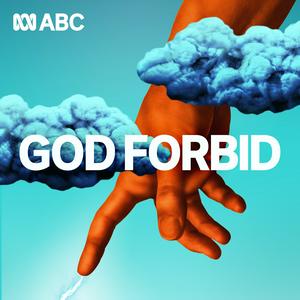
About God Forbid
Religion: it’s at the centre of world affairs, but profound questions still remain. Why are you here? What happens when you die? Does God matter? God Forbid seeks the answers.
Podcast websiteListen to God Forbid, The Shawn Ryan Show and many other podcasts from around the world with the radio.net app
Get the free radio.net app
- Stations and podcasts to bookmark
- Stream via Wi-Fi or Bluetooth
- Supports Carplay & Android Auto
- Many other app features
Get the free radio.net app
- Stations and podcasts to bookmark
- Stream via Wi-Fi or Bluetooth
- Supports Carplay & Android Auto
- Many other app features
God Forbid
Scan code,
download the app,
start listening.
download the app,
start listening.
God Forbid: Podcasts in Family
 Australia