
Listen to this podcast in the app for free: Download for free in the App Store
radio.net
Sleep timer
Save favourites
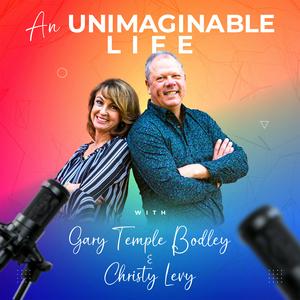
An Unimaginable Life
Christy Levy, Spiritual Medium with Gary Temple Bodley
Latest episode
100 episodes
Love Without Rescuing — Nellie Bly and Harry Harlow
18/10/2026 | 1h 2 mins.This Dead Talk, with Nellie Bly and Harry Harlow, explores one of the most deeply embedded limiting beliefs in human relationships: the belief that loving someone means being responsible for their happiness.
Read about the Freedom Project here
Schedule a call with Christy to learn about The Freedom Project here
Schedule a call with Gary to learn about The Freedom Project here
Nellie Bly was an American investigative journalist, writer, and pioneering advocate for social reform. She became famous for her undercover investigation of conditions at a New York psychiatric institution, documented in Ten Days in a Mad-House. She also completed a celebrated journey around the world in 72 days, challenging prevailing assumptions about women's abilities and independence.
Harry Harlow was an American psychologist known for his research on attachment, maternal separation, and social development in rhesus monkeys. His experiments helped establish the importance of comfort, affection, and emotional bonds, although his methods caused significant animal suffering and remain ethically controversial.The Art of Being Fully Alive — Isadora Duncan & D. H. Lawrence
14/10/2026 | 57 mins.What if spiritual awakening isn't about rising above the human experience, but finally allowing yourself to experience it fully? In this Dead Talk, Christy brings in legendary dancer Isadora Duncan and novelist D. H. Lawrence as they reveal the deeper meaning of desire, sensuality, beauty, and the extraordinary force they call aliveness. Their message challenges everything we think we know about detachment, neutrality, and the purpose of physical existence.
Read about the Freedom Project here
Schedule a call with Christy to learn about The Freedom Project here
Schedule a call with Gary to learn about The Freedom Project here
Isadora Duncan was an American dancer and choreographer widely recognized as a pioneer of modern dance. She rejected many of the rigid conventions of classical ballet, emphasizing natural movement, emotional expression, freedom, and inspiration drawn from nature.
D. H. Lawrence was an English novelist, poet, essayist, and literary critic. His major works include Sons and Lovers, The Rainbow, Women in Love, and Lady Chatterley's Lover. His writing explored human relationships, sexuality, emotional experience, instinct, and the tensions between industrial society and natural human vitality.Stop Editing Yourself - Diego Rivera and Zora Neale Hurston
05/10/2026 | 49 mins.What if the life you want isn't waiting on the other side of accomplishment, healing, money, approval, or becoming a better version of yourself? Diego Rivera and Zora Neale Hurston arrive with a provocative invitation: trust your appetite for life, notice the ordinary guidance already calling you, and stop confusing the conditions of your life with actual limitation.
Their message is simple and radical: you were worthy of your life before you accomplished a single thing, and freedom begins when you allow yourself to participate in it now.
Read about the Freedom Project hereWhy Falling Is Not Failure: Buster Keaton and Heraclitus
27/09/2026 | 58 mins.What do a silent-film comedian famous for falling down and a 2,500-year-old philosopher famous for a flowing river have to teach us about freedom? Buster Keaton and Heraclitus arrive with a surprisingly unified message: you are exhausting yourself trying to remain who you think you're supposed to be.
This hilarious and unexpectedly moving Dead Talk explores spiritual performance, emotional honesty, identity, surrender and the freedom to stop correcting every wobble. Sometimes the next version of you isn't born when you get back up—it begins while you're still on the floor wondering what just happened.
Read about The Freedom Project 7-day Boosts here
Schedule a call with Christy to learn about The Freedom Project here
Schedule a call with Gary to learn about The Freedom Project here
Buster Keaton was famous silent-film physical comedian known as “The Great Stone Face” because of his deadpan expression. His comedy repeatedly involved physical chaos: falling, collapsing structures, accidents, unexpected movement and circumstances going spectacularly wrong while he remained engaged with what was happening.
Heraclitus of Ephesus was an ancient Greek philosopher associated with continual change, fire, the Logos, the unity of opposites, and the famous river teaching: “You can't step into a river twice” because the river is no longer the same river, and you are no longer the same person.Living Without Waiting - Eileen Caddy and Albert Camus
20/09/2026 | 1h 3 mins.We think certainty gives us permission to move, but what if waiting for certainty is precisely what keeps us stuck? This Dead Talk explores trust without reassurance, clarity without explanation, and the extraordinary power of taking the next honest step even while doubt is still present.
Eileen Caddy was a spiritual teacher, author, and one of the founders of the Findhorn spiritual community in Scotland. She became particularly associated with receiving practical inner guidance through what she described as the quiet voice within.
Albert Camus was a French-Algerian writer, philosopher, journalist, and Nobel Prize–winning author associated with philosophical explorations of absurdity, revolt, meaning, mortality, and the human condition.
Read about The Freedom Project 7-day Boosts here
Schedule a call with Christy to learn about The Freedom Project here
Schedule a call with Gary to learn about The Freedom Project here
More History podcasts


Trending History podcasts






About An Unimaginable Life
Christy is a one of the world’s most powerful mediums. In this podcast, Christy and channeler Gary Temple Bodley bring in those who have crossed over to share their nonphysical perspectives to tell us what’s really going on in our reality. The conversations are both fascinating and enlightening.
Podcast websiteListen to An Unimaginable Life, The Ancients and many other podcasts from around the world with the radio.net app
Get the free radio.net app
- Stations and podcasts to bookmark
- Stream via Wi-Fi or Bluetooth
- Supports Carplay & Android Auto
- Many other app features
Get the free radio.net app
- Stations and podcasts to bookmark
- Stream via Wi-Fi or Bluetooth
- Supports Carplay & Android Auto
- Many other app features
An Unimaginable Life
Scan code,
download the app,
start listening.
download the app,
start listening.
 Australia