Listen to this podcast in the app for free: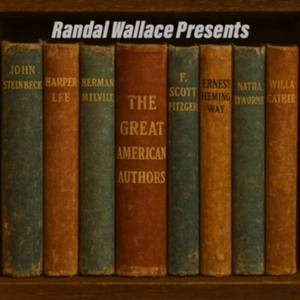 Download for free in the App Store
radio.net
Sleep timer
Save favourites
627 episodes
Episode 411 THE GREAT AMERICAN AUTHORS (Part 9) Pat Conroy, South Carolina's Own
18/12/2025 | 57 mins.
Send us a textPat Conroy’s writing tips focus on using personal experience to craft honest, passionate prose. His advice emphasizes deep exploration of one's inner world, dedicated hard work, and the importance of reading widely. On finding your subjectWrite to understand your own life. Conroy wrote to make sense of his own story and invited readers to join him in the journey. He believed a writer's "central agony cowers in the limestone cave, licking its wounds, awaiting my discovery of it".Draw from your memories. Conroy frequently mined his difficult childhood, particularly his father's violence, as the central truth of his work. He wrote for the "people who can't speak" and explored where his life and relationships had gone off course.Use your life as fuel, not as a script. As a "creative non-fiction" writer, Conroy used his experiences to inform his fictional stories and craft complex characters, rather than simply presenting estranged family members with their names changed.Gather stories. Conroy was an avid collector of stories, treating them like "rare stamps" or a library of music. He was known to claim a good story for his own writing if he heard it. On the writing processWrite the first draft by hand. Conroy famously wrote the first drafts of his books on long yellow legal pads with a pen, preferring to lose himself in the narrative flowing from his hand.Dedicate yourself to hard, fanatical work. Conroy described writing as "hard labor and one of the most pleasant forms that fanaticism can take." He believed nothing lazy should ever enter his books.Practice with an "ironclad" schedule. Writing requires discipline and a consistent schedule. Conroy committed to a routine no matter where he was, knowing that the process "does not permit much familiarity with chaos".Go deeper, then go deeper again. He instructed writers to dive past the surface of their narratives. Your job, he said, is to discover the angels or demons—the enigmas—buried within you.Write for yourself. While Conroy loved his readers and answered every letter he could, he believed that ultimately, you write for yourself. Your art is "desperately trying to make its own voice heard to you"—you just need to listen. On language and craftListen to the sound of your sentences. He insisted words had to "come out right".Pursue amplitude and exactness. Early in his career, Conroy was drawn to extravagance, but over time, he learned that "exactness is a virtue in even the most word-possessed writer". His writing balances lyrical, lush prose with simple and well-stated truths.Capture the spirit of a place. Conroy was a master of place, especially the South Carolina Lowcountry. He advised writers to make locations concrete, exact, and so vivid that they are indispensable to the story.Trust the power of story. The most powerful words, according to Conroy, are, "Tell me a story." On reading and learningRead everything, especially your contemporaries. Read 200 pages a day. Embrace the long apprenticeship. Conroy believed that his first, "naive" book, The Boo, taught him that he had a long way to go and would have to work as hard as any writer alive to master his craft. Questions or comments at , [email protected] , https://twitter.com/randal_wallace , and http://www.randalwallace.com/Please Leave us a review at wherever you get your podcastsThanks for listening!!
Episode 410 THE GREAT AMERICAN AUTHORS (Part 8) The British Invasion - Ian Fleming and J. K.. Rowling
16/12/2025 | 1h 9 mins.
Send us a textJames Bond meets Harry Potter in this episode of our series. Two favorites of mine from across the pond in this special edition. Ian Fleming's writing tips emphasize speed, research, clarity, and sensory detail to keep the reader engaged and "turn over the page". He wrote primarily for "pleasure and money," aiming to create compelling thrillers rather than "Literature with a capital L". Here are his key writing tips and habits:The Writing ProcessWrite Fast and Never Look BackEdit LaterEstablish a Routine Style and ContentBlend Fact with Fantasy: Use real-world facts, locations, and brand names to ground the more fantastical plot elements in reality. This gives the story authenticity and stimulates the reader's senses, a technique known as the "Fleming effect".Prioritize Clarity and ConcisionFocus on Sensory Details: Describe food, drink, clothes, and locations to provide a vivid, vicarious experience.Create Strong VillainsHook the Reader: The most important rule: "You have to get the reader to turn over the page". He used plot hooks (often involving sex or violence) at the end of chapters to compel the reader to continue.Vary Sentence LengthListen to Your Audience: Fleming was sensitive to feedback from his readers and adjusted his approach based on their expectations, such as ensuring Bond traveled to exotic locations after a UK-only novel ( Moonraker). MindsetWrite for Pleasure and Money: He was unashamed about his motivations, believing a writer's life was a good one, offering a decent living if film deals and other rights were secured.Be Aware of the WorldView Writing as a Craft: He considered himself a "writer" rather than an "author" or "artist," viewing writing as a craft where one constantly learns by studying peers. J.K. Rowling emphasizes discipline, extensive planning, and resilience as core to her writing process. Her tips focus on the craft and the emotional connection to the story. Key writing tips from J.K. Rowling include:Read Extensively Rowling consistently advises aspiring writers to read as much as possible. This helps you analyze what works and what doesn't, discover your preferences, and eventually find your own distinctive voice.Plan Meticulously Rowling is a thorough planner who mapped out the entire seven-book Harry Potter series before completing the first novel, using detailed, color-coded spreadsheets and outlines. Knowing the overall arc and destination provides structure, allowing for creative freedom along the way.Be DisciplinedRewrite and Edit Develop Complex Characters Give characters flaws and contradictions, making them morally complex and realistic. This allows readers to relate to them on a deeper, more human level.Write What You Know (Emotionally) While not a literal tip to only write from personal experiences, Rowling suggests drawing from your own emotions, truths, and instincts. She used her personal struggles with depression as the raw material for the Dementors, for example.Minimize Adverbs Be Resilient a Questions or comments at , [email protected] , https://twitter.com/randal_wallace , and http://www.randalwallace.com/Please Leave us a review at wherever you get your podcastsThanks for listening!!
Episode 409 THE GREAT AMERICAN AUTHORS (Part 7) William Faulkner
14/12/2025 | 1h 1 mins.
Send us a textIn this episode we look back at the man who can lay claim to having written the longest sentence in American Literature. He also wrote the story, "A Rose For Emily" which is a play that our host, Randal Wallace, once played the part of Homer Barron, the unfortunate beau of Ms. Emily, who they would later find dead in her bed years after he disappeared. William Faulkner offered extensive advice on writing during his time as a writer-in-residence at the University of Virginia and in various interviews. His tips emphasize passion, discipline, and a ruthless dedication to craft over commercial success or style. Core PhilosophyBe writing, not "a writer": The act of writing is about movement and activity; adopting the static label of "a writer" can lead to stagnation.Write for pleasure, not money: Relying on writing for income or external approval can compromise artistic integrity. Keep your writing amateur in spirit and get another job to pay the bills.Embrace failure as growth: You will never achieve absolute perfection, and that is a healthy condition. The goal is a "splendid failure" that drives you to improve with each new work, always striving to be better than your past self.Be ruthless for your art: The writer's only responsibility is to their art. Everything else—honor, pride, security—goes by the board to get the book written. Craft and TechniqueFocus on core human conflicts: Faulkner believed that enduring stories focus on "the problems of the human heart in conflict with itself," such as love, honor, pity, and sacrifice.Prioritize character: According to Faulkner, if you understand your characters, they will drive the narrative, and the writer's job is to record their actions and words.Don't overthink style: Style should serve the story and is not a goal in itself. There are no mechanical rules for writing.Use dialect sparingly: A few touches of recognizable dialect are better than extensive use, which can confuse readers. Process and HabitsRead extensively: Faulkner advised reading all kinds of literature, good and bad, to learn from other writers.Stop while you're inspired: To maintain momentum, stop writing for the day when you're in a good flow and know what you'll write next.Make time for writing: Faulkner contended that anyone claiming they lack time to write is mistaken; even ten minutes can be used, and ideas should be written down immediately.Combine experience, observation, and imagination: These elements are crucial for a writer, and they can compensate for each other's absence. Questions or comments at , [email protected] , https://twitter.com/randal_wallace , and http://www.randalwallace.com/Please Leave us a review at wherever you get your podcastsThanks for listening!!
Episode 408 THE GREAT AMERICAN AUTHORS (Part 6) Nathaniel Hawthorne and Herman Melville
11/12/2025 | 48 mins.
Send us a textIn this episode we examine the life and work of two authors who actually knew each other and corresponded as they wrote their literary masterpieces. Nathaniel HawthorneFrom a modern perspective, Nathaniel Hawthorne’s writing tips emphasize the importance of deep psychological exploration, moral complexity, and meticulous craft. His advice challenges writers to move beyond simple storytelling and engage with the more difficult truths of the human condition. Embrace the difficulty of good writingHawthorne’s most famous writing maxim is: "Easy reading is damn hard writing". Editing is keyThe illusion of easeFocus on psychological and moral depthAs a key figure in Dark Romanticism, Hawthorne's work delves into the complexity of the human mind and its dark side. Explore complex inner strugglesExamine sin and guiltUncover hypocrisyUse symbolism and allegoryHawthorne masterfully used symbolic imagery and allegorical narratives to create layered, meaningful stories. Go beneath the surfaceEmploy symbolsCraft evocative narrativesDevelop a strong writing ritualHawthorne was known for his very structured, solitary, and monotonous daily routine, which created the ideal conditions for deep and sustained thought. Embrace solitudeMake it a habitRecognize the power of wordsHawthorne viewed words as an instrument of immense power that a writer must learn to wield skillfully. Combine words carefullyLet the narrative unfold naturallyHis storytelling technique was focused on telling a story as a process, allowing it to reveal itself naturally. Character-driven choicesCreate richly detailed narrativesHawthorne’s elaborate, ornate prose style was intentional, designed to force readers to examine every word. Craft intricate sentences: His notoriously long, winding sentences were used to add layers of meaning and complexity to his ideas.Encourage reader interpretationHerman MelvilleFrom his letters, essays, and fictional works, Herman Melville's writing tips emphasize originality, ambition, and the pursuit of truth beneath surface appearances. He encouraged a deep, unyielding commitment to art, even if it meant commercial failure. Pursue originality over imitationMelville deeply valued originality and considered it a measure of a writer's potential for greatness. "It is better to fail in originality than to succeed in imitation".Choose a "mighty theme"For Melville, a book's substance was directly related to the ambition of its topic. He advised writers to grapple with "great and enduring" subjects "To produce a mighty book, you must choose a mighty theme".- Uncover the truth beneath the surfaceTruth is often elusiveChallenge assumptions Embrace creative struggle and even failureUse your own experiencesBe prepared for your work to be misunderstoodWriting from the heart, Melville was famously undervalued in his lifetime, and in a letter to Nathaniel Hawthorne, he resigned himself to this fact. Questions or comments at , [email protected] , https://twitter.com/randal_wallace , and http://www.randalwallace.com/Please Leave us a review at wherever you get your podcastsThanks for listening!!
Episode 407 THE GREAT AMERICAN AUTHORS (Part 5) The One Hit Wonders: Harper Lee, J. D. Salinger, and Margaret Mitchell
09/12/2025 | 1h 17 mins.
Send us a textThese three writers all wrote just one novel of renown but they were gargantuan titles. We celebrate their impact on American Literature in this episode. Harper Lee offered several writing tips centered on persistence, humility, and the importance of craft over reward. She emphasized a love for language and a dedication to writing for oneself. Key Writing Tips from Harper LeeDevelop a thick hide Write for yourself A writer worth their salt writes to please an audience of one: themselves. Writing is a self-exploratory process, an exorcism of "divine discontent," not a pursuit for external validation or monetary gain.Be a steady, slow worker Embrace the revision process Master the English sentence Write what you know and use vivid imagery Nurture the creative spirit Fundamentally, Lee's advice was to focus on the integrity of the work and the process itself, hoping for the best but expecting nothing in return.J.D. Salinger's writing approach prioritized authenticity, a distinctive narrative voice, and emotional depth achieved through minimalist prose and realistic dialogue. His tips for writers can be distilled into the following principles: Write for yourself, first and foremostPrioritize a strong, authentic voiceEmbrace minimalism and precisionKnow your characters inside and outUse naturalistic dialogueWork with focus and disciplineRead extensivelyMargaret Mitchell's writing tips and style emphasize thorough research, relentless rewriting, and a simple, direct prose. She prioritized her creative work and was known for working methodically on a single project at a time. Key Writing TipsPrioritize writing above all elseEmbrace rewriting: She famously said, "I do not write with ease, nor am I ever pleased with anything I write. And so I rewrite". She emphasized that "Pulitzer-type writing... comes in the rewriting".Research thoroughlyWrite with simplicity and clarityFocus on the story and what mattersPlan meticulously but be flexibleWork with discipline and enduranceAvoid digressionsWork on one project at a timePersonal Habits and Style"Show, Don't Tell" (selectively)Character and dialogue-drivenGumption is keyAnswer fan mail Questions or comments at , [email protected] , https://twitter.com/randal_wallace , and http://www.randalwallace.com/Please Leave us a review at wherever you get your podcastsThanks for listening!!
More Government podcasts
 The DSR NetworkGovernment
 Global Security BriefingGovernment, News, Politics
 Strict ScrutinyGovernment, News, Society & Culture, Philosophy
 Best Practice: Family law tips by Registrars for PractitionersEducation, Government
 The InterviewGovernment, News, Politics
 The Westminster TraditionGovernment, History, News, News Commentary
 The National Security PodcastEducation, Government, News, News Commentary, Politics
 Grattan InstituteGovernment
 Law ReportGovernment, News, Politics
 5-4Government, News, News Commentary
Trending Government podcasts
 The Vale PodcastGovernment, Society & Culture, Personal Journals
 The World Politics PodcastGovernment
 Living In Brisbane Live!Government
 ASIAL Security InsiderEducation, Government, News, Business News
 From the Crows' NestGovernment, Technology
 SekulowGovernment, Religion & Spirituality, Christianity
 Centre for Public IntegrityGovernment, News, Politics
 Supreme Court Oral ArgumentsGovernment, News, Politics
 I SpiedComedy, Government, News
 The AssetGovernment, History, True Crime
 Red Eye RadioGovernment, News, Daily News
 The Langley Files: CIA's PodcastEducation, Government
 State of PlayGovernment
 Sane(ish) with Jo CarducciGovernment, News, Politics
 Legal Aid NSW Criminal Law DivisionGovernment
 NatSec MattersGovernment, News
 The Strong Towns PodcastGovernment
 The Lawfare PodcastGovernment, History, News, Politics
 What Trump Can Teach Us About Con LawGovernment
- The National Security PodcastEducation, Government, News, News Commentary, Politics
 Irregular Warfare PodcastGovernment
 MacroaggressionsComedy, Government, News
 下班瀚你聊Business, Government, Leisure, News, Society & Culture
- The InterviewGovernment, News, Politics
 Pitchfork Economics with Nick HanauerBusiness, Government, News, Politics
About The Great American Authors
Randal Wallace Presents : The Great American Authors Special SeasonWelcome to our special 16 episode season looking at the Great American Authors of American Literature. We take you through biographies of each of our selected authors, and pick up some writing tips from each one of them as well. Over the next 16 episodes we will look back at F. Scott Fitzgerald, Edgar Allan Poe, Dr. Suess, John Steinbeck, Thomas Wolfe, Mark Twain, Toni Morrison, Maya Angelou, Harper Lee, J. D. Salinger, Margaret Mitchell, Nathaniel Hawthorne, Herman Melville, William Faulkner, Ian Fleming, J. K Rowling, Pat Conroy, Gene Hackman, Kurt Vonnegut, Walter Mosley, Lee Child, Stephen King, John Grisham, Joyce Carol Oats, Sinclair Lewis, Tennessee Williams, Ernest Hemingway, Jimmy Carter, Marilyn Quayle, Newt Gingrich, Bill Clinton, James Patterson, and the announcement about our hosts own three books: a history companion book to this podcast, and two novels by Randal Wallace. This should be a fun special Holliday season. Bob Dole will return in January 2026.This special Season in dedicated to our host's Mother Gloria Grant Wallace Bulmer who taught American and British Literature, Journalism, and South Carolina History at Myrtle Beach High School for many years. She would have loved this series. We invite you to come along with us on a wild ride through the high points and low moments of modern American History, in an effort to show the citizens of today that we are an amazing and resilient nation. Our Podcasts are separated by individual Documentary style titles. --Season 1 : Bridging the Political Gap episodes 1 -11 --- Season 2 : Lessons in Leadership : --- The GIANTS of the Senate and Joe Biden episodes 14 - 16 ---- World War 2 Episodes 17 - 20 --- General MacArthur You're Fired Episodes 21 - 23 ---- A Celebration of the life of George Shultz episodes 26 - 28 ---- November 1963 : The end of the Age of Innocence episode 29 --- Season 3 ----The Johnson Treatment episodes 32 - 39 ---- Upheaval 1968 episodes 40 - 50 ---- Season 4: Richard Nixon 1968 -1971 The Man Who Saved the Union episodes 51 -67 ----- Season 5 Richard Nixon 1972 The Foundation of Peace episodes 71 - 96 -----1973 Ten Days in January 97 - 100 -- Season 6 Richard Nixon 1973 : Enemies at the Gate 101 - 125 ---- Season 7 Richard Nixon 1974 Through the Fire 126 - 147 ---- Season 8 Richard Nixon 1974 - 1994 The Fall and the Re-Rise of Richard Nixon. 148 - 174 plus bonus materials --- Season 9 Gerald Ford Beyond Watergate 175 -190 -- Season 10 John Jenrette. & Jimmy Carter too 191 - 224 -- Season 11 George H.W. Bush : The Leadership Lessons 225 - 250 --- Season 12: Mayor Hirsch 253 - 259, George H.W. Bush : The Sweep of History 260 - 285, Season 13 George H.W. Bush The Gulf War, The Coup, Clarence Thomas & the Cold War's End 286 - 318, Season 14 George H. W. Bush 1992 The Changing of the Guard 319 - 363 Season 15 Bob Dole 1993 - 1995 The Last Man Standing 364 - 402, Special Season 16 The Great American Authors 403 - (FAIR USE NOTICE : This presentation contains copyrighted material the use of which has not been specifically authorized by the copyright owner. The use of this footage is for educational and historical commentary. We believe this constitutes a fair use of any such copyrighted material.)
Podcast websiteListen to The Great American Authors, The DSR Network and many other podcasts from around the world with the radio.net app
Get the free radio.net app
- Stations and podcasts to bookmark
- Stream via Wi-Fi or Bluetooth
- Supports Carplay & Android Auto
- Many other app features
Get the free radio.net app
- Stations and podcasts to bookmark
- Stream via Wi-Fi or Bluetooth
- Supports Carplay & Android Auto
- Many other app features

The Great American Authors
Scan code,
download the app,
start listening.
download the app,
start listening.
 Australia