
Listen to this podcast in the app for free: Download for free in the App Store
radio.net
Sleep timer
Save favourites
11 episodes
The Memory Tapes Episode 11 - [Bonus] Trailblazers: Women, Change and the Work Still Ahead
15/10/2026 | 48 mins.Episode Eleven – [Bonus] Trailblazers: Women, Change and the Work Still Ahead
International human rights lawyer Jennifer Robinson joins Dr Shirleene Robinson for a special episode centred on the remarkable life of her grandmother, Philipa Cracknell, heard here in her own words from the National Library's Oral History collection. A survivor of domestic violence, Philipa went on to spend seventeen years working in one of Australia's earliest women's refuges, helping other women find safety and support.
Jennifer reflects on Philipa's courage and the profound influence she has had on her own life, including her own commitment to fighting for women's rights and human rights more broadly. Their conversation also recognises other trailblazing women who helped change the course of Australian history. Some created places of refuge for women and fought for equal pay and reproductive rights. Others broke new ground in the legal profession, fought for the rights of First Nations peoples and challenged the narratives Australia told about women.
Together, Jennifer and Shirleene reflect on how far women have come, the new challenges they face and the work ahead. From early trailblazers to those continuing their fight today, this is a story of courage, determination and the enduring power to make a difference.
Sensitivity Warning: This episode contains discussions and references to domestic violence, gender-based discrimination and sexual violence. Some listeners may find this content distressing and listener discretion is advised.
To learn more, the book The Memory Tapes is available where all good books are sold.
Included in this episode are excerpts from the following oral history interviews from the National Library of Australia's Oral History Collection:
1. Philipa Cracknell interviewed by Shirleene Robinson
Philipa Cracknell was born in Papua New Guinea in 1937 to an expatriate Australian father working there. Following his death when she was very young, she and her mother returned to Bondi. In her oral history, she recalls a childhood shaped by the Second World War, her bond with her mother, her talent for horse riding and the strong sense of community in Bondi. She later married a jockey but experienced abuse within the marriage. She divorced her husband in the 1950s, when divorce was difficult, details were public and support was limited. She reflects on her seventeen years working at Bonnie Women's Refuge, Australia's second women's refuge, where she supported women in court as a litigation friend and trained police in responding to domestic violence. She eventually stepped down because of the trauma of witnessing so much violence. Philipa speaks proudly of the achievements of her granddaughter, renowned human rights lawyer Jennifer Robinson, and her other grandchildren. She reflects on the progress made in women's rights, the challenges that remain and need for continued vigilance.
2. Anne Summers interviewed by Hazel de Berg
Dr Anne Summers AO, born in 1945, is a pioneering Australian author, editor, academic and feminist whose influential work over more than five decades has helped transform public understanding of gender equality and domestic and family violence. She helped establish Australia's first women's refuge, Elsie, in Sydney in 1974, and later headed the Office of the Status of Women under Prime Minister Bob Hawke and served as an adviser to Prime Minister Paul Keating. An acclaimed author of eight books, including her landmark Damned Whores and God's Police (1975), Summers has a ninth, Witness, forthcoming in December 2026. In her 1975 oral history, Summers reflects on her motivations for writing Damned Whores and God's Police, the research behind it and the writing process. She also discusses her childhood, education and involvement in the women's liberation movement, including her role in founding the feminist journal Refractory Girl and helping to establish Elsie. She shares her views on feminism and reflects on her plans for the future.
3. Jessie Street interviewed by Hazel de Berg
Jessie Street, born in 1889, was an Australian feminist, diplomat, peace activist and human rights advocate. She advocated for the rights of First Nations people and collaborated with Indigenous activists such as Pearl Gibbs, as well as Faith Bandler, a woman of South Sea Islander, Scottish and Indian descent, on the campaign for constitutional change that culminated in the 1967 referendum. In her oral history, she reflects on the quality of life for Australian women at the beginning of the twentieth century, her family history and her childhood experiences in India. She recalls challenging inferior sporting facilities provided for women at the University of Sydney, where she studied Arts and met her future husband, Sir Kenneth Street. She also describes living in England during the First World War, collaborating with sex workers to pursue reform in New York and shares her thoughts on trade unions. Street speaks with pride about travelling to San Francisco in 1945 as the only Australian woman in the delegation to the founding conference of the United Nations. She also reads a passage from her book, Truth or Repose.
4. Faith Bandler interviewed by Hazel de Berg
Faith Bandler ACE MBE, born in 1918, was an Australian civil rights activist of South Sea Islander, Scottish and Indian descent who played a leading role in the 1967 referendum campaign. In her oral history, she reflects on her family background, including how her father, who died when she was five years old, was forcibly taken from Vanuatu at the age of thirteen and brought to Queensland to work as slave labour on sugar plantations. She recalls her involvement in the long campaign for constitutional change for Aboriginal and Torres Strait Islander peoples, the success of the 1967 referendum and the importance of her friendship with Jessie Street. She also expresses her hope that the discrimination experienced by South Sea Islanders will be addressed and that their needs and rights will be recognised.
5. Oodgeroo Noonuccal (formerly known as Kath Walker) interviewed by Hazel de Berg
Quandamooka woman, Oodgeroo Noonuccal, was born in 1920 and was a poet, artist, environmentalist and activist for the rights of Aboriginal and Torres Strait Islander peoples. In 1964, she became the first Aboriginal person to publish a book of poetry with We Are Going. In her oral history, she reflects on her family, early life on Minjerribah (North Stradbroke Island) in Queensland and her love of writing. She recalls leaving school at thirteen because of discrimination against Aboriginal people in the education system and beginning work as a domestic servant. She also outlines the impact of colonisation on Aboriginal peoples, as well as their endurance and survival. She describes the publication and success of We Are Going and how she became involved in the Aboriginal civil rights movement and the campaign leading to the 1967 referendum. She also reflects on her second book, The Dawn is at Hand (1966), and reads poems, including The Past, to convey who she is. She speaks of her family, connection to culture, the environment and hopes for the future.
6. Elizabeth Reid interviewed by Sara Dowse
Elizabeth Reid AO was born in 1942 and, in 1973, was appointed by Gough Whitlam's Labor government as the world's first adviser on women's affairs to a head of government. In her oral history, she reflects on her early life and education. She graduated with First Class Honours in Arts at the Australian National University, before completing a Bachelor of Philosophy at the University of Oxford. Returning to Australia, she worked as a senior tutor in philosophy at ANU and became increasingly involved in the growing women's movement, including the Women's Electoral Lobby. She reflects on the significance of her role in the Whitlam government, what she had hoped for this role, her eventual resignation and subsequent contributions, including ongoing advocacy for women's rights and the rights of people living with HIV and AIDS. She also discusses roles within the United Nations, in academia and as a development practitioner and social policy analyst
7. Elizabeth Evatt interviewed by Amy McGrath
Elizabeth Evatt AC was born in 1933 and is an Australian lawyer and jurist who became the inaugural Chief Judge of the Family Court of Australia, the first female judge of an Australian federal court and the first Australian elected to the United Nations Human Rights Committee. In her oral history, she reflects on her early life, family, education and study of law at the University of Sydney and Harvard University. She outlines the beginnings of her legal career as a barrister in England and, from 1968, working at the English Law Commission for five years. She discusses returning to Australia in 1973 to become the first woman appointed Deputy President of the Commonwealth Conciliation and Arbitration Commission. She recalls her appointment as the first female judge of the Australian Federal Court in 1976 and as the inaugural Chief Judge of the Family Court of Australia, reflecting on the Family Court's role. She also discusses chairing the Royal Commission on Human Relationships and its broader significance.
8. Kathy Lette interviewed by Shirleene Robinson
Kathy Lette is an Australian and British writer who first came to prominence with the classic novel Puberty Blues (1979), co-authored with Gabrielle Carey when both were teenagers. In her oral history, she reflects on her childhood, family and how personal experiences of sexism and Australian 'surfie' culture influenced Puberty Blues. She discusses the novel's reception over time, including its adaptation into a film and television series. Lette has since published nineteen other novels, including international bestsellers, with her work translated into nineteen languages. She has written for television, including The Facts of Life and The Simpsons, and become a highly regarded media personality known for her wit. An ambassador for autism charities, Lette also speaks of her love for and pride in her children and the enduring importance of women supporting one another.
9. Philipa Cracknell and Jennifer Robinson interviewed by Shirleene Robinson
Philipa Cracknell, who spent seventeen years working at Bonnie, Australia's second refuge for women and children experiencing domestic violence, is interviewed in conversation with her granddaughter, internationally renowned Australian human rights lawyer Jennifer Robinson. Jennifer reflects on her childhood memories of Philipa's work and her growing appreciation of its significance, as well as the inspiration she continues to draw from her grandmother's contribution to the women's rights movement. Together, they discuss Philipa's experiences as a survivor of domestic violence, the difficulties she faced following her divorce, Jennifer's own work to advance women's and human rights and ongoing and emerging threats to women's rights.The Memory Tapes Episode 10 - Bright Sparks: Australian Innovation
29/07/2026 | 37 mins.Episode Ten – Bright Sparks: The Story of Australian Innovation
In this final episode, Dr Shirleene Robinson explores the remarkable history of Australian innovation and scientific ingenuity. The episode investigates 65,000 years of invention and imagination from First Nations Australians and considers the stories of 20th century scientists such as Howard Florey's discovery of penicillin. Hear about Fiona Wood and Marie Stoner's invention of spray-on skin, and delve into the incredible stories of Australian women in the space industry. This episode asks an intriguing question: how does a country with less than half a per cent of the world's population keep producing discoveries that change the world?
To learn more, the book The Memory Tapes is available where all good books are sold.
Included in this episode are excerpts from the following oral history interviews from the National Library of Australia's Oral History Collection:
1. Barry Marshall interviewed by Peter Pockley
Barry Marshall is Professor of Microbiology at the University of Western Australia. In December 2005, he travelled to Stockholm, with colleague Dr Robin Warren, to receive the Nobel Prize in Physiology or Medicine "for their discovery of the bacterium Helicobacter pylori and its role in gastritis and peptic ulcer disease". In this interview he discusses
2. Roy Barker interviewed by Rob Willis
Artist Roy Barker was born at the Brewarrina Mission in 1928, in this interview he reflects on life on the mission in 1930's, the Stolen Generation, Aboriginal musicians, claypan dances and gum leaf players, the disappearance of Corroborrees and the emergence of hillbilly music and old time dances taking their place, country music and its importance to the Aboriginal people, assimilation, removal from tribal lands, the Aboriginal Control Board, his knowledge of Aboriginal language, astronomy and lore, the stories passed down from his father, the official Government Apology, the Referendum of 1967, Census of Aborigines in 1938, Aboriginal deaths after colonisation in relation to Australian war deaths and the future for Aboriginal people.
3. Kevin Pearce interviewed by Graham Dodsworth
Kevin Pearce talks about his family, childhood and indigenous background, his family background in handicrafts, Aboriginal art and culture, traditional indigenous economy and the importance of didgeridoos as trade items, indigenous weapons and tribal wars, passing skills to the next generation, boomerangs, grass weaving and women's handicrafts, traditional authenticity of designs, and of being a teacher of culture to students.
4. Howard Walter Florey interviewed by Hazel de Berg
Florey speaks about his childhood, his studies at the medical school in Adelaide, his career in pathology, his work on penicillin, the setting up of the John Curtin School at the Australian National University and receiving the Nobel Prize.
5. Frank Fenner interviewed by Ann Moyal
Frank Fenner, microbiologist and virologist, was born in Ballarat, Vic. on Dec. 21, 1914, graduating in medicine and surgery at the University of Adelaide. After serving in the Australian Army Medical Corps from 1940-46, he undertook research in microbiology in Melbourne and New York before being appointed as Foundation Professor of Microbiology, Australian National University from 1949-1967. He was prominent in developing the myxamatosis virus as a biological control for rabbits. He campaigned for the need to establish an international centre for virology research resulting in his appointment as Director of the ANU's John Curtin School for Medical Research in 1967-73.
6. Fiona Wood interviewed by Peter Pockley
Dr Fiona Wood is a Consultant Plastic Surgeon, the Director of Burns Service at the Royal Perth Hospital and the Princess Margaret Hospital for Children in Western Australia and she was named Australian of the year in 2005. In this interview she discusses her early life in Yorkshire, her father's job as a miner, her mother's youth work, her and her siblings various part-time jobs, contributing to the household, the whole family moving so that she could attend a Quaker Ackworth Friends' School, her growing interest and skill in maths and science, attending St Thomas' medical school, working as a plastic surgeon at Great Ormond Street Hospital, developing an interest in burns care, the complex nature of burn injuries and the nuances of treating burns, tissue engineering, bioengineering and artificial skin, establishing a laboratory at Princess Margaret Hospital for Children in Perth to explore skin growing technology, their development of skin culture treatments and cell suspension grafting or 'spray on skin' and producing Clinical Cell Culture kits and starting a company (C3) to make the technology accessible around the world.
7. Katherine Bennell-Pegg interviewed by Louise Whelan
Katherine Bennell-Pegg is the first Australian woman to qualify as an astronaut and the first astronaut to train under the Australian flag and officially represent Australia, she was named Australian of the Year in 2026 and is the Australian Space Agency's Director of Space Technology. In this oral history she talks about her childhood surrounded by nature and natural curiosity, a family vacation to the Space centre in DC and the Smithsonian, deciding she wanted to be an astronaut, learning to fly during high school and having the opportunity to apply her theoretical learning in the real world, her interest in the planets of our solar system, studying and working in a make predominantly male field, working in teams as both a leader and follower, different leadership styles, the process of becoming an astronaut through the European Space Agency and the rigorous tests and interviews involved, her astronaut training, seeing the Australian flag on her flight suit for the first time, the evolution and establishment of the Australian Space Agency, Australia's many strengths in space related studies, the Australian Space Agency's partnership with LEGO to inspire curiosity and creativity, the importance of space in everyday life and her hopes for inspiring the next generations to go into STEM fields.
8. Tracy Smart interviewed by Louise Whelan
Professor Tracy Smart is a Professor Military and Aerospace Medicine at the Australian National University. She was the first female Commanding Officer of the Institute of Aviation Medicine and the first lesbian to reach the rank of two-star officer in the Australian Defence Force (ADF). In this oral history she discusses growing up on a farm in the McLaren Vale, watching the Moon landing on television as a child, her lifelong love of Star Trek and science fiction, pursuing medicine, joining the Air Force as a medicine student, her role in Aviation Medicine and aeronautical evacuations, training and assessing air crew for the extreme environmental impacts of flight, her deployment to Rwanda in 1995 with the United Nations, working as Wing Command Officer at Langley Air Force Base in Virginia during the "Don't Ask, Don't Tell" era, creating the first flight surgeon toolkit website in the wake of the September 11 attacks, her experience marching in the first official ADF entries into Mardi Gras, her deployment as Senior Medical Officer in Timor-Leste, her work as Surgeon General, being awarded Officer of the Order of Australia, her retirement from the Air Force, her work leading the COVID-19 response at the ANU and developing the processes and standards for the professional workforces that will make the future of space travel possible.
9. Natasha Maimbo interviewed by Louise Whelan
Zimbabwe born Natasha Maimbo is Senior Mechanical Engineer at Finisar Australia and was previously a Mechanical Engineer at CSIRO working on the next-generation CryoPAF receiver for Murriyang, CSIRO's Parkes radio telescope. In this oral history she discusses attending primary school in Zimbabwe, moving to Australia at age 13, attending high school in Australia, studying engineering and physics at University of Technology Sydney, the everyday realities of being the only woman in a workplace, her student outreach work with Engineering Without Borders, developing an interest in space, the ethics of space exploration, space litter, and utilising the resources of planets responsibly, working for the CSIRO (Commonwealth Scientific and Industrial Research Organisation) Space and Astronomy new space program, the versatility and importance of the Parkes Telescope and its role in international astronomy and her work designing antenna components for the Parkes radio telescope.
10. Karlie Noon interviewed by Louise Whelan
Karlie Noon is an astrophysicist and science communicator with extensive knowledge of Indigenous heritage and STEM education. She is currently undertaking a PhD in astrophysics at the Australian National University which focuses on the Milky Way and the chemical evolution of its nuclear wind. In this oral history she discusses her childhood in Tamworth, the isolation and bullying she experienced at school, the contrast between the expectations for students of different socioeconomic backgrounds, positive experiences of learning at home, discrimination by teachers, falling in love with maths, leaving school at 13 and attending TAFE, where she was able to study grade 11 maths, returning to a high school with greater understanding of students in difficult circumstances, experiencing a sense of cultural safety at school for the first time, falling in love with physics and going to university to study maths and science, graduating as the first female Indigenous person with a combined degree in maths and physics, her focus on Indigenous sky stories, studying astronomy at the ANU, minimising harm in the fields of science and combining indigenous values and traditions with the future of space exploration.The Memory Tapes Episode 9 - From Sand to Stadiums: Australians at Play
29/07/2026 | 35 mins.Episode Nine – From Sand to Stadiums: Australians at Play
Few things capture Australia's imagination in the way that sport does. And yet, even in a country that celebrates sporting victories, the playing field has not always been level. In this episode, Dr Shirleene Robinson focuses on sport. From Cathy Freeman to avid fans of AFL, hear stories of First Nations athletes who carried pride and expectation, of swimmers who challenged the rules, the impact of the Matildas on women's sport, and all those everyday Australians who gather each weekend on sidelines across the country to cheer others on.
To learn more, the book The Memory Tapes is available where all good books are sold.
Included in this episode are excerpts from the following oral history interviews from the National Library of Australia's Oral History Collection:
1. Max Walker and Max Walker Snr address at the National Press Club on 21 July 1993
Max Walker Junior, sports commentator and former test cricketer, speaks humorously about his cricket career and his childhood in Melbourne.
2. Mina Wylie interviewed by Neil Bennetts
Mina Wylie, an early women's swimming champion and Olympic silver medallist, speaks about the development of women's swimming in Australia, competing in 1912 Olympics in Stockholm and coming second to Fanny Durack, her family background, the introduction of mixed bathing, women's swimming since the 1920s, going to America in 1920 with Fanny Durack, and her election to the International Swimming Hall of Fame.
3. Jack Tonkin interviewed by Marjorie Biggins
Jack Tonkin, who was born at Woollahra, Sydney, speaks of his parents and family life, celebrations, exhibitions and shows in Sydney, swimming, dancing and other recreational activities, and the introduction of surfing to Australian sport.
4. Bernard "Midget" Farrelly interviewed by Neil Bennetts
Bernard "Midget" Farrelly, Australian international surfer and surfboard manufacturer, speaks about his surfing titles, his family background and early memories of surfing at Bondi at age 6, his first surfboard at age 12 when he first learnt to surf at Manly, the evolution of professional surfboard construction, the changing perception of surf culture in Australia, and the art of surfing.
5. Harold Coe interviewed by Rob Willis
Harold Coe, born 1955 in Condobolin, New South Wales, talks about his family background and education, early memories of the Murie, the spiritual significance of the Murie, living conditions on the Murie, and the leisure activities and sports they played there.
John Maynard interviewed by Hamish Sewell
Historian and Emeritus Professor, John Maynard is the son of Mervyn Maynard, a Worimi man and highly sought after jockey. In this interview he discusses his early experiences with education, being of Aboriginal-Irish descent, his father's career as an international jockey, the family love for horse racing, his childhood on the Newcastle Racecourse, travelling for his father's career, and his developing interest in history.
Jenny Rose interviewed by Rob Willis
Jenny Rose, born in Warragul, speaks about her love of sport, meeting Lionel Rose, his early boxing days and training, his work to become a world champion, the attitude towards women in the boxing industry, the elements needed to be a champion, and the mental courage required to compete.
Lisa Jackson interviewed by Frank Heimans
Lisa Jackson, born in Surry Hills, speaks about her Aboriginal Australian background, her family history, Stolen Generations, the 1967 Referendum, AFL and its Aboriginal history, the Sydney Olympics, Corroboree 2000 and Bridge Walks for Reconciliation, political activism, Royal Commission into Aboriginal Deaths in Custody, and working with NSW Police Force
Elizabeth Edmondson interviewed by Ian Jobling
At the age of 14, at the 1964 Tokyo Paralympic Games, Elizabeth Edmondson became the youngest swimmer to win a gold medal for Australia, a record she held for 48 years. In this interview she speaks about the 1954 polio epidemic, recovering from polio and the resulting mobility difficulties, swimming at the 1964 Tokyo Paralympics, support for athletes with a disability in Australia, her involvement with the WA Wheelchair Sports Association, the changing attitudes towards awareness, acceptance and appreciation of people with a disability in Australia.
Susan Alberti interviewed by Nikki Henningham
Victorian born businesswoman and philanthropist, Dr Susan Alberti was Vice President of the Western Bulldogs football club between 2012 and 2016, and the inaugural ambassador for the AFL national women's competition in 2017. In this interview she discusses playing sports at school, her start in business, the importance of youth sports, Aussie Rules football, the attitudes towards professional women's sports, her extensive philanthropic works, her defamation lawsuit against Channel 9, the changing status of women in AFL leadership, the AFLW league, and creating joy, resilience, and community through women's participation in sport.
Edward Hekking interviewed by Edith van Loo
Dutch World War II veteran, Eddy Hekking, speaks about growing up in the Netherlands, the German invasion of the Netherlands, travelling by boat to fight the Japanese in Indonesia when the war ended, immigrating to Australia, buying land and building a house, working for a Dutch dredging company dredging in Botany Bay, the influence of wartime experiences on his life, and becoming part of a new country.
Sam Wong interviewed by Michelle Potter
Former People of Australia Ambassador and Australian Red Cross board member, Sam Wong, speaks about his childhood in Hong Kong, studying in Australia, his interest in Carlton Football Club, Chinese community in Canberra, the role of the government in promoting multiculturalism, and the history and impact of the Chinese in Australia.
Jodie Bell interviewed by Elaine Rabbitt
Broome based Jodie Bell was the CEO of Marra Worra Worra Aboriginal Corporation, CEO of Goolari Media, and board member for the Kimberley Aboriginal Women's Council. In this interview she discusses her family's history and her Aboriginal ancestry, repeated relocations during childhood, her time at school and university, Aboriginal students at university, working for the Department of Training and Workforce Development in Aboriginal access, working for the Aboriginal and Torres Strait Islander Commission out of Broome, working with remote communities in the Fitzroy Valley area, racial violence at Fitzroy, her family's involvement in the Broome Saints Football Club, and health and welfare in the Kimberley.The Memory Tapes Episode 8 - Power and Protest: Movements that Transformed Australia
29/07/2026 | 40 mins.Episode Eight – Power and Protest: The Movements that Transformed Australia
In this episode, Dr Shirleene Robinson explores the history of power and protest in Australia. Dr Robinson uncovers some of those movements and inspiring Australians who joined together to take action for change. The episodes focuses on struggles that took place during a time of great social transformation in the 1960s and 1970s, including the Wave Hill Walk-Off, the Freedom Ride of 1965, Vietnam moratorium protests, work towards gay and lesbian visibility and rights, and the women's liberation movement.
To learn more, the book The Memory Tapes is available where all good books are sold.
Included in this episode are excerpts from the following oral history interviews from the National Library of Australia's Oral History Collection:
1.Charles Perkins interviewed by Peter Read
Charles Perkins was born in Alice Springs in 1936 and is often recognised for his role in the 1965 Freedom Ride and his campaigning in the 1967 referendum on Aboriginal rights. In this interview, he reflects on his early life at St Francis House, the influence of Ted Noffs and his Foundation and studying at Sydney University. He speaks about his experiences with the Freedom Ride, working in the Office of Aboriginal Affairs, joining the Tent Embassy and establishment of National Aboriginal Consultative Committee (NACC). Charles Perkins also speaks about his experiences of racism in his life, from confrontation with Bjelke-Petersen, land councils and boycotting of the Brisbane Commonwealth Games. He finishes the interview discussing the contribution Aborigines (First Australians) could make to Australian society in the future.
2. Larry Brandy interviewed by Mary Hutchison
Larry Brandy is a Wiradjuri man born in Condobolin NSW in 1958 and moved to Canberra in 1975. Over three interview sessions, Larry speaks about his family history in the Condobolin area, his childhood memories of "growing up Aboriginal" and playing football. He reflects on his move to Canberra to work in the Public Service, meeting his wife and working in the same building as Charles Perkins. He talks of his work with the Department of Health, the Ngunnawal Centre, Aboriginal Heritage Officer with ACT Parks and Conservation and involvement in the Apology to Stolen generations. He talks of his plans to become a full-time storyteller and performer with preschool and school aged children.
3. Geraldine Box interviewed by John Bannister
Geraldine Box was born in Blackheath, 1949 and grew up in the Riverina area outside of Corowa. Over four sessions, she reflects on her life journey and how her experiences have formed her decisions in life. She talks about her background and family history and her memories as a child in an isolated community. She reflects on her education; her nursing career; and overseas travel including work as a nanny. She talks about the Vietnam War and her protest activity; her return to Darwin, her memories of Cyclone Tracy and work in Alice Springs. She speaks about living through the Whitlam era, the Rights and Equal opportunity Act (1984); rights movements for women, the environment and First Australians peoples and her experiences in the LGBT community.
4. Peter Galvin interviewed by Matthew Higgins
Peter Galvin, born in Gulargambone, NSW, 1951 speaks of his protest experiences beginning with a moral objection to conscription including refusal to register for the draft and participating in the Melbourne moratorium marches. He recalls his experiences in protesting apartheid and the Springbok rugby tour of the 1970s, protesting the US base at West Cape and uranium and union protests against the Whitlam dismissal. He speaks on his careers both on the union side and industrial relations side, the media's role in public opinion; the change of technology; voting patterns; social observations.
5. Merle Thornton interviewed by Maryanne Dever and Margaret Henderson
In 1965 Merle Thornton, founding member and President of the Equal Opportunities for Women Association, and Rosalie Bogner chained themselves to the bar of the Regatta Hotel to protest the ban on serving women drinks in Queensland's public bars. The protest was an inciting incident in Australian Second Wave Feminism and a defining moment in what would become the Women's Liberation Movement. In this oral history Merle talks about her early childhood and family history, early experiences of gender discrimination, becoming involved in feminist politics, joining the Aboriginal Advancement League in the early 1960s, being a working mother, the Regatta Hotel demonstration, the rights of women in Australian society at the time, the Equal Opportunities for Women Association, the 1969 International Congress for Women in Helsinki, introducing Women's Studies to the University of Queensland, the pace of feminist change, working on the National Film and Sound Archive foundation committee, the Equal Employment Opportunity Act of 1987, the problems of Aboriginal advancement as linked to those of Women's advancement, and future prospects for feminist activism, culture and gender around the world.
6. Patricia Barrkman interviewed by Hamish Sewell
Patricia Barrkman, born in South Gippsland during the Depression, grew up on a farm with her parents and siblings. In this interview she talks about her family's experiences on their rural farm during World War II, working for G J Coles as a junior office girl, how routines for young women were determined by others, the morals of the time, the sense of safety, the impact of technology on relationships, her courtship and marriage, the post war Americanisation of Australian homes and habits, sex education and the introduction of the pill, how rural social structure ran on religious lines, free education and opportunities for children, and her work with the Queensland Renal Association.
7. Germaine Greer address at the National Press Club
Germaine Greer is an Australian academic whose seminal work on female oppression in the nuclear family and the traditional roles of women in society, the Female Eunuch, was published in 1970. She was a prominent figure in second wave feminism and the Women's Liberation Movement of the 1970s. As a longstanding public figure in the areas of feminism and sexual politics, her work has continued to be controversial and influential. In this address to the National Press Club she speaks on the representation of women, and women's issues in the media, in relation to a number of recent newspaper articles from the Murdoch press and US media. She discusses; working mother's guilt, access to childcare, wage discrimination, and discriminatory workforce practices, how the media handles sexual assault, how reporting should be improved to reflect the real lives of women, cater to channels through which women consume news, and integrate women's news into mainstream news, and urges women to join the trade union movement.
8. Pat Turner interviewed by Nikki Henningham
Born in Alice Springs, Pat Turner is an Aboriginal Australian woman of Gudanji-Arrernte heritage, who has worked extensively for the advancement of Aboriginal and Torres Strait Islander rights, health and welfare, the civil rights and women's liberation movements, and Aboriginal land rights, in both the Northern Territory and Federal Governments. In this oral history she discusses her family history, childhood and education, her commitment to self-determination for Aboriginal people, working as the first Aboriginal woman welfare officer in the Department of the Interior, the importance of community controlled organisations for Aboriginal people, the Civil Rights Movement and Women's Liberation, Northern Territory Land Rights and uranium mining at Ranger Mine, and her time working for various government agencies including; the Federal Council for the Advancement of Aborigines and Torres Strait Islanders, the Australian Institute of Aboriginal and Torres Strait Islander Studies, the Department of Aboriginal Affairs and Aboriginal Childcare, and the Aboriginal and Torres Strait Islander Commission.
9. Francesca Curtis and Phyllis Papps interviewed by Helen Ross-Browne
In 1970, Francesca Curtis and Phyllis Papps were the first lesbian couple to 'come out' on national television, during an interview on ABC's This Day Tonight. The interview is considered a turning point in the recognition of lesbian relationships in Australia. Though they exchanged wedding rings in 1970, the couple were legally married in 2017, after same-sex marriage was formally legalised in Australia. In this interview they discuss their childhoods, their early experiences of being different, discovering they were gay, their families' attitudes towards homosexuality, and the societal understanding of lesbian relationships in the sixties and seventies. Francesca discusses founding the Daughters of Bilitis in Melbourne, later the Australasian Lesbian Movement, and her decision to appear on television. Phyllis reflects on seeking psychiatric treatment for her homosexuality, seeing Francesca's appearance on the Bailey File, realising that there were other women like her, and subsequently joining the Daughters of Bilitis. Together they reflect on meeting, moving in together, their joint interview on This Day Tonight, and the repercussions, both positive and negative, of coming out on prime-time television.
10. John Ware interviewed by Sara Dowes
In 1971 John Ware was a founding member of CAMP Inc (Campaign Against Moral Persecution), Sydney's first gay and lesbian political organisation, which advocated for visibility, community building, law reform, and an end to the psychiatric 'treatment' of homosexuality. The organisation continues to operate today as the Gay and Lesbian Counselling Service of NSW. In this interview he discusses his role in CAMP Inc, the rebellion of the Sixties, the decision to 'come out', the public response, the CAMP INK magazine, the role of psychologists and psychiatrists in the treatment of homosexuality, the early Gay Liberation movement in Sydney, and the effects of HIV/AIDS on the gay community.The Memory Tapes Episode 7 - Invisible Enemies: Stories from Australia's Epidemic Frontlines
29/07/2026 | 36 mins.Episode Seven– Invisible Enemies: Stories from Australia's Epidemic Frontlines
In this episode, Dr Shirleen Robinson invites you to consider the stories of some of Australia's greatest public health crises through the voices of many of those impacted and whose courage met the moments. Across three different eras, the 1919 influenza epidemic, the devastation of HIV and AIDS, and the more recent COVID-19 pandemic, this episode explores how epidemics disrupted the familiar, how borders closed, how individuals and communities responded and how public health became something every Australian had to think about.
To learn more, the book The Memory Tapes is available where all good books are sold.
This episode includes excerpts from the following oral history interviews from the National Library Oral History Collection:
1. Alice Doyle interviewed by Lucy Taksa
In this oral history Doyle speaks of her family's background in country and city Victoria, moving to Sydney at age 11, the comparison of school in country and city , her immediate and extended family, her employment in an umbrella factory, work conditions, lifestyle, family reading material, and her memories of the plague in Sydney, 1903 and the flu epidemic of 1918.
2. Barbara Cullen interviewed by Catherine Johnson
Born in Double Bay, Sydney, Cullen speaks of her parents' background, childhood memories, family life, their living conditions, family servants and their chores, family health, schooling beginning with a governess and then private schools in Sydney and Bowral, the custom of "coming out", her memories and experiences as a child during WWI, her mother's lifestyle and modern attitudes about women and society, contraception, sex and sex education, and the influenza epidemic of 1919.
3. Louisa Martin interviewed by Catherine Johnson
Martin speaks of her parents' background immigrating from Scotland and England, childhood memories with her brothers and sisters, life and work on the farm, moving to Brunswick Heads, employment doing housework for local families, and her experiences during flu epidemic of 1919.
4. Thomas McKernan interviewed by Mel Pratt
McKernan, a journalist, overseas correspondent, and publicity officer for the National Capital Development Commission, speaks about early childhood in Northcote, his family background, living conditions during World War I, illness brought on by Spanish flu epidemic, education at St. Patrick's College, the police strike of the 1920s as he was told by his father, post-war Melbourne, the death of his father, and how he entered journalism in 1948 with Radio Australia.
5. Beatrice Gerdes interviewed by Bronwyn Hughes
Born in Balmain, Sydney, Gerdes speaks of her family, being the eldest of 9 children, her parents' backgrounds and work, her mother and her work in the home, sex education, pregnancy, social life, family roles, family health, employment with AMP doing clerical work, WWI, and the flu epidemic.
6. Ethel Brunton Gibb interviewed by Catherine Johnson
Born in Surrey Hills, Gibb speaks of her parents' background, her father's employment overseas, life with extended family in Ashfield, the family home and family values, meeting her father for the first time, lifestyle and education in U.S., returning to Australia, discrimination and racism during World War I, her husband's involvement in World War I, her and her husband's work in radio, the flu epidemic 1919, and the Depression.
7. Eva Nowlan interviewed by Inge Riebe
Nowlan speaks of the family dairy farm, family life, the pneumonic influenza that killed her sister and its effect on the community, her memories of WWI, employment as a home help after leaving school, brief experience nursing, marrying reluctantly, her opinion of their marriage, and managing a farm on her own during the 1914 drought.
8. Phyllis Matthews interviewed by Stan Arthur
Matthews talks about her earliest recollection of her Uncle Ted singing a song for her at the front gate of the family home before he headed off to the War, the family home and neighbourhood, her mother's contraction of the pneumonic influenza in 1919, her father's return from the war and his being unaware of mother's death, relocation to the countryside and life on the farm, her father getting out of the 'family business', her relationship with step-mother, meeting her husband, moving to Papua New Guinea and working as a radio (tele) operator.
9. Ron Penny interviewed by Diana Ritch
Professor Ron Penny, Director, Centre for Immunology, St Vincent's Hospital, Sydney, NSW, speaks of his background in medical research, setting up immunology laboratory St Vincent's Hospital, medical research funding, first contact with AIDS as a disease, epidemiological study of HIV and gay men, his representation on AIDS Taskforce, National Advisory Committee on AIDS and ANCA (anti-neutrophil cytoplasmic antibodies), lessons learned from AIDS epidemic, the Grim Reaper campaign, AIDS education, and scientific advances made from AIDS study.
10. John Bal interviewed by Shirleene Robinson
In this oral history John discusses growing up in country Victoria, his experiences of bullying at school, attending La Trobe to study, reconciling with himself that he 'was not heterosexual', moving to Adelaide and working at Flinders Medical Centre, the gay scene in early eighties Adelaide, how he learned about GRID (gay related immunodeficiency) in medical literature, prior to joining the gay community, and how it may have helped prepare him for the emergence of the AIDS crisis, moving to Melbourne in 1984, his work with the Victorian AIDS Council, volunteering as an 'AIDS mate' at Fairfield Hospital, the dedication of medical staff at the time, going into nursing, the Grim Reaper Campaign, the media's handling of the 1984 incident where multiple children had received HIV infected blood transfusions, his long lasting friendship with the man who had unknowingly donated the infected blood, the contrast between the media portrayal of him and the reality of the man himself, learning he was HIV positive, living with HIV, and his career supplying HIV counselling to patients in GP clinics.
11. Leslie Taylor interviewed by James Waites
Taylor speaks about his early life in New Zealand, coming to Australia in 1981, living with HIV, becoming involved with the Victorian AIDS Council in 1983, the AZT Task Force, the People Living With AIDS program, and how HIV has affected his life.
12. Robert McLean interviewed by James Waites
McLean speaks about his childhood in Adelaide, his sexuality, contracting HIV; promoting understanding of HIV/AIDS among Torres Strait Islanders, living with HIV, and what he has learned from being HIV positive.
13. Ian Rankin interviewed by James Waites
Ian Rankin, President of the Australian Federation of AIDS Organisations speaks about his upbringing, the early days of AIDS, gay-related immune deficiency (GRID), his involvement in social advocacy and activism, AZT trials, relocating to Canberra, local HIV services, his position as Convenor of People Living With HIV/AIDS-ACT and President of AIDS Action Council-ACT, the arrival of highly active anti-retroviral therapies, his early involvement in HIV community sector activity, his time as Australian Federation of AIDS Organisation delegate; the AIDS Coalition To Unleash Power model, the AIDS Match Funding Programme and Medicare AIDS Programme, the HIV community sector over past 10 years and the reduced resources while the HIV+ population increases, the Disability Support Pension, Canberra's first mobile needle exchange, his involvement in AIDS Action, and the changes in approach to education over past decade.
14. Geoffrey Cole interviewed by James Waites
Geoffrey Cole, Services Coordinator at the AIDS, Dementia and HIV Psychiatry Service, speaks about studying to become a psychiatric nurse, his experiences working as a medic in Nui Dat during the Vietnam War, moving to Sydney, working as a mental health nurse, building rapport with patients, the gay community in Sydney during the early eighties, the impact the emergence of HIV had on the community and interpersonal relationships, 'fake' HIV tests and false positives, the discrimination faced by himself and others in the community during the AIDS crisis, unexpectedly strong support from volunteers out of the Lesbian and heterosexual communities, community building in the HIV and Tropical Diseases Ward at Prince Henry Hospital, the Neuro AIDS Symposium and International Neuro AIDS Society World Conference, the scientific and medical advancements Australia made in HIV treatment and prevention, the effects of HIV in remote and rural areas of Australia, the relationship between HIV and mental health, AIDS Dementia Complex, and starting the AIDS, Dementia and HIV Psychiatry Service and it's work in the years following
15. Edward Holmes interviewed by Michael Green
Virologist and evolutionary biologist, Edward Holmes is a Professor at the University of Sydney and fellow of the National Health and Medical Research Council (NHMRC). With Zhang Yongzhen, he co-authored the first published descriptions of SARS-CoV-2 (Covid 19) and its genomic sequence.
In this oral history Professor Holmes discusses his early life, growing up in the UK, his studies, moving to Australia, developing an interest in virology during the AIDS crisis, his work prior to the COVID-19 outbreak and his long-standing working relationships with chief virologists in China and the Chinese Centre for Disease Control, the ecosystem in and around Wuhan, and how it likely contributed to the virus jumping from animals to humans, initial sequencing of the genome and making the information public, the ramifications of its unsanctioned publication, the virus' spread and development into a pandemic, theories on the origin of the virus, early speculation on the nature of the virus, increasing understanding of how the virus works, the medias representation of the scientists involved in studying the virus, facing criticism and conspiracy theories, the intersections of politics and science, the process of peer-reviewing papers, and balancing due process with public safety and awareness during the Covid-19 pandemic.
16. Alison McMillan interviewed by Madonna Grehan
Alison McMillan is the Commonwealth Chief Nursing and Midwifery Officer, and a member of the Australian Health Protection Principal Committee, the committee that guides emergency and disaster response for disease control in public health.
In this oral history she discusses her childhood and family life in England, migrating to Australia with her husband, living and working as a nurse in Australia, her work with the Victorian Department of Health, developing analytic practise of 'sentinel events' and publishing the first Sentinel Event Report in Australia, the Start Clean: Victorian Infection Control Strategy and the impacts of hand hygiene among hospital staff on the spread of infectious diseases, implementing a system of third party credentialing in the health system, the National Critical Care and Response Centre and the Australian Medical Assistance Teams, her roles in health and disaster emergency management, sexism in emergency response organisations, and improving the working environment for emergency response workers at every level, her work as State Health and Medical Commander, epidemic thunderstorm asthma in 2016 and changes to the Bureau of Meteorology's reporting on storms and developing national monitoring systems to pick up notable abnormal increases in respiratory symptoms presenting to emergency departments, becoming the Commonwealth Chief Nursing and Midwifery Officer just before Christmas in 2019, coordinating emergency responses to the emerging Covid-19 virus, the repatriation of Australian citizens from China and quarantining on Christmas Island, and the wide range of challenges facing public health in managing Covid-19.
17. Leroy Johnson interviewed by Peter Read
Born in Wilcannia 1973, Barkindji/Malyangaapa man, Leroy Johnson, is the Native Title Officer and Park Manager at Mutawintji National Park. In this interview he discusses his family history, attending university in Newcastle, working in Juvenile Justice after university, his roles at Mutawintji National Park, conservation of Aboriginal Rock Art and the threats posed by feral animals, Covid-19 effectively cutting Wilcannia off from Broken Hill and therefore access to food and resources, and how his team hunted and butchered kangaroos out in the park to provide food to the town, in the interim between the start of lockdown and the roll out of Government assistance packages.
More History podcasts
Trending History podcasts

About The Memory Tapes
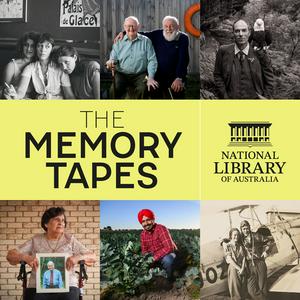
The Memory Tapes is a new podcast from the National Library of Australia that brings history to life through the voices of the people who lived it. Drawing on the nation's most significant oral history collection, the series explores remarkable stories of resilience, innovation, creativity, migration, activism and everyday life. In each episode, oral historian Dr Shirleene Robinson AM combines firsthand accounts with expert storytelling to reveal the people behind Australia's history.
Podcast websiteListen to The Memory Tapes, The Ancients and many other podcasts from around the world with the radio.net app
Get the free radio.net app
- Stations and podcasts to bookmark
- Stream via Wi-Fi or Bluetooth
- Supports Carplay & Android Auto
- Many other app features
Get the free radio.net app
- Stations and podcasts to bookmark
- Stream via Wi-Fi or Bluetooth
- Supports Carplay & Android Auto
- Many other app features

The Memory Tapes
Scan code,
download the app,
start listening.
download the app,
start listening.
 Australia

