
Listen to this podcast in the app for free: Download for free in the App Store
radio.net
Sleep timer
Save favourites
22 episodes
Season 2 Trailer
20/04/2026 | 3 mins.A sneak peek at upcoming guests during Season 2 of Chook. The Podcast.Phil and Anne Westwood on 4 Decades of True Free Range Egg Farming
13/04/2026 | 39 mins.For almost 40 years, Phil and Anne Westwood have run Freeranger Eggs in Grantville, 90 km south east of Melbourne.
What’s super interesting about Phil and Anne’s operation is that growth has never been part of their business model.
They have stayed deliberately small, deliberately avoiding automation including a total lack of autodoors and rollaway nest boxes.
There were several motivations for this strategy.
Firstly, the idea was to keep things small enough that a single person could run the entire business without the need for staff.
Secondly, an intentionally smaller, truly free-range operation, as Phil describes it, is also able to maximise hen welfare sine the chickens are living in smaller groups.
Thirdly, smaller flocks produce less manure with its associated impacts on the land, making the whole operation more environmentally sound.
Topics covered include:
What kind of living you can actually make with a one-person operation like Freeranger (listen to the end where Phil does share some figures)
Environmental impacts of running 10 000 birds per hectare, the maximum allowed to still qualify as a "free range" egg farm
What regenerative poultry farming looks like
How native vegetation coexists with chickens on the Westwood's property
ISA Browns — how many eggs they lay, and how long they can live when cared for the way the Westwoods do, without lights
Whether you could run an economically-viable egg farm with heritage, coloured-egg laying breeds
Egg production in free range vs. caged systems
Use of lights with laying hens (Impacts on health and longevity)
Mite and lice control
Wormwood as a natural deterrent against parasites, internal and external
Sawdust over straw as preferred nest box bedding
Diotomaceous earth
Managing wild birds, goannas, snakes around chook food and nest boxes
Maremma dogs as livestock guardians
Use of mobile sheds
What it's like running an egg farm solo
How to stay enthusiastic about hands-on egg farming after almost 40 years
Use of the Kangaroo Apple shrub around chickens
What trees Anne would plant around a home chicken coop
Whether the egg industry is becoming more sustainableBrendon Murphy on Australian Cream Legbars
28/03/2026 | 45 mins.Brendon Murphy presides over the Australian Facebook group dedicated to Cream Legbar breeding.
In this conversation, we discuss:
How Cream Legbars were created in Australia
How to tell the difference between Australian and import bloodlines
Egg colour
Ways to work with faults like high tails and floppy or twisted combs
Perhaps the most interesting thing Brendon shares in this chat is why some Cream Legbar chicks hatch with vaulted skulls, a defect Brendon says stems from how the Araucana, one of the breeds used to create Cream Legbars, was itself created in this country.
The level of detail in this conversation means this really is one for those of us seriously into this particular breed.Rooster Rescuer Lisa Short
21/03/2026 | 43 mins.Roosters can be tragic figures.
The reality is, for every hen in a backyard flock, there is a rooster, her brother, that almost certainly didn’t live happily ever after.
Lisa Short, from the Victorian-based Rooster Warriors Rehoming, tries to make a small dent in this unfortunate aspect of chicken keeping by helping find homes for hundreds of roosters.
Most of those roosters, she says, come from kinder and school hatching programs, which she'd like to see banned.
From rooster dumping to crow collars and night boxes that allow roosters to be kept where you otherwise probably couldn’t, Lisa ventures into some uncomfortable territory in this conversation, in hopes of raising awareness.Hatching egg seller Belinda Burgess
14/03/2026 | 1h 21 mins.Belinda Burgess tried having a regular job. She tried retiring. Neither stuck.
Despite 12 hour days, 7 days a week, she says running a commercial poultry farm is a good job, a passion. Therapy, even.
She sells 30-40+ dozen eggs per week at the height of the season, and hatches hundreds of chicks per week. She sells year-round.
Ask her how many breeds she keeps and she'll have to check.
In this conversation, Belinda is beautifully candid. She shares what it’s really like selling hatching eggs as a business — the ups and downs and some of her major learnings along the way.
Whether it’s leg banding baby chicks at midnight or packing eggs at dawn…this chat will give you a feel for what it takes to build a successful operation.
Topics discussed include:
How much Belinda pays per week in feed
The problem with hatching pullet eggs
Her most popular breeds
Why she's phasing out her chicken tractors
How she ended up with silken Araucanas
How to breed stronger chickens
How she accidentally killed 2 of her best hens with scratch mix
ILT (infectious laryngotracheitis) and how her birds tested positive for it without having the disease
Marek’s disease
Quarantining birds
Challenges in dealing with egg customers
Her advice to someone considering starting an egg business
More Home & Garden podcasts






Trending Home & Garden podcasts
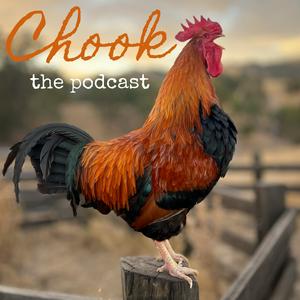
About Chook. The Podcast
Fresh, free-ranging conversations for backyard chicken keepers and serious breeders. Hosted by former foreign correspondent turned chicken breeder Jane Cowan.
Podcast websiteListen to Chook. The Podcast, Avant Gardeners and many other podcasts from around the world with the radio.net app
Get the free radio.net app
- Stations and podcasts to bookmark
- Stream via Wi-Fi or Bluetooth
- Supports Carplay & Android Auto
- Many other app features
Get the free radio.net app
- Stations and podcasts to bookmark
- Stream via Wi-Fi or Bluetooth
- Supports Carplay & Android Auto
- Many other app features

Chook. The Podcast
Scan code,
download the app,
start listening.
download the app,
start listening.
 Australia