
Listen to this podcast in the app for free: Download for free in the App Store
radio.net
Sleep timer
Save favourites
66 episodes
Your Art Is a Gift – Creative Ways to Share It This Christmas
20/10/2026 | 19 mins.Have you got paintings tucked away in a drawer because you don't think they're good enough to show anyone?
Well, before you throw them away, think again!
In this episode of the Tuesday Art Chat Podcast, wildlife artist and educator Kerri Dixon explores creative ways to turn your artwork, including unfinished paintings, practice pieces and even those not-so-successful experiments, into beautiful, meaningful Christmas gifts.
Kerri shares how a couple of simple watercolour backgrounds, originally intended to be painted over, became gorgeous designs for cushions, tote bags, clothing and even a bucket hat!
You'll discover that your artwork doesn't have to be a masterpiece to become something special.
Why your art is good enough: Learning to see beyond the mistakes and recognise the value in what you've created.
Turning paintings into gifts: Creative ideas for greeting cards, cushions, tote bags, calendars, notebooks, fabric and more.
Finding beauty in unfinished artwork: How cropping, repeating patterns and experimenting with colours can give old paintings a completely new purpose.
Getting creative with Canva: Simple ways to prepare your artwork and preview designs on products.
Print-on-demand services: Exploring options for printing personalised gifts without ordering large quantities.
Handmade Christmas keepsakes: Small original paintings, gift tags, bookmarks and decorations.
Creating Christmas traditions: Making seasonal artwork for your home and sharing creative projects with your grandchildren.
Preparing artwork for printing: Tips for photographing, editing and getting your designs ready.
Find one painting you've put aside because you weren't happy with it.
Instead of asking whether it's good enough to frame, ask yourself:
"What else could this become?"
Perhaps a little section would make a lovely greeting card, or the colours could become a beautiful fabric pattern.
Have a play, experiment and see what possibilities you discover!
Design and printing platforms:
Canva – https://www.canva.com
Printful – https://www.printful.com
Printify – https://printify.com
VistaPrint – https://www.vistaprint.com.au
Spoonflower – https://www.spoonflower.com
Redbubble – https://www.redbubble.com
Explore wildlife art tutorials and The Creative Barn membership:
https://www.thecreativebarnmembership.com
Ever dreamed of going on an art retreat?
Join Kerri for a wildlife art retreat at Australia Zoo, where art, wildlife and wonderful creative friendships come together.
https://www.kerridixonart.com/art-retreats/
Your artwork doesn't have to be perfect to make someone smile.
Sometimes a painting's greatest purpose isn't hanging on a gallery wall. It might be becoming a treasured Christmas card, a handmade keepsake or a thoughtful gift for someone you love.
So don't be too quick to dismiss those paintings hiding in your drawers. They might just be this year's Christmas presents!
Happy creating!
KerriBeyond the Reference Photo: Creating Wildlife Art That Tells a Story
13/10/2026 | 22 mins.Beyond the Reference Photo: Creating Wildlife Art That Tells a Story
Have you ever spotted a beautiful wildlife photograph and immediately thought, “I'd love to paint that!”?
But what if that photograph was just the beginning?
In this episode of the Tuesday Art Chat Podcast, I'm exploring how researching our wildlife subjects can inspire more meaningful and creative artwork. Rather than simply copying what we see in a reference photograph, we'll look at how understanding an animal's behaviour, habitat and unique characteristics can help us make our own artistic decisions.
I'll share examples from my Colours of K'gari dingo series and explore how the Greater Gliders living on our property could inspire three completely different compositions.
Because sometimes the most interesting part of a wildlife painting isn't what we can see in the photograph — it's the story behind it!
Going beyond the reference photo: Why a photograph can be the starting point rather than the final composition.
Researching your wildlife subjects: How learning about an animal's habitat, behaviour and characteristics can spark new ideas.
My Colours of K'gari series: How observing dingoes has inspired paintings that explore expression, movement and behaviour.
One animal, three compositions: Using Greater Gliders to explore portraits, habitat and atmospheric scenes.
Making creative decisions: How composition, lighting, colour, values and edges help tell a story.
Creating an art series: Why exploring one subject through several paintings can help develop your artistic voice.
Reference photos and copyright: The importance of using photographs you have permission to work from.
Before starting your next wildlife painting, try this simple exercise:
Choose an animal that interests you.
Spend 15–20 minutes researching its habitat, behaviour or unique characteristics.
Create three quick thumbnail sketches exploring different compositions.
Consider which idea tells the most interesting story.
You might discover that your favourite composition isn't the one you originally had in mind!
And remember, not every painting needs a deep meaning or conservation message. Sometimes we paint an animal simply because we think it's beautiful, and that's perfectly fine too.
The important thing is to explore your creativity and enjoy the process.
Learn wildlife drawing and soft pastel techniques with me:
https://kerridixonart.com
Explore The Creative Barn:
My online art membership, where you'll find step-by-step drawing and soft pastel tutorials, structured learning pathways and plenty of inspiration to keep creating.
https://www.youtube.com/kerridixonart
Watch Tuesday Art Chat on YouTube:
Find the video version of this episode and explore more art discussions and demonstrations on my YouTube channel.
A reference photograph shows us what an animal looks like. Research helps us discover the story we want to tell.
I hope this episode encourages you to look a little further, ask a few more questions and discover new possibilities for your next artwork.
Happy creating!
Kerri
#WildlifeArt #TuesdayArtChat #WildlifeDrawing #SoftPastels #ArtComposition #ReferencePhotos #CreativeProcess #KerriDixonArtDrawing Endangered Animals: Raising Awareness Through Art
06/10/2026 | 16 mins.Can a drawing really make a difference?
In this episode of the Tuesday Art Chat Podcast, I’m exploring how wildlife artists can use the art we already love creating to raise awareness, tell the stories of threatened species and even support wildlife conservation.
This topic was inspired by our latest Draw for Wildlife event, where 135 people came together online to draw a juvenile green sea turtle named Elliott — and together we raised $1,350 for Turtles in Trouble Rescue.
One turtle. One drawing. Two hours creating together. And a very real contribution to a small wildlife rescue organisation.
But fundraising is only one way our art can make a difference.
In this episode, I also share the stories behind some of the animals I’ve drawn, including the Greater Gliders that live here on our farm, Gouldian Finches and my K’gari dingo paintings.
We chat about how simply choosing a threatened species as your subject can introduce people to an animal they may never have heard of before — and why telling the story behind your artwork can sometimes be just as important as the artwork itself.
How Draw for Wildlife raised $1,350 for turtle rescue
Why wildlife artists are in a unique position to raise awareness
Finding threatened species living in your own area
My personal connection with Greater Gliders
Gouldian Finches and how captive populations can give us a very different impression of what’s happening in the wild
Why conservation art doesn’t always need to show suffering
Using beauty to help people connect with wildlife
Adding simple information cards and QR codes to wildlife artwork at exhibitions
Supporting conservation organisations without creating more work for them
Why I donated 10% from sales of my K’gari dingo paintings and prints to dAfter the Last Stroke: What to Do When a Pastel Painting Is Finished
06/10/2026 | 18 mins.You’ve put down the final pastel pencil, stepped back from your painting and finally decided…
It’s finished!
But what happens next?
In this episode of the Tuesday Art Chat Podcast, I’m talking about everything that happens after the last stroke — from deciding whether your artwork really is finished to protecting, storing, photographing and framing your soft pastel paintings.
These are questions I’m asked all the time, and they’re things we don’t tend to think about while we’re busy learning how to create the artwork itself.
We’ll chat about why I like to walk away from a painting before officially calling it finished, why I personally don’t use fixative on my pastel paintings, and the simple way I protect finished artwork using glassine and flat storage.
I’ll also explain why photographing every finished artwork has become one of the most valuable habits in my own art practice. You may not plan on selling prints or entering competitions today, but that photograph could become incredibly useful years from now.
Then we’ll get into framing — including the simple framing system I use, why I standardise my artwork sizes, how I reuse frames for exhibitions, the importance of a pastel gap, and why you should never tape your artwork down on all four sides.
How to decide when your artwork is really finished
Signing and recording your finished paintings
Whether you should use fixative on soft pastel
Using glassine to protect pastel artwork
How to safely store and transport finished paintings
Why you should photograph every artwork you create
Simple tips for photographing artwork accurately
How I edit and save my artwork photographs
Framing soft pastel behind glass
Mats, glass and creating a pastel gap
Why I standardise my artwork sizes and reuse frames
How to mount pastel artwork correctly
Making budget frames look more professional
The simple finishing routine I use with every painting
If you’d like something you can keep beside you in the studio, I’ve put all of this information together in my free After the Last Stroke ebook.
It will walk you through how to protect, store, photograph and frame your finished soft pastel artwork, so you know exactly what to do once those pencils finally go down.
Download your FREE After the Last Stroke guide
And remember — before you rush off to start your next painting, take a moment to enjoy the one you've just finished.
Every finished artwork is another little marker of how far you’ve come.
Happy creating,
Kerri xKeep Going by Austin Kleon - creative lessons for artists
24/09/2026 | 16 mins.Kerri shares a practical book chat on Austin Kleon’s Keep Going, focusing on how artists can stay creative when time is tight, motivation dips, and life gets noisy.
This episode is especially useful if you want simple, repeatable ways to keep making art without waiting for the perfect mood or perfect schedule.
In this episode, Kerri explores how the book’s ideas apply to real artistic life, from routines and lists to play, gifts, and seasonal creativity. She also reflects on what it means to keep creating for the love of it, not just for output or income.
More Arts podcasts







Trending Arts podcasts












About Tuesday Art Chat with Kerri
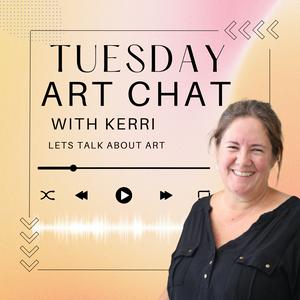
Join artist Kerri Dixon each week for a down-to-earth, inspiring chat about all things art—from creative confidence and pastel tips to studio routines, selling your work, and finding inspiration in everyday life. Whether you're a hobby artist or dreaming of going pro, grab a cuppa and tune in for practical advice, real talk, and a supportive creative boost every Tuesday!
Podcast websiteListen to Tuesday Art Chat with Kerri, Table Manners with Jessie and Lennie Ware and many other podcasts from around the world with the radio.net app
Get the free radio.net app
- Stations and podcasts to bookmark
- Stream via Wi-Fi or Bluetooth
- Supports Carplay & Android Auto
- Many other app features
Get the free radio.net app
- Stations and podcasts to bookmark
- Stream via Wi-Fi or Bluetooth
- Supports Carplay & Android Auto
- Many other app features
Tuesday Art Chat with Kerri
Scan code,
download the app,
start listening.
download the app,
start listening.
 Australia