

Listen to this podcast in the app for free: Download for free in the App Store
radio.net
Sleep timer
Save favourites
30 episodes
Ep.29 AuDHD, Burnout Prevention & Self-Compassion
12/07/2026 | 55 mins.Content warning:
Burnout, chronic health struggles, mental illness, brief references to domestic violence and the strain of single parenting.
Summary:
In this episode, Bri sits down with Dr Hayley D Quinn — mindset and wellbeing coach, speaker, author, former clinical psychologist, host of the Welcome to Self Unmasked podcast, and past president of Compassionate Mind Australia — to talk about burnout prevention and the power of a compassionate relationship with yourself. Hayley shares her late AuDHD diagnosis, her own significant burnout in 2016, and how discovering Compassion Focused Therapy (CFT) changed the way she relates to herself. Together, Bri and Hayley unpack the early warning signs of burnout, why neurotypical recovery advice ("just get out more") can push neurodivergent people further into burnout, and what real burnout prevention looks like: knowing yourself, building in breaks, and treating yourself the way you'd treat a small child you love. They dig into the three flows of compassion (giving, receiving, and self-compassion), why receiving is often the hardest one, and practical ways to start — hand-on-heart check-ins, compassionate letter writing, and asking yourself one simple question.
Takeaways:
Burnout doesn't always look like collapse. It can look like "everything's fine at work" but nothing left for anyone once you're home, social withdrawal, or things that used to feel easy suddenly feeling hard.
Neurotypical burnout advice (get out more, push through, stay busy) can push neurodivergent people deeper into burnout — recovery has to be tailored to your neurotype.
There are three flows of compassion: giving it out, receiving it from others, and offering it to yourself. Most of us are strong on the first and shakiest on the other two.
A compassionate relationship with yourself isn't about letting yourself off the hook. It takes courage, wisdom, and strength.
Tone matters as much as words — "you're doing your best" lands completely differently depending on the warmth behind it.
If a coping strategy doesn't work, that's not failure. It's just data.
Try it: ask yourself "what's one small thing I could change, that I likely can change, to make my life more enjoyable?"
Follow Hayley:
Dr Hayley D Quinn is at www.drhayleydquinn.com, on Instagram, Facebook & LinkedIn.
Hayley's podcast: Welcome to Self Unmasked
Hayley's book: From Self Neglect to Self Compassion (includes 8 guided compassion meditations via QR code)Bonus Episode: AuDHD, Friends and Conferences
11/07/2026 | 43 mins.Content warning: brief mentions of trauma, PTSD, dissociative identity disorder, chronic illness and healthcare self-advocacy, and online hatred directed at trans people. Nothing graphic. Look after yourself!
Summary:This one's a bit different. Bri grabbed Emily and Jade, her Psych Hive co-directors and real-life mates, for two quick check-ins recorded live from NATCA (the Neurodivergence Affirming Therapists Conference Australia) in Melbourne. Part one is end of day one, part two is the exhausted-but-glowing wrap after day two, where Jade and Bri also gave their own talk on self-care.
Along the way: spirit animal introductions (Jade's a lemur, Emily's a cheetah, Bri's a labrador who eats shoes, don't ask), a mid-conference "missing person" scare, and a genuinely lovely rundown of what stuck with them from two days of neuroaffirming research and practice.
Takeaways:
Day one, the panel on neurodivergence and medical co-occurrences hit hard: capacity is finite, and the people with the most medical complexity carry the heaviest self-advocacy load. Systems like NDIS and Medicare help some, but the burden of proving your needs still falls on the most disabled.
A talk on trans marginalisation and online hatred, and one on intergenerational trauma from undiagnosed neurodivergence, both circled the same idea: othering breaks connection, and disconnection is where distress grows.
Research on masking and mental health found the harm isn't masking itself, it's what masking does to your sense of self: feeling "less than" and losing a clear identity. The quote that stuck: "I am wrong."
Day two opened with Nick Walker's keynote touched on human flourishing and a genuinely useful reframe: instead of pathology paradigm versus neurodiversity paradigm, think pathology paradigm versus neuronormative paradigm. Some forms of neurodivergence (like PTSD) can genuinely benefit from treatment when the person wants that. Others (like autism) are actively harmed by attempts to cure them. ADHD medication got reframed as an accommodation rather than a cure, since the traits come straight back off it.
A talk on echolalia reframed it as authentic communication rather than "just stimming", it can carry a feeling, a need, a want, or be a bid for connection. There's even a version where people echo movements or emotions, not just words.
The through-line for both of them: connection, not categorisation, is what actually helps people flourish.
They close with a quick word on Psych Hive resources (the OCD guide, the PDA parent guide, the AuDHD books for adults and for parents, free webinars and downloads) and two prize draws running through the AuDHD IRL and Psych Hive email lists. Jade and Emily will be back to talk about building a neuroaffirming practice and being allies.
You can find Jade and Emily on instagram at @thepsychhive and their resources through the website www.thepsychhive.com.Ep28. AuDHD and Exploring Hormones with Samantha
05/07/2026 | 1h 2 mins.Content warning:
This episode touches on sexual assault, postpartum rage, and suicide statistics (in the context of perimenopause research). Please look after yourself. If this isn't what you have capacity for today, keep scrolling.
Show notes:
This one is a hormone deep dive and it's some knowledge I wish someone had handed me years ago. I sat down (in person, so much fun) with Samantha Johnson, AuDHD lived experience educator and the brains behind Sam Attempts Motherhood, to talk about the wild ride of AuDHD plus hormones plus motherhood.
Sam takes us right through the cycle: what oestrogen and progesterone are actually doing to your dopamine and your sensory system, why the days before your period can flatten you, and why "just take birth control" is doctors' favourite non-answer. We get into cyclic medication dosing (yes, your meds can need adjusting through the month), how postpartum rage and perimenopause snuck up on Sam at the same time, and why AuDHD folks might just be noticing these shifts earlier rather than experiencing them earlier. We also unpack the WHI scare that set women's hormone health back decades, vaginal estrogen for UTIs, and why self identification is valid, full stop.
It's dense, it's validating, and it will make you want to go start tracking your cycle immediately.
Takeaways:
Oestrogen and progesterone aren't just "period hormones." Oestrogen affects dopamine, progesterone affects sensory processing, mood, gut motility and histamine clearance. Every cell in your body has oestrogen receptors.
The days before ovulation and the days before your period are when a lot of AuDHD folks notice their meds feel "off." That's real, and cyclic dosing is backed by research, even if most doctors haven't caught up.
Self identification counts. If you've done the deep dives and ticked the boxes, you don't need three hours with a psych to validate a lifetime of lived experience.
Postpartum rage and early perimenopause can hit at the same time and get mistaken for each other, or dismissed entirely.
AuDHD people may not start perimenopause earlier, but we might just be more sensitive to noticing the shift before our neurotypical peers do.
The 2002 Women's Health Initiative scare tanked HRT uptake and we're still feeling the fallout, even though the original findings were misreported.
Vaginal oestrogen can be a genuine fix for recurrent UTIs in older women, instead of endless rounds of antibiotics.
Find Sam at @samattemptsmotherhood or www.attemptingmotherhood.com for her free resources, and check out Dr Lotta Borg Skoglund and Dr Kelly Casperson for more on this stuff.Ep27. AuDHD and Gender Diversity with Morgs
30/06/2026 | 53 mins.Content warning
This episode includes discussion of transphobia, misgendering and microaggressions, and a brief mention of non-consensual medical procedures performed on intersex infants. Please look after yourself while you listen.
Summary
This week I sat down with Morgs, and was such a joy. We actually met years ago working retail together (selling very overpriced cups and plates), and I have loved watching everything they have gone on to do since.
Morgs is a queer, trans, neurodivergent social worker. They were the 2023 AASW Social Work Student of the Year for a policy proposal to include gender affirming surgeries in the Medicare Benefits Scheme. They finished their master's in 2024, and they now work in child protection. They are also AuDHD, and their current special interest is dahlias (we got delightfully sidetracked).
Our topic was AuDHD and gender diversity, and Morgs brought so much warmth and wisdom to it. We talked about why autistic people are far more likely to be gender diverse, and Morgs had a beautiful way of putting it. If you already feel like you do not fit the rules in a hundred other ways, questioning the rules around gender feels like much less of a leap.
Morgs also shared something cool... When they started transitioning, a whole lot of autistic traits became more obvious, because they were unmasking femininity and unmasking autism at the same time. Finding out who they were in terms of gender helped them find out who they were as a neurodivergent person. Cool, right??
Then we got into language, which we both love. We unpacked AFAB and AMAB, why those terms get overused, and why saying what you mean is so much kinder and clearer than lumping people into boxes. We finished on microaggressions, over-apologising, and the very simple, very powerful question: what are your pronouns?
This one will make you think, and it might just help you do a little bit better.
Takeaways
There are as many experiences of gender and autism as there are gender diverse and autistic people. You cannot assume.
Transitioning and unmasking can happen together. Exploring your gender can unlock a deeper understanding of your neurotype.
Say what you mean. If you mean people who have periods, say that. AFAB and AMAB are not a stand-in for someone's whole body, history or identity.
If you get someone's pronouns wrong, apologise once, correct yourself, and move on. Do not make the other person comfort you.
Just ask: what are your pronouns? Fewer words, less assuming, easy to practice.
We all have room to do a little bit better. Trans and gender diverse people need cis people to meet them halfway.Ep26. AuDHD, Joy & Monotropism with Steph
21/06/2026 | 43 mins.Summary
This week I'm joined by Steph Robertson, a neurodivergent occupational therapist, speaker and advocate whose work centres trauma-responsive, neurodiversity-affirming care. Steph is autistic, ADHD, complex PTSD and a plural system, and brings their professional, research and lived experience to everything they do.
We dig into the overlap between joy and monotropism: why a monotropic flow state and autistic joy can be such a beautiful recipe together, and how the people around us so often interrupt that flow without meaning to. Steph shares the refrain that came to her while building a presentation on this topic ("not all meaningful occupations are joyful, but all joyful occupations are meaningful"), unpacks the tendril theory in a powerful way, and offers genuinely useful ways to work with a monotropic brain instead of against it, from getting through the hard self-care tasks to giving yourself proper transition time. This one really did light us both up.
Takeaways
Joy is foundational, not a bonus. It's not a reward at the end of a session or an added extra, it's an evidence-based way of supporting wellbeing and the actual therapeutic work.
A monotropic flow state doesn't have to feel joyful to be valuable. It can be deeply satisfying and grounding even when it isn't "fun."
Joy and monotropism can amplify each other. If we're not interrupting someone's flow, we increase the likelihood of joy, and both joy and flow boost learning capacity.
We so often interrupt joy without realising. Polytropic environments like schools and busy workplaces ask monotropic minds to task-switch fast, which can "rip the tendrils out" and cause real distress.
Work with monotropism, not against it. Often it's less about facilitating flow and more about not getting in the way, plus giving gentle time to transition.
Couple hard tasks with something joyful. Steph starts a podcast before she's even out of bed so she can "auto-drive" through the morning routine.
Transition time isn't wasted time. Monotropism and transitions are deeply linked, and giving yourself space between tasks may protect you from burnout down the line.
Stop policing how joy looks. Stimming, routines, rituals and "childlike" joy at any age all count. Challenging neuronormativity means letting joy be whatever it needs to be for the individual.
Resources mentioned
Tendril theory credited to Erin Human. Read more here.
You can find Steph on Instagram at @sgroccupationaltherapy.
More Education podcasts
 The Jordan B. Peterson PodcastEducation, Science, Society & Culture
 Good Life ProjectBusiness, Education, Health & Wellness, Self-Improvement, Tutorials
 How to Be a Better HumanEducation, Self-Improvement
 The Jefferson Fisher PodcastEducation, Relationships, Self-Improvement, Society & Culture
 6 Minute EnglishEducation, Language Learning
 IMO with Michelle Obama and Craig RobinsonEducation, Self-Improvement, Society & Culture
 The Rich Roll PodcastEducation, Health & Wellness, Self-Improvement, Society & Culture
 Begin Again with Davina McCallEducation, Health & Wellness, Mental Health, Self-Improvement, Society & Culture
 Aussie EnglishCourses, Education, Language Learning
 The Mel Robbins PodcastEducation, Health & Wellness, Mental Health, Relationships, Self-Improvement, Society & Culture
Trending Education podcasts
 VOA Learning English Podcast - VOA Learning EnglishEducation, Language Learning
 A Changed Mind | Mindset That MattersEducation, Philosophy, Religion & Spirituality, Self-Improvement, Society & Culture, Spirituality
 Listening Time: English PracticeEducation, Language Learning
 The Hunters Campfire - Australian HuntingEducation, Sports, Wilderness
 The Astrology LoungeAlternative Health, Education, Health & Wellness, Relationships, Self-Improvement, Society & Culture
 Why Isn't Everyone Doing This? with Emily FletcherEducation
 IELTS Energy English 7+Education, Language Learning
 French Mornings with ElisaEducation, Language Learning
 Learning English VocabularyEducation, Language Learning
About AuDHD IRL
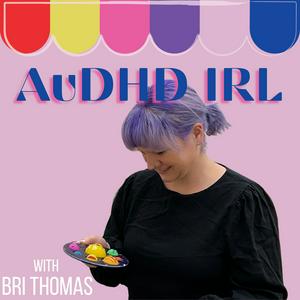
AuDHD IRL is a podcast about what it really looks like to be autistic + ADHD, beyond the hot takes and productivity hacks. Each episode feels like a cuppa with someone a few steps ahead on the journey (who’s tripped over it a few times). We talk honestly about it all, with laughter, tasteful swearing, and lots of self-compassion. This isn’t about fixing yourself. It’s about understanding your brain, finding language for your experience, and feeling less alone while you figure things out in real life. Come as you are. Stay as long as you like.
From Ngunnawal and Ngambri lands/knowledge/love.
Podcast websiteListen to AuDHD IRL, The Jordan B. Peterson Podcast and many other podcasts from around the world with the radio.net app
Get the free radio.net app
- Stations and podcasts to bookmark
- Stream via Wi-Fi or Bluetooth
- Supports Carplay & Android Auto
- Many other app features
Get the free radio.net app
- Stations and podcasts to bookmark
- Stream via Wi-Fi or Bluetooth
- Supports Carplay & Android Auto
- Many other app features
AuDHD IRL
Scan code,
download the app,
start listening.
download the app,
start listening.
 Australia