

Listen to this podcast in the app for free: Download for free in the App Store
radio.net
Sleep timer
Save favourites
49 episodes
Part 1: Deep-diving PDA
05/10/2026 | 23 mins.In this first part of a deep dive into PDA from a professional's lens, I’m talking with Dr. Katherine Olson, a clinical psychologist with extensive training in autism, early childhood intervention, and neurodevelopment. But Katie is also a parent who had to completely rethink what she thought she knew clinically, when her own child didn't fit the frameworks she'd been trained to use. Next week we'll talk more about the definition of PDA itself and why so many common parenting strategies fail so spectacularly for PDAers.
--
ABOUT KATHERINE:
Dr. Katherine L. Olson is a licensed clinical psychologist who lives and works on the central coast of California. She is a part-time psychologist and full-time mom and caregiver to two wonderful, neurodivergent kids, one of whom is PDA. Despite her years of training in neurodevelopment, she continually learns and unlearns so much more from her kids than she ever expected (or bargained for!). Through her private practice consultations, she has been privileged to work with many other PDA families along their journey, as well as other professionals who are hoping to better understand and support their PDA clients. Dr. Olson’s hope is to help bring autonomy focused, neurodiversity affirming care to the families who need it most.
Learn more about her practice here: https://www.katherinelolsonphd.com/
--
Additional Resources:
Explore the new book - the Parent's Handbook for Kids in Burnout
Low Demand Parenting book: a love letter to exhausted, overwhelmed parents everywhere. Get the first chapter free!
Why is everything with my kid so hard?: Take the quiz to find your first step forward!
Low Demand Parenting Blog: a treasure trove of low demand wisdom
Follow us on social for updates on the podcast, blog, and more!
Instagram
Facebook
Pinterest
The Low Demand Parenting Podcast is your space to let go of the pressure and embrace a more joyful, authentic approach to parenting. We hope you enjoyed this episode and would be honored if you left us a review which helps us reach more parents just like you!The radical freedom of trusting our kids
28/09/2026 | 29 mins.Listen in as I talk with somatic coach and artist Jo Kelly about what happens when we practice truly trusting our children (and ourselves) for the long haul. Jo shares her experience stepping away from traditional schooling and choosing a radically child-led educational path for her children, who are now young adults, including what she learned about feeling our feelings, self-trust, curiosity, and the ways children flourish when we release the expectation of conformity. We talk about how conditioning teaches us to disconnect from our own bodies and feelings, why so many of us struggle to trust our instincts as parents, and what it can look like to create a life where our children are allowed to follow their interests, honor their needs, advocate for themselves, and become who they already are. What if our work isn't to fix or heal our children, but to stop interrupting the incredible humans they already are?
About Jo:
Jo Kelly is the founder of To Be Or Not To Act and creator of the 33-Day Reset Journey. For over 30 years, she has explored human instinct, emotional freedom and the conditioning that disconnects us from our natural intelligence. With an MBA specialized in systemics and human resources, her work looks beyond the individual to the family, education and social systems that shape how we learn to behave, express ourselves and trust our own internal signals. She is also directing the documentary Why Isn’t Everyone Dancing?, exploring what happens to our natural freedom and expression as we learn to behave, perform and fit in.
Website: https://www.tobeornottoact.com
Instagram: https://www.instagram.com/tobeornottoact_jokelly/
Facebook: https://www.facebook.com/jo.kelly.77/
About the Podcast:
Low Demand Parenting book: a love letter to exhausted, overwhelmed parents everywhere. Get the first chapter free!
Why is everything with my kid so hard?: Take the quiz to find your first step forward!
Low Demand Parenting Blog: a treasure trove of low demand wisdom
Follow us on social for updates on the podcast, blog, and more!
Instagram
Facebook
Pinterest
The Low Demand Parenting Podcast is your space to let go of the pressure and embrace a more joyful, authentic approach to parenting. We hope you enjoyed this episode and would be honored if you left us a review which helps us reach more parents just like you!Parenting a gamer
24/08/2026 | 31 mins.DISCOVER THE LOW DEMAND COURSE
This powerful 8-week course hones your parenting intuition, builds your self-trust, supports collaborative work with your kid, and yields massive shifts in families. I love it. I hope you love it too. Find out more here.
ABOUT ANDREW
Andrew Fishman, LCSW, is a licensed mental health professional in Chicago, where he specializes in the impact of video games on mental health. He earned a master’s degree in social work at Loyola University and is certified to counsel gaming disorder by the International Problem Gambling and Gaming Certification Organization. His new book, Parenting a Gamer, is a comprehensive guide to all the challenges of parenting a gamer. Andrew has written extensively for Psychology Today, and he has been featured in interviews with outlets including The Wall Street Journal, AJ+ and Fintech Beat, among others. Connect with him online.
Additional Resources:
Low Demand Parenting book: a love letter to exhausted, overwhelmed parents everywhere. Get the first chapter free!
Why is everything with my kid so hard?: Take the quiz to find your first step forward!
Low Demand Parenting Blog: a treasure trove of low demand wisdom
Follow us on social for updates on the podcast, blog, and more!
Instagram
Facebook
Pinterest
The Low Demand Parenting Podcast is your space to let go of the pressure and embrace a more joyful, authentic approach to parenting. We hope you enjoyed this episode and would be honored if you left us a review which helps us reach more parents just like you!How does unschooling work?
17/08/2026 | 29 mins.Esther Jones is a long-time unschooling parent who joins me to talk about how kids learn, how we can support learning, and what it looks like to truly trust our kids in their own educational journey. A rich conversation for people regardless of your schooling approach, Esther embodies a conviction that learning is our kids' native state, and that all we have to create a open, trusting, collaborative space, and they will learn in abundance!
Meet Esther:
- Esther's website: https://www.esther-jones.com/
- Read Esther's book: https://us.jkp.com/products/the-parents-handbook-to-unschooling-yourself
-Explore the Unschooling Summit: https://www.theunschoolingsummit.org/
- Esther's podcast: https://theunschoolspace.buzzsprout.com/
Additional Resources:
Low Demand Parenting book: a love letter to exhausted, overwhelmed parents everywhere. Get the first chapter free!
Why is everything with my kid so hard?: Take the quiz to find your first step forward!
Low Demand Parenting Blog: a treasure trove of low demand wisdom
Follow us on social for updates on the podcast, blog, and more!
Instagram
Facebook
Pinterest
The Low Demand Parenting Podcast is your space to let go of the pressure and embrace a more joyful, authentic approach to parenting. We hope you enjoyed this episode and would be honored if you left us a review which helps us reach more parents just like you!Healing parenting burnout
13/07/2026 | 26 mins.What if the reason compassion feels so hard isn't because you're failing—but because your nervous system is protecting you? In this conversation, Melissa Corkum and I explore the concept of "blocked care," why so many parents of high-needs kids experience it, and how shame, grief, and chronic stress can leave us feeling disconnected from the children we love so desperately. We talk about soothing and practical ways to begin restoring connection by caring for ourselves first.
ABOUT MELISSA CORKUM:
Web: risetoregulation.com
Book: Every Parent's Guide to Reclaiming Compassion
Email: melissa@risetoregulation.com
More Education podcasts
 The Florence Given ShowEducation, Health & Wellness, Mental Health, Philosophy, Self-Improvement, Society & Culture
 anything goes with emma chamberlainEducation, Personal Journals, Self-Improvement, Society & Culture
 The Mel Robbins PodcastEducation, Health & Wellness, Mental Health, Relationships, Self-Improvement, Society & Culture
 Begin Again with Davina McCallEducation, Health & Wellness, Mental Health, Self-Improvement, Society & Culture
 6 Minute EnglishEducation, Language Learning
 How to Be a Better HumanEducation, Self-Improvement
 All Ears English PodcastBusiness, Education, Language Learning
 The Jefferson Fisher PodcastEducation, Relationships, Self-Improvement, Society & Culture
 Finding Freedom with Peter CroneEducation, Health & Wellness, Mental Health, Religion & Spirituality, Self-Improvement, Spirituality
 IMO with Michelle Obama and Craig RobinsonEducation, Self-Improvement, Society & Culture
Trending Education podcasts
 How To Witch, Bitch!Education, Religion & Spirituality, Tutorials
 hey, waitEducation, Self-Improvement
 Duolingo French PodcastEducation
 Learn French with daily podcastsEducation, Language Learning
 The Magician's WayEducation, Self-Improvement
 Learn Japanese with Masa sensei!Courses, Education
 FLY with Richard De CrespignyEducation, Society & Culture
 The Dr. Lee Warren PodcastChristianity, Education, Health & Wellness, Life Sciences, Mental Health, Religion & Spirituality, Science, Self-Improvement
 The Examined Life with Matt PurcellEducation, Self-Improvement
 Learn Japanese with Japanese Made EasyEducation, Language Learning
About Low Demand Parenting
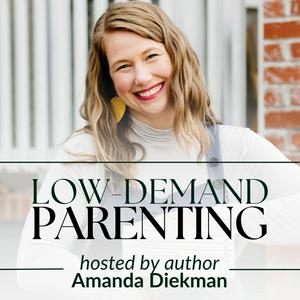
The Low Demand Parenting Podcast is your space to let go of the pressure and embrace a more joyful, authentic approach to parenting. Hosted by Amanda Diekman—author, autistic adult, and mom of three—this podcast isn’t about perfection or expert advice. It’s about learning together how to drop the demands that weigh us down and find the ease we crave in our families. Whether you’re navigating neurodivergence, challenging behaviors, or simply the highs and lows of life, this show offers honest conversations, practical insights, and a whole lot of compassion. Let's thrive, even when it feels like life is on level 12 hard.
Podcast websiteListen to Low Demand Parenting, The Florence Given Show and many other podcasts from around the world with the radio.net app
Get the free radio.net app
- Stations and podcasts to bookmark
- Stream via Wi-Fi or Bluetooth
- Supports Carplay & Android Auto
- Many other app features
Get the free radio.net app
- Stations and podcasts to bookmark
- Stream via Wi-Fi or Bluetooth
- Supports Carplay & Android Auto
- Many other app features
Low Demand Parenting
Scan code,
download the app,
start listening.
download the app,
start listening.
 Australia