
Listen to this podcast in the app for free: Download for free in the App Store
radio.net
Sleep timer
Save favourites
65 episodes
What It Takes to Reclaim Your Attention Span
24/08/2026 | 40 mins.Of all the potential effects of using smartphones, the one that seems to inspire the most anxiety is what scrolling could be doing to people’s attention. On social media (ironically), many people express a desire to “heal” their attention spans from the damage they feel technology has done. They’re picking up on something real. In one 2025 study, researchers found that blocking the internet on people’s phones for two weeks led to improvements in sustained attention equivalent to reversing 10 years of cognitive decline.
In this final episode of How to Touch Grass, host Julie Beck embarks on an experiment to see if she can heal her own attention span. Beck and co-host Natalie Brennan also hear from Jenny Odell, the author of How to Do Nothing and Saving Time, about how Odell’s antagonism for her phone actually helped her make peace with it, and how nature can teach us to pay deeper attention to the world around us.
Learn more about your ad choices. Visit podcastchoices.com/adchoicesWhy Learn Something That a Machine Can Do for You?
17/08/2026 | 33 mins.Children still learn long division even though calculators exist, and many people continue to study languages even as AI translation becomes faster and more accurate. Is there a deeper purpose for learning that technology will never touch?
In this episode of How to Touch Grass, hosts Natalie Brennan and Julie Beck hear from Michelle Miller, a cognitive psychologist at Northern Arizona University who studies technology and learning. She explains that although the changing tides of tech may shape what and how we learn, as humans we still have the autonomy to build the minds we want.
Learn more about your ad choices. Visit podcastchoices.com/adchoicesThe Internet Is More Image-Focused Than Ever
10/08/2026 | 37 mins.It wasn’t that long ago that “body positivity” was all over the internet. Oppressive beauty standards hadn’t gone away by any stretch, but many people on social media were pushing against limits on what an “ideal” body could look like. Now, things have swung in the opposite direction, with the rapid uptake of GLP-1s and the resurgence of a skinny ideal, combined with a new frankness about plastic surgery. The calls for “self-love” and “health at any size” can be harder to hear these days over the roar of looksmaxxers and influencers talking about weight loss and cosmetic procedures.
In this episode of How to Touch Grass, hosts Natalie Brennan and Julie Beck talk with Atlantic staff writer Sophie Gilbert, the author of Girl on Girl: How Pop Culture Turned a Generation of Women Against Themselves, about how the culture of the internet got even more image-focused and the role that social-media algorithms play in distorting what people consider “normal.”
Learn more about your ad choices. Visit podcastchoices.com/adchoicesHow AI Could Make People More Anxious
03/08/2026 | 27 mins.Nothing sucks you in quite like the internet. It seems to have a way of figuring out what you’re currently obsessed with and serving you more and more of it, whether that’s cat videos, cookie recipes, or information about your most pervasive and seemingly unshakeable anxiety. (At this point, anyone who’s never spent a late night Googling their worries should be studied by science for their willpower.) But with the rise of artificial intelligence, the internet may be fueling a different kind of engagement.
Elias Aboujaoude, a psychiatrist at Stanford University, and Ashleigh Golden, a psychologist at Stanford, recently wrote a paper arguing that the design of AI chatbots appears to encourage anxious behavior and keep people stuck in obsessive loops. One in six adults have turned to chatbots for mental-health information and advice, according to a KFF poll, and Golden cautions that “we may be encountering the perfect storm of avoidant coping behaviors and this tech that reinforces those tendencies and disorders.”
In this episode of How to Touch Grass, hosts Julie Beck and Natalie Brennan hear from Golden and Aboujaoude about how people who use AI looking for reassurance may instead find their symptoms getting worse, and what that means for an anxious nation.
Learn more about your ad choices. Visit podcastchoices.com/adchoicesThe Power of Pre-Internet Nostalgia
27/07/2026 | 37 mins.Back in the ’90s, before everyone had smartphones, were things just … better? Tech-focused nostalgia has become a potent cultural force in recent years, driving sales of “dumbphones,” iPods, CDs, and other retro technology. According to a 2023 survey, 67 percent of Americans wish they could go back to a time “before everyone was ‘plugged in.’” The psychologist behind that survey, Clay Routledge, has found that this sort of nostalgia is more than just a yearning to go backwards. “We can often feel overwhelmed in the moment and in the challenges we face today. It's hard to see past them. Nostalgia can help us step outside of that moment,” Routledge explains. Nostalgia can actually teach us how we want to live now, and in the future.
Learn more about your ad choices. Visit podcastchoices.com/adchoices
More Education podcasts





Trending Education podcasts













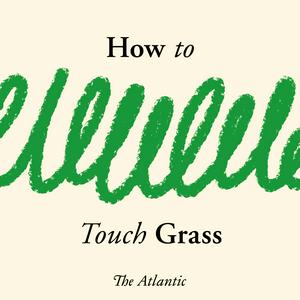
About How to Touch Grass
It may be time to rethink our relationships with our devices.
Podcast websiteListen to How to Touch Grass, The Mel Robbins Podcast and many other podcasts from around the world with the radio.net app
Get the free radio.net app
- Stations and podcasts to bookmark
- Stream via Wi-Fi or Bluetooth
- Supports Carplay & Android Auto
- Many other app features
Get the free radio.net app
- Stations and podcasts to bookmark
- Stream via Wi-Fi or Bluetooth
- Supports Carplay & Android Auto
- Many other app features
How to Touch Grass
Scan code,
download the app,
start listening.
download the app,
start listening.
How to Touch Grass: Podcasts in Family
 Australia