
PodcastsGovernmentPolitics with Michelle Grattan

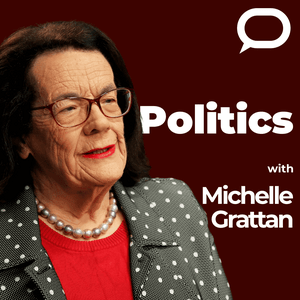
Politics with Michelle Grattan

The Conversation
Politics with Michelle Grattan
Latest episode

630 episodes

  • Politics with Michelle Grattan

    The Making of an Autocrat: co-opt the military

    04/01/2026 | 19 mins.

    In November, six Democratic lawmakers recorded a video directed at members of the US military and intelligence agencies. In it, they issued a blunt reminder:"The laws are clear: you can refuse illegal orders. […] You must refuse illegal orders."The lawmakers were issuing the warning against the backdrop of US airstrikes on boats off the coast of Latin America the Trump administration claims are suspected drug runners. Many Democrats and legal experts, however, argue these strikes are illegal.Since returning to office, Trump has successfully expanded his power over his own party, the courts and the American people. Now, like many autocrats around the world, he’s trying to exert control over the military.In the final episode of The Making of an Autocrat, Joe Wright, a political science professor at Penn State University, says:"I am very concerned that getting the military to do illegal things will not only put US soldiers at more risk when they do engage in international missions in the future […] it’s a first step to using the military to target domestic political opponents. That’s what really worries me."This episode was written by Justin Bergman and produced and edited by Isabella Podwinski and Ashlynne McGhee. Sound design by Michelle Macklem.Mentioned in this episode:Your support mattersSupport non-profit journalism you can trust. Donations 2025

  • Politics with Michelle Grattan

    The Making of an Autocrat: suppress the people

    04/01/2026 | 15 mins.

    The list of people Donald Trump has punished or threatened to punish since returning to office is long. It includes the likes of James Comey, Letitia James, John Bolton, as well as members of the opposition, such as Adam Schiff, Mark Kelly and Kamala Harris.In fact, he has gone so far as to call Democrats “the enemy from within”, saying they are more dangerous than US adversaries like Russia and China.According to Lucan Way, a professor of democracy at the University of Toronto, when a leader attacks the opposition like this, it’s a clear sign a country is slipping into authoritarianism.As Way says in episode 5 of The Making of an Autocrat:"In other kind of countries with weaker justice systems, you can literally jail members of opposition or bankrupt them. In a country like the United States, where the rule of law is quite robust, this is not possible, you can’t just jail rivals at will."But Trump has other ways of making the cost of opposing him too high for his critics to bear. This includes investigations, lawsuits, audits, personal attacks – anything to distract and silence them.The effect is his opponents become much more reluctant to engage in behaviour they know that Trump won’t like, Way says:"So it really has this kind of broader silencing effect that I think is quite pernicious."This episode was written by Justin Bergman and produced and edited by Isabella Podwinski and Ashlynne McGhee. Sound design by Michelle Macklem.Mentioned in this episode:Your support mattersSupport non-profit journalism you can trust. Donations 2025

  • Politics with Michelle Grattan

    The Making of an Autocrat: beat the courts

    28/12/2025 | 18 mins.

    In democratic systems, the courts are a vital check on a leader’s power. They have the ability to overturn laws and, in Donald Trump’s case, the executive orders he has relied on to achieve his goals.Since taking office, Trump has targeted the judiciary with a vengeance. He has attacked what he has called “radical left judges” and is accused of ignoring or evading court orders.The Supreme Court has already handed the Trump administration some key wins in his second term. But several cases now before the court will be pivotal in determining how much power Trump is able to accrue – and what he’ll be able to do with it.As Paul Collins, a Supreme Court expert from the University of Massachusetts-Amherst, explains in episode 4 of The Making of an Autocrat:"It’s all about presidential power. And that’s really significant because it’s going to enable the president to basically inject a level of politics into the federal bureaucracy that we frankly haven’t really seen before in the US."This episode was written by Justin Bergman and produced and edited by Isabella Podwinski and Ashlynne McGhee. Sound design by Michelle Macklem.Mentioned in this episode:Your support mattersSupport non-profit journalism you can trust. Donations 2025

  • Politics with Michelle Grattan

    The Making of an Autocrat: manufacture a crisis

    28/12/2025 | 15 mins.

    Donald Trump has sounded the alarm, over and over again, that the United States is facing an “invasion” by dangerous gang members. He blames immigrants for the country’s economic problems and claims protesters are destroying US cities.Trump is not the first would-be autocrat to manufacture a crisis to seize extraordinary powers.As Natasha Lindstaedt, an expert in authoritarian regimes at the University of Essex, says in episode 3 of The Making of an Autocrat, a strongman “loves a crisis”."A crisis is the way that they mobilise their base, the way that they can depict themselves as the saviour, as this messianic type of figure that is going to save people from this chaotic world."So, is the United States really facing a national emergency? Or is this just a tactic on Trump’s part to amass more power?This episode was written by Justin Bergman and produced and edited by Isabella Podwinski and Ashlynne McGhee. Sound design by Michelle Macklem.Mentioned in this episode:Your support mattersSupport non-profit journalism you can trust. Donations 2025

  • Politics with Michelle Grattan

    The Making of an Autocrat: recruit an architect

    28/12/2025 | 17 mins.

    Every autocrat needs a clan of loyalists, strategists, masterminds – these are the figures behind the scenes pulling the strings.They’re unelected and unaccountable, yet they wield a huge amount of power.This is the role Stephen Miller has played for Donald Trump – he is the architect in chief for the second Trump administration. He has so much power, in fact, he’s reportedly referred to as the "prime minister."So who is Stephen Miller? And why are architects so important in helping a would-be autocrat amass power?As Emma Shortis, a Trump expert and an adjunct senior fellow at RMIT University in Melbourne, explains in episode 2 of The Making of an Autocrat:"[Miller] is the kind of brains behind particularly Trump's hardline stances on immigration and the Trump administration's ability to use the levers of power, and expand the power available to the president.I think what Stephen Miller demonstrates and, and history has demonstrated over and over again is that autocrats cannot rise to power by themselves. They often require a singular kind of charisma and a singular kind of historical moment, but they also need architects behind them who are able to facilitate their rise to power."This episode was written by Justin Bergman and produced and edited by Isabella Podwinski and Ashlynne McGhee. Sound design by Michelle Macklem. Mentioned in this episode:Your support mattersSupport non-profit journalism you can trust. Donations 2025

More Government podcasts

About Politics with Michelle Grattan

The Conversation's Chief Political Correspondent Michelle Grattan talks politics with politicians and experts, from Capital Hill.
Podcast website

Listen to Politics with Michelle Grattan, Law Report and many other podcasts from around the world with the radio.net app
Get the free radio.net app

  • Stations and podcasts to bookmark
  • Stream via Wi-Fi or Bluetooth
  • Supports Carplay & Android Auto
  • Many other app features

Politics with Michelle Grattan: Podcasts in Family

  • Podcast Jane Austen's Paper Trail
    Jane Austen's Paper Trail
    Arts, Books, Education, Leisure
Social
v8.2.2 | © 2007-2026 radio.de GmbH
Generated: 1/7/2026 - 3:16:00 PM