Listen to this podcast in the app for free: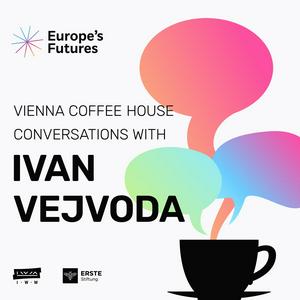 Download for free in the App Store
radio.net
Sleep timer
Save favourites
Vienna Coffee House Conversations with Ivan Vejvoda
Institute for Human Sciences, Ivan Vejvoda
Latest episode
51 episodes

Episode 50: Post-Enlightenment Hungary with Péter Krekó
06/08/2025 | 41 mins.
Discussion Highlights:Post-Enlightenment era: Shift from fact-driven, technocratic politics to emotional, myth-based narratives; “new romanticism” as politics serving emotional needs.Tribal politics: Politics as moralized conflict; unconditional leader loyalty; democratic norms waived as “necessary” in existential struggle; disinformation and conspiracy theories as tools of tribal mobilization.Free speech charade: How authoritarian leaders and tech moguls exploit “free speech” rhetoric to delegitimise content moderation; selective censorship in global social media platforms.Hungary’s 2026 elections: Fidesz’s entrenched media control; opposition lead in polls amid corruption scandals and economic woes; risk of electoral-system tweaks if the gap widens.Ukraine-fear campaign: Government-backed narratives linking EU/NATO enlargement to economic decline; pervasive anti-Ukrainian sentiment despite public sympathy and solidarity efforts.Migration narratives: Contradictions in anti-migration rhetoric versus labour needs in German-owned Hungarian automotive plants; persistence of sovereignty-based appeals.Budapest Pride mobilisation: Over 200,000 participants signalling civil-society resilience; government attempts to cast Pride as a threat to “family values.”Europe’s response: Internal EU disruptors like Hungary; need for flexible, united EU measures (e.g., qualified-majority votes); potential leverage via conditionality on EU funds.About Péter KrekóPéter Krekó (born 20 March 1980 in Budapest) is a Hungarian social psychologist and political scientist. He is Associate Professor (with habilitation) at the Department of Social Psychology and the Disinformation and Artificial Intelligence Research Lab at Eötvös Loránd University (ELTE) in Budapest Mores Horizon. Since 2011, he has directed the Budapest-based Political Capital Institute and serves as consortium leader for the Hungarian Digital Media Observatory (HDMO-Lakmusz), part of the European Digital Media Observatory (EDMO) network Democracy Institute. His research addresses disinformation, conspiracy theories, political populism, extremism, Russian influence, and political tribalism. He has held fellowships as Visiting Fellow, Engaging Central Europe at the German Marshall Fund of the United States; Europe’s Futures Visiting Researcher at the Institute for Human Sciences, Vienna; PopBack Fellow at the University of Cambridge; non-resident Associate Fellow at Johns Hopkins SAIS Bologna; and Fulbright Visiting Professor at Indiana University (2016–2017) European Forum Alpbach. He is author of The Hungarian Far Right (Ibidem-Verlag, 2017, with Attila Juhász) and Mass Paranoia: The Social Psychology of Conspiracy Theories and False News (Athenaeum Kiadó, 2018) Read more on Péterat the Political Capital Instituteat the ELTE Disinformation & AI Research Labat the German Marshall FundFind him on X.com @PeterKreko Ivan Vejvoda is Head of the Europe's Futures program at the Institute for Human Sciences (IWM Vienna) implemented in partnership with ERSTE Foundation. The program is dedicated to the cultivation of knowledge and the generation of ideas addressing pivotal challenges confronting Europe and the European Union: nexus of borders and migration, deterioration in rule of law and democracy and European Union’s enlargement prospects.The Institute for Human Sciences is an institute of advanced studies in the humanities and social sciences. Founded as a place of encounter in 1982 by a young Polish philosopher, Krzysztof Michalski, and two German colleagues in neutral Austria, its initial mission was to create a meeting place for dissenting thinkers of Eastern Europe and prominent scholars from the West.Since then it has promoted intellectual exchange across disciplines, between academia and society, and among regions that now embrace the Global South and North. The IWM is an independent and non-partisan institution, and proudly so. All of our fellows, visiting and permanent, pursue their own research in an environment designed to enrich their work and to render it more accessible within and beyond academia.For further information about the Institute:https://www.iwm.at/
Episode 49: Defending the European Miracle: Borders, Asylum, and Security with Gerald Knaus
16/07/2025 | 47 mins.
Discussion Highlights:Building Schengen: Origins in the Coal and Steel Community (1952), the Treaty of Rome (1958), and the Schengen Agreement (1995), creating 16,000 km of invisible internal borders through a single market and shared enforcement mechanisms.Asylum strains: Germany and Austria have received over half of all EU asylum seekers during the Syrian and Ukrainian crises, revealing the breakdown of the Dublin allocation rules under free movement.Humanitarian crisis at the external border: Approximately 30,000 people have died attempting Mediterranean crossings in the last decade, underscoring the need to address smuggler-driven journeys.EU–Turkey precedent: The 2016 agreement cut irregular crossings from about 1 million to 30,000 and deaths from 1,100 to 80 within a year, demonstrating the efficacy of safe-third-country arrangements.Safe-third-country proposals: Knaus calls for similar pacts with West African states to deter Canary Islands crossings, coupled with procedural guarantees under international law.Regular migration frameworks: Expansion of refugee resettlement and labour migration via planned pathways—in the style of Canada or Australia—to meet workforce needs and reduce reliance on smugglers.European deterrence: With U.S. reliability in doubt, Europe must bolster its own deterrent capacity—including possibilities such as a German nuclear option—and integrate frontline democracies.EU enlargement: A clear, merit-based accession roadmap for Ukraine, Moldova, and Western Balkan candidates is essential to reinforce democracy, security, and prosperity.Engaging the next generation: Francesca Knaus highlights a gap in how Europe’s peace “miracle,” the lived threat of modern warfare, and climate urgency are communicated to younger Europeans.About Gerald KnausGerald Knaus is an Austrian social scientist and co-founder and chairman of the European Stability Initiative (ESI), which he helped establish in Sarajevo in June 1999. An alumni of the University of Oxford, the Institut d’Études Européennes in Brussels, and the Johns Hopkins University Bologna Center, Knaus taught macroeconomics at the State University of Chernivtsi in Ukraine, worked for NGOs and international organisations in Bulgaria and Bosnia-Herzegovina and directed the Lessons Learned and Analysis Unit of the EU pillar of UNMIK in Kosovo. He is a founding member of the European Council on Foreign Relations and served as an Associate Fellow at the Carr Center for Human Rights Policy at Harvard Kennedy School. Knaus was a Mercator-IPC Senior Fellow in Istanbul and a Europe's Futures Fellow at the IWM here in Vienna.Knaus co-initiated and co-negotiated the 2016 EU–Turkey migration statement, authored Can Intervention Work? (2011) and Welche Grenzen brauchen wir? and received the Karl Carstens Award in 2021. He lives in Berlin. Further Reading & ResourcesEuropean Stability Initiative profile: https://www.esiweb.org/esi-staff/gerald-knausRumeli Observer blog: https://www.esiweb.org/rumeliobserverPiper Verlag author page: https://www.piper.de/autoren/gerald-knaus-6417Twitter: https://twitter.com/rumeliobserverGerald and Francesca Knaus's new book, Welches Europa Bracuhen Wir? is available to pre-order from amazon.de and will be published at the end of August 2025. Ivan Vejvoda is Head of the Europe's Futures program at the Institute for Human Sciences (IWM Vienna) implemented in partnership with ERSTE Foundation. The program is dedicated to the cultivation of knowledge and the generation of ideas addressing pivotal challenges confronting Europe and the European Union: nexus of borders and migration, deterioration in rule of law and democracy and European Union’s enlargement prospects.The Institute for Human Sciences is an institute of advanced studies in the humanities and social sciences. Founded as a place of encounter in 1982 by a young Polish philosopher, Krzysztof Michalski, and two German colleagues in neutral Austria, its initial mission was to create a meeting place for dissenting thinkers of Eastern Europe and prominent scholars from the West.Since then it has promoted intellectual exchange across disciplines, between academia and society, and among regions that now embrace the Global South and North. The IWM is an independent and non-partisan institution, and proudly so. All of our fellows, visiting and permanent, pursue their own research in an environment designed to enrich their work and to render it more accessible within and beyond academia.For further information about the Institute:https://www.iwm.at/
Episode 48: Europe's Demographic Reckoning with Tim Judah
25/06/2025 | 38 mins.
Discussion Highlights:Demographic megatrends: Population is shrinking and aging across Central, Eastern and Southeastern Europe; fertility rates remain low and often below replacement levels. Some Western nations rely on immigration to maintain workforce levels.Economic and fiscal impact: Falling birth rates and working-age populations threaten tax bases needed to sustain pensions, healthcare, and living standards.Policy responses: Hungary’s family incentives briefly boosted fertility before rates fell again to ~1.38. Scandinavian social policies helped but haven’t reached replacement fertility. Immigration remains essential.Healthy life expectancy: Lifespans have increased significantly but healthy years have not kept pace. Promoting healthy ageing is critical for extending working lives.Political narratives: Demographic anxieties underpin nationalist rhetoric in Hungary and Bulgaria. In Western Europe, aging populations amplify both immigrant integration debates and depopulation concerns (e.g., rural Spain).Ukraine and modern warfare: Judah shares frontline insights: drones, electronic warfare countermeasures, fiber-optic-controlled UAVs, land drones for logistics and medevac, and upcoming AI-swarm tech reshape battlefield dynamics.Ukrainian resilience: On-the-ground mindset is “phlegmatic pragmatism”—facing war fatigue, debate over ceasefire, but determination to adapt.Europe’s future: Post-Brexit Britain re-engages with EU; EU enlargement may take a variable-geometry approach. Western Balkans and Ukraine may enter through piecemeal integration rather than simultaneous accession.Guest BioTim JudahA British journalist and author Tim Judah is a Special Correspondent for The Economist and a longtime commentator on Eastern Europe. Educated at the LSE, and Fletcher School at Tufts University, he has reported from global hotspots across the Balkans, Ukraine, Africa, and Asia. His major works include The Serbs: History, Myth and the Destruction of Yugoslavia, Kosovo: War & Revenge, and In Wartime: Stories from Ukraine. He has been shortlisted for the 2022 Bayeux Calvados-Normandy War Correspondents Prize. Judah co-founded the concept of the “Yugosphere” during a fellowship at LSE in 2009, serves on the boards of BIRN and the Kosovar Stability Initiative, and was a fellow of IWM and ERSTE Foundation's Europe’s Futures programme in 2018/19 Online ProfilesFind Tim on Bluesky @timjudah.bsky.socialTwitter/X: @timjudah1More on Life and Fate is @ the IWM's site here Ivan Vejvoda is Head of the Europe's Futures program at the Institute for Human Sciences (IWM Vienna) implemented in partnership with ERSTE Foundation. The program is dedicated to the cultivation of knowledge and the generation of ideas addressing pivotal challenges confronting Europe and the European Union: nexus of borders and migration, deterioration in rule of law and democracy and European Union’s enlargement prospects.The Institute for Human Sciences is an institute of advanced studies in the humanities and social sciences. Founded as a place of encounter in 1982 by a young Polish philosopher, Krzysztof Michalski, and two German colleagues in neutral Austria, its initial mission was to create a meeting place for dissenting thinkers of Eastern Europe and prominent scholars from the West.Since then it has promoted intellectual exchange across disciplines, between academia and society, and among regions that now embrace the Global South and North. The IWM is an independent and non-partisan institution, and proudly so. All of our fellows, visiting and permanent, pursue their own research in an environment designed to enrich their work and to render it more accessible within and beyond academia.For further information about the Institute:https://www.iwm.at/
Episode 47: Demography, Europe, and the Western Balkans’ Future with Alida Vračić
04/06/2025 | 43 mins.
Discussion Highlights:Global demographic megatrends include aging populations, declining fertility rates, and diverging regional population dynamics.Migration patterns involve both forced displacement from conflict zones such as Ukraine and Palestine and labor migration from the Western Balkans, with climate-related movement remaining unpredictable.Depopulation in the Western Balkans is driven by inaccurate census data, economic factors that incentivize emigration, steadily declining fertility rates, and cultural influences on family size.Many countries in the region face labor shortages as plumbers, electricians, and healthcare workers emigrate, prompting policy responses to attract migrant labor, cover an estimated €600 million integration cost in Croatia, and implement language instruction and integration programs.Populist political discourse often exploits public fears about migration, while political leaders frequently show reluctance to acknowledge domestic labor shortages and plan beyond short electoral cycles.Europe’s geopolitical context is shaped by U.S.-China competition, the continuation of the war in Ukraine, and uneven or delayed European responses to crises, such as the conflict in Gaza.The current EU enlargement process is critiqued as overly merit-based, and many argue for the package accession of all Western Balkan states, drawing lessons from Croatia’s recent membership and anticipating a changing nature of the future European Union.Bosnia and Herzegovina’s post-Dayton governance system succeeded in halting widespread violence but remains hampered by persistent power-sharing gridlock, redundant international structures such as the Office of the High Representative, and ongoing challenges in constitutional and education system reforms.Thirty years after Dayton, instances of inter-ethnic violence have remained low since 1995, but schooling and commemorative practices remain fragmented, and domestic dialogue on wartime accountability has stalled.EU integration offers the potential to replace international oversight with European Union frameworks while addressing governance deficits, pervasive corruption, and the need for electoral reforms.About Alida VračićAlida Vračić is a political scientist and lawyer. She co-founded and serves as executive director of Populari, a Sarajevo-based think tank specializing in post-conflict state-building, democratization, good governance, and migration in the Western Balkans. Vračić holds a law degree from the University of Sarajevo and Karl-Franzens-Universität Graz, where she specialized in criminal procedure law, an M.Sc. in International Public Policy from University College London, and completed Executive Education for non-government executives at the Kennedy School of Government, Harvard University. Before founding Populari in 2007, she worked for the State Court Prosecutor’s team in Bosnia, at the Human Rights Commission of the Constitutional Court of Bosnia and Herzegovina, and led Balkan-wide projects at the Human Rights Centre, University of Sarajevo, and the Spanish Institutional Programme. Vračić has been affiliated with several academic and policy institutions, including as a former Europe's Futures fellow at IWM, the European Council on Foreign Relations as a Visiting Fellow, and the German Marshall Fund as a Marshall Memorial Fellow. Further Reading & ResourcesPopulari Think Tank: https://populari.org/en populari.orgIWM Europe’s Futures Program (Alida Vračić profile): https://www.iwm.at/europes-futures/fellow/alida-vracic iwm.atECFR Profile (Alida Vračić): https://ecfr.eu/profile/alida-vracic ecfr.eu Ivan Vejvoda is Head of the Europe's Futures program at the Institute for Human Sciences (IWM Vienna) implemented in partnership with ERSTE Foundation. The program is dedicated to the cultivation of knowledge and the generation of ideas addressing pivotal challenges confronting Europe and the European Union: nexus of borders and migration, deterioration in rule of law and democracy and European Union’s enlargement prospects.The Institute for Human Sciences is an institute of advanced studies in the humanities and social sciences. Founded as a place of encounter in 1982 by a young Polish philosopher, Krzysztof Michalski, and two German colleagues in neutral Austria, its initial mission was to create a meeting place for dissenting thinkers of Eastern Europe and prominent scholars from the West.Since then it has promoted intellectual exchange across disciplines, between academia and society, and among regions that now embrace the Global South and North. The IWM is an independent and non-partisan institution, and proudly so. All of our fellows, visiting and permanent, pursue their own research in an environment designed to enrich their work and to render it more accessible within and beyond academia.For further information about the Institute:https://www.iwm.at/
Episode 46: Youth, The Diaspora, and Bosnia’s Political Future with Teresa Reiter
22/04/2025 | 39 mins.
Discussion Highlights:Idemo!'s Mission: Building bridges between Austria and the Western Balkans.Democratic Challenges: Addressing political instability and ethnic divisions in the region.Diaspora Engagement: Mobilizing communities to support democratic initiatives."Speak Up!" Program: Empowering young leaders to collaborate across ethnic lines.EU Integration: Navigating the path toward European Union membership.Grassroots Activism: The role of civil society in promoting democratic values.Transnational Cooperation: Leveraging networks to foster regional stability.Inclusive Civic Spaces: Creating platforms for dialogue and collaboration.About Teresa ReiterTeresa Reiter is a journalist and policy professional based in Vienna. She is a co-founder of Idemo!, an organization promoting civic engagement and cross-ethnic cooperation among Austria's Western Balkans diaspora. Most recently, Reiter worked as a political specialist at the U.S. Embassy in Vienna. Reiter previously led communications at the European Forum Alpbach, co-hosted The Defence Café podcast, and served as a foreign policy advisor for NEOS in the Austrian Parliament. She was a candidate in the 2019 European Parliament elections. Reiter was a 2020/21 Europe’s Futures Fellow of the Institute for Human Sciences (IWM) and ERSTE Foundation.Learn more about Idemo! at idemo.jetzt.Further Reading & ResourcesIdemo!'s Initiatives: idemo.jetztFacebook: IDEMOX: @idemomediaLinkedIn: Idemo Social Media Ivan Vejvoda is Head of the Europe's Futures program at the Institute for Human Sciences (IWM Vienna) implemented in partnership with ERSTE Foundation. The program is dedicated to the cultivation of knowledge and the generation of ideas addressing pivotal challenges confronting Europe and the European Union: nexus of borders and migration, deterioration in rule of law and democracy and European Union’s enlargement prospects.The Institute for Human Sciences is an institute of advanced studies in the humanities and social sciences. Founded as a place of encounter in 1982 by a young Polish philosopher, Krzysztof Michalski, and two German colleagues in neutral Austria, its initial mission was to create a meeting place for dissenting thinkers of Eastern Europe and prominent scholars from the West.Since then it has promoted intellectual exchange across disciplines, between academia and society, and among regions that now embrace the Global South and North. The IWM is an independent and non-partisan institution, and proudly so. All of our fellows, visiting and permanent, pursue their own research in an environment designed to enrich their work and to render it more accessible within and beyond academia.For further information about the Institute:https://www.iwm.at/
More Education podcasts
 How Do They Afford That?Business, Education, Tutorials, Investing
 6 Minute EnglishEducation, Language Learning
 Begin Again with Davina McCallEducation, Health & Wellness, Society & Culture, Mental Health, Self-Improvement
 Aussie EnglishEducation, Courses, Language Learning
 The Rich Roll PodcastEducation, Health & Wellness, Society & Culture, Self-Improvement
 The Divorce Course PodcastEducation, Tutorials
 The Daily StoicBusiness, Education, Society & Culture, Self-Improvement
 anything goes with emma chamberlainEducation, Society & Culture, Personal Journals, Self-Improvement
 SOLVED with Mark MansonEducation, Self-Improvement
 The Mel Robbins PodcastEducation, Health & Wellness, Society & Culture, Mental Health, Relationships, Self-Improvement
Trending Education podcasts
 Stoicism MeditationEducation
 Speak English with ESLPod.com - Learn English FastEducation, Courses, Language Learning
 Conversations with TylerEducation, Society & Culture
 Your Safe SpaceEducation, Health & Wellness, Society & Culture, Mental Health, Relationships, Self-Improvement
 The Tamsen ShowEducation, Health & Wellness, Society & Culture, Self-Improvement
 SBS Learn EnglishEducation, Language Learning
 This Naked Mind PodcastEducation, Self-Improvement
 The Calm Christmas Podcast with Beth KemptonEducation, Health & Wellness, Mental Health, Self-Improvement
 Learning English VocabularyEducation, Language Learning
 Built ResilientBusiness, Education, Health & Wellness, Careers, Mental Health, Self-Improvement
 The Let Them TheoryEducation, Self-Improvement
 Pulling The Thread with Elise LoehnenEducation, Religion & Spirituality, Self-Improvement
 RealLife English: Learn and Speak Confident, Natural EnglishEducation, Language Learning
 InnerFrenchEducation, Language Learning
 10:10 Be WellEducation, Health & Wellness, Mental Health
 The Other Side NDE (Near Death Experiences)Education, Religion & Spirituality
 Comfort AffirmationsEducation, Self-Improvement
 Finding Mastery with Dr. Michael GervaisEducation, Health & Wellness, Mental Health, Self-Improvement
 Speak UpEducation
 Learning Easy EnglishEducation, Language Learning
 Law of Attraction Changed My LifeEducation, Kids & Family, Religion & Spirituality, Parenting, Self-Improvement, Spirituality
 BPLUS بیپلاس پادکست فارسی خلاصه کتابEducation, Kids & Family, Self-Improvement
 Stories in Slow Italian - Learn Italian through storiesEducation, Language Learning
About Vienna Coffee House Conversations with Ivan Vejvoda
At this pivotal moment for Europe and the liberal democratic order, this podcast series from the Institute For Human Sciences explores the undercurrents, tensions and dilemmas that the continent is facing and will will face in the near term. In conversation with leading figures in the field, civil society pioneer Ivan Vejvoda is your guide to the diverse and complex preoccupations of an uncertain time.
Podcast websiteListen to Vienna Coffee House Conversations with Ivan Vejvoda, How Do They Afford That? and many other podcasts from around the world with the radio.net app
Get the free radio.net app
- Stations and podcasts to bookmark
- Stream via Wi-Fi or Bluetooth
- Supports Carplay & Android Auto
- Many other app features
Get the free radio.net app
- Stations and podcasts to bookmark
- Stream via Wi-Fi or Bluetooth
- Supports Carplay & Android Auto
- Many other app features

Vienna Coffee House Conversations with Ivan Vejvoda
Scan code,
download the app,
start listening.
download the app,
start listening.
 Australia