
Listen to this podcast in the app for free: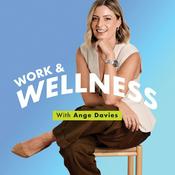 Download for free in the App Store
radio.net
Sleep timer
Save favourites
99 episodes
EP 98: What Is Your Digital Diet Doing to Your Brain? with Jocelyn Brewer
26/10/2026 | 53 mins.We talk a lot about what we eat, how we move and how we sleep. We talk far less about what we consume digitally.
In this episode I sit down with Jocelyn Brewer, Sydney-based psychologist and founder of Digital Nutrition, to explore what our digital diet is really doing to our brains. I had just come back from hiking the Camino with almost no access to technology, so this conversation was very much on my mind.
Jocelyn has spent over a decade translating complex research into practical, human-friendly language. We get into why screen time is far more nuanced than “good” or “bad”, what technology is doing to loneliness and friendship, how short form content trains our attention, and why we need to think carefully about outsourcing our thinking to AI. We also cover simple, realistic ways to design a digital diet that works for your life, without going cold turkey.
KEY TOPICS
What digital nutrition is and why the “virtual vitamins” analogy keeps getting stronger
Why screen time is more complicated than the hours on your phone
What technology is doing to loneliness, friendship and our tolerance for human discomfort
Why short form content trains our brains for short bursts and how to rebuild attention
How AI is changing the way we think, work and relate to each other
What leaders can do to reduce digital overwhelm in their teams
Why digital detoxes often fail and what a healthy day to day digital diet looks like
The one change Jocelyn would encourage everyone to make tomorrow
ABOUT JOCELYN
Jocelyn Brewer is a Gadigal Sydney-based psychologist and the founder of Digital Nutrition. With a master’s in cyber psychology, she is an expert on how people live, love and learn in a hyper-connected, AI-immersed world. Known for her practical, approachable style, Jocelyn translates complex research into clear language and cuts through the anxiety around screen time and tech habits.
CONNECT WITH JOCELYN
Website: https://jocelynbrewer.com/
KEYWORDS
digital wellbeing, screen time, attention, AI, loneliness, social media, sleep, burnout, leadership, mental healthEP 97: Why You've Stopped Trusting Yourself (And How to Change That)
19/10/2026 | 24 mins.We have more information, more advice and more technology available to us than ever before. But are we losing the ability to trust our own judgment?
In this episode, I share something deeply personal — how grief quietly disconnected me from my own intuition for over a year without me even realising it. It wasn’t until I spent hundreds of thousands of steps walking the Via Francigena in Italy with almost no external input that I recognised what had been missing.
This episode is about what intuition actually is, why we are outsourcing our thinking more than we realise, what constant input is doing to our judgment, and six practical ways to reconnect with the most valuable voice in the room — your own.
Key Topics
What intuition actually is and why it is not woo-woo. It is neuroscience
How grief, stress and overload quietly disconnect us from our own judgment
Why outsourcing our thinking to AI and external sources is eroding a critical skill
The default mode network and why your brain needs space to wander
Six ways to reconnect with and strengthen your intuition and judgment
How to distinguish true gut feel from fear, bias and old experiences
Keywords: intuition, self trust, decision making, leadership, grief, AI, judgment, self awareness, mental clarity, burnoutEP96: Who Are You When Nobody Is Watching? The power of going offline.
12/10/2026 | 21 mins.I just walked over 600,000 steps across Italy and one of the most powerful things I chose to do along the way was to go offline.
In this episode, I share what that space brought up because within minutes of coming back online after one of the most extraordinary experiences of my life, I immediately felt behind. Nothing had changed. I had just checked social media.
This episode is about what being offline reveals — about our identity, our attention, our relationship with comparison, and the question I kept coming back to on the road: how much of what we do are we doing because we truly want to, and how much are we doing because we want to be seen doing it?
Key Topics
What going offline for four weeks actually revealed about identity and wellbeing
Why comparison hit the moment social media was back and the reframe that helped
How fragmented attention is quietly costing us more than we realise
The 2025 study that found blocking mobile internet for two weeks improved attention, wellbeing and mental health
Who are you when you are not performing for an audience
How to be more intentional about what you consume and what you share
Keywordssocial media, identity, wellbeing, comparison, attention, digital boundaries, offline, mindfulness, authenticity, burnoutEP 95: Your Team Is Watching - How Leaders Influence More Than They Realise with Anton Guinea
05/10/2026 | 47 mins.Your team is watching you. Every micro decision you make, every emotion you walk in with, every conversation you avoid — they notice all of it.
In this episode, I sit down with Anton Guinea, leadership coach and host of the Find Your Influence podcast, to explore how leaders influence their teams in ways that go far beyond what they say in meetings. We get into emotional contagion, the difference between influence and manipulation, what 1600 coaching conversations revealed people need most from their leaders, and how to lead with confidence when everything feels like it is falling apart.
KEY TOPICS
Why your emotional state is contagious and how it shapes your entire team's day
The difference between influence, impact and inspiration and why the best leaders are chasing the last two
What 1600 coaching sessions revealed: the three things people need most from their leaders
The micro decisions leaders make that set the standard without saying a word
How to have difficult conversations without the feedback sandwich
Radical Candor: care personally before you challenge directly
ABOUT ANTON
Anton Guinea is a leadership coach, researcher, speaker and author based in Australia. He is the host of the Find Your Influence podcast and has conducted over 1600 one-on-one coaching and leadership training sessions. Anton works with leaders and organisations across safety, culture and performance, with a particular focus on the human side of leadership — how leaders show up, how they influence, and how they build environments where people feel cared for, valued and supported.
CONNECT WITH ANTON
https://antonguinea.com.au/EP 94: Stop Having All the Answers: What Human Leadership Actually Looks Like with May Samali
28/09/2026 | 1h 3 mins.In this episode I sit down with May Samali, founder of Human Leadership Lab and Fellow of the Institute of Coaching at Harvard Medical School, to explore the human capabilities that no algorithm will ever replicate. Because the skills that got us promoted, perfectionism, having all the answers, pushing through, are often the very same skills that now hold us back as leaders.
We get into what it really means to lead with self-awareness, why psychological safety has been completely misunderstood, how to lead through uncertainty, and what sustainable high performance actually looks like when you stop performing and start being human.
KEY TOPICS
What human leadership actually means and why every person is a leader regardless of title
The skills that get us promoted that become liabilities when we lead others
Why psychological safety does not mean making everyone comfortable and what it actually requires
How to lead through uncertainty without pretending you have answers you don't have
The ABC framework of human leadership: adaptability, bravery and compassion
Why wellness is a performance strategy, not a nice to have
What AI will never be able to do and the human skills it is quietly eroding
What May now believes about leadership that she didn't believe ten years ago
ABOUT MAY
May Samali is the founder and CEO of Human Leadership Lab, a Fellow of the Institute of Coaching at Harvard Medical School, and an executive coach, facilitator and researcher. Her career has spanned corporate law, venture capital, entrepreneurship and leadership development. May works with leaders and organisations to build the human capabilities needed to lead and thrive in a complex, rapidly changing world, with a particular focus on sustainable high performance and what it means to lead with self-awareness, bravery and compassion as AI continues to reshape how we work.
CONNECT WITH MAY
LinkedIn: May Samali
Website: humanleadershiplab.com
More Education podcasts

Trending Education podcasts











About Work and Wellness
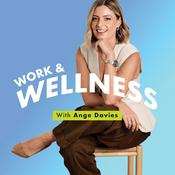
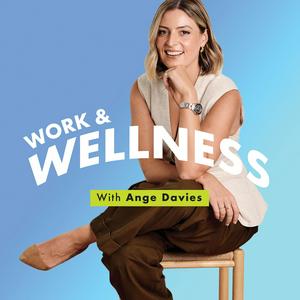
Welcome to Work and Wellness, the podcast for anyone who wants to feel great and perform at their best, without burning out. I’m Ange Davies, a wellbeing speaker and ex-corporate leader, here to help you create a life that feels as good as it looks. Each week, I’m joined by guests who bring real stories and practical insights on what it means to thrive both at work and beyond. Ready to live well and succeed on your own terms? Hit follow and let’s get into it!
Podcast websiteListen to Work and Wellness, 6 Minute English and many other podcasts from around the world with the radio.net app
Get the free radio.net app
- Stations and podcasts to bookmark
- Stream via Wi-Fi or Bluetooth
- Supports Carplay & Android Auto
- Many other app features
Get the free radio.net app
- Stations and podcasts to bookmark
- Stream via Wi-Fi or Bluetooth
- Supports Carplay & Android Auto
- Many other app features
Work and Wellness
Scan code,
download the app,
start listening.
download the app,
start listening.
 Australia