
Listen to this podcast in the app for free: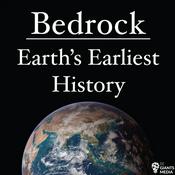 Download for free in the App Store
radio.net
Sleep timer
Save favourites
83 episodes
Hometown Geology: The Big Island of Hawai'i
23/10/2026 | 58 mins.I'm on fall break right now! (That's why the first minute sounds funky) While I'm off, enjoy an episode of Hometown Geology from our Patreon, on the house! If you like what you hear, check out Bedrock on Patreon for more- you can listen, vote, or even suggest your own topics!
This episode covers two main stories: how the Hawaiian Island chain formed, then a quick tour through seven(!) volcanoes on and around the Big Island. Enjoy!57: New Horizons
08/10/2026 | 28 mins.Today, we visit the three major locations for Season 3. A three-ring circus of rocks, if you will. One area is a remote desert full of ancient fossils. One area is a forested mountainland with evidence for global catastrophes. One area is our most populated region yet, full of iron mines. Dylan has visited two of these three locations, and hints at a few personal field stories that will set Season 3 apart.
Check out bonus episodes on Patreon!
One-off donations on Paypal56: The Council of Time (Season 3 Premiere)
24/09/2026 | 41 mins.Welcome to Season 3 of Bedrock!
This season will cover the Paleoarchean Era, from 3.6 to 3.2 billion years ago, or March to April on the "Earth Calendar". Get ready for more fossils and strange new rocks! In this episode, we'll see why Season 3 begins and ends when it does: an extinction? an impact? or something more random?
On the way, we'll visit geology's great "Council of Time", meet a bishop who was a founder of modern geology, and make a cake on the edge of the Grand Canyon.
Want bonus content? Check out our Patreon!
One-off donations on PaypalMail Time! Dylan answers your questions
27/08/2026 | 32 mins.While we're on a break between seasons, and while I'm starting my new job, I figured this would be a nice palate cleanser. There's no script, just answers like I'd actually give in person.
If YOU want your question to be on a future Mail Time (and listen to bonus episodes), join our Patreon here!
Today, I talk about the day I fell in love with "fossil pond scum", some of my favorite field locations, and my favorite time period in Earth history. Enjoy!Season 2 Recap: The Eoarchean
19/08/2026 | 54 mins.Get caught up on Season 2!
The Eoarchean Era covers 4 to 3.6 billion years ago, Feb 15 to March 19 on the Earth Calendar. Highlights include: the oldest rock on Earth (24), a dimmer Sun (28), the Man in the Moon (35), the oldest ash (46) the oldest uncontested(-ish) evidence for life (50), and the oldest rocks in the USA (55).
While you wait for Season 3, check out patreon.com/bedrockpodcast for episodes of Hometown Geology, or bedrockpodcast.com for helpful scripts and images! Thanks for all the support!
More Earth Sciences podcasts
Trending Earth Sciences podcasts
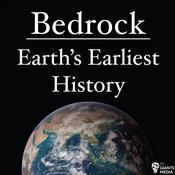
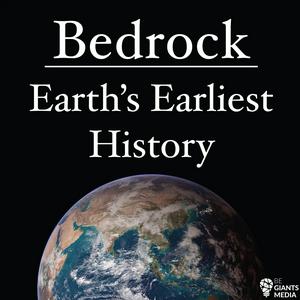
About Bedrock: Earth's Earliest History
This podcast starts at the beginning of Earth's prehistory and works forward through time. Bedrock will explore the first 90% of Earth’s past, a time known as the Precambrian Era. Before humans, before dinosaurs… there was the Precambrian.
The Earth was an incredibly alien world, but not a dead one.
Along the way, you will build a mental toolkit to see the world like a geologist. You will never look at a mountain, the moon, or pond scum in quite the same way again.
Welcome to Bedrock.
For transcripts, visuals, and references, check out https://www.bedrockpodcast.com
Podcast websiteListen to Bedrock: Earth's Earliest History, Drilled and many other podcasts from around the world with the radio.net app
Get the free radio.net app
- Stations and podcasts to bookmark
- Stream via Wi-Fi or Bluetooth
- Supports Carplay & Android Auto
- Many other app features
Get the free radio.net app
- Stations and podcasts to bookmark
- Stream via Wi-Fi or Bluetooth
- Supports Carplay & Android Auto
- Many other app features
Bedrock: Earth's Earliest History
Scan code,
download the app,
start listening.
download the app,
start listening.
 Australia