

Listen to this podcast in the app for free: Download for free in the App Store
radio.net
Sleep timer
Save favourites
67 episodes

E69 | Auckland Unsolved | Who Killed Katrina Jefferies?
12/10/2026 | 37 mins.At about 7.30pm on Sunday 10 July 2005, 22-year-old Katrina Jefferies left the Mt Roskill home she shared with her mother, her younger brother and her 20-month-old son. On the morning of Tuesday 12 July she was found partly undressed on a bank beside Waikowhai Road, wrapped in a red tarpaulin, a yellow raincoat and black rubbish bags, about a kilometre from home. She had been killed somewhere else. The police have never said how she died. They have traced everything found with her to one Mt Roskill address, and believe more than one person knows what happened. As of October 2026, nobody has been charged.
IF YOU KNOW SOMETHING
Police want to hear from anyone who saw Katrina between the evening of Sunday 10 July and Tuesday 12 July 2005, or who knows where she went and who she was with. They also want to hear from anyone who was in Waikowhai Reserve or around Hillsborough Road in the early hours of Tuesday 12 July 2005. And they are asking about the red tarpaulin, the yellow Stormwear raincoat, the black rubbish bags, a framed river and mountain print signed "Haver", and a piece of marine plywood found with her, and about the clothes she left home in, which have never been found: blue tracksuit pants, a black duffle coat, burgundy slip-on shoes (size 10), a peaked cap and a black Walkman cassette player.
Call 0800 COLD CASE (0800 2653 2273), use the cold case contact form at police.govt.nz, or call Police on 105. Anonymous information: Crime Stoppers 0800 555 111 or crimestoppers-nz.org.
A NOTE ON SOURCING
Nobody has ever been charged with Katrina's death, and no court has made any finding against any person. In November 2011 Coroner Gordon Matenga found that she died at the hands of another and suppressed the cause of death, which has never been published. We did not obtain the full text of the finding and rely on contemporaneous reporting of it. The man charged in 2014 after Operation Lyra interviews was convicted of offending against other women; police have said those charges were unrelated to Katrina, and nothing in the public record connects him to her death. The 2016 claim reported by One News is untested. The investigation remains open.
SOURCES
NZ Police, Cold Case: Katrina Jefferies, 2005: police.govt.nz/stolenwanted/coldcase/2019/katrina-jefferies-2005
NZ Police releases, 13, 14 and 21 Jul 2005, 26 Aug 2005, 25 Jun 2007 and 23 Jun 2019
Kirsty Wynn, "Haunted by the death of Katrina", Herald on Sunday, 31 Jul 2005
Martin Johnston, NZ Herald, 26 Aug 2005
NZPA, "Murdered woman died 'highly unusual death'", 26 Jul 2005, and "Mother thinks of her murdered daughter every day", 26 Jun 2007, via nzherald.co.nz
NZ Herald, "Jefferies family now have body", 19 Jul 2005; "New murder information 'contradicts earlier statement'", 3 Jul 2007; "Woman claims lead on 2005 cold case", 20 Apr 2016
Elizabeth Binning and Louisa Cleave, "Unsolved: the murder mysteries of 2005", NZ Herald, 2 Jan 2006
"More false confessions in cold case", NZPA via ODT, 21 Nov 2011
Jared Savage, NZ Herald, 24 May 2016 and 23 Jun 2019
RNZ and 1News, 23 Jun 2019
High Court sentencing in the Marie Jamieson case, [2010] NZHC 540
SUPPORT
This episode discusses the killing of a young mother. If it raises anything for you: 1737 (call or text), Victim Support 0800 842 846, Alcohol Drug Helpline 0800 787 797.
While some dramatic license is taken during the retelling of these stories, but you can be sure that these true crime stories are all based 100% on real events and facts.
If you would like to suggest a case, you can message us via our website at www.brevityplus.com
Subscribers get ad free listening to The Veil and all of our podcasts. Please consider subscribing to support our work.
This podcast is researched, and written by the Brevity Studios team using AI tools, and is narrated in its entirety by - Ryan Wolf.
Hosted on Acast. See acast.com/privacy for more information.E68 | Auckland Unsolved | The Murder of Claire Hills
11/10/2026 | 34 mins.Before dawn on 28 April 1998, Claire "Lisa" Hills, a 30-year-old McDonald's shift manager, left her Herne Bay flat for a 3.30am start at Auckland Airport and never arrived. About three hours later a woman walking on Māngere Mountain watched a man set a car alight beside the sports clubrooms, then came face to face with him as he ran. Lisa was in the back seat, alive but probably unconscious. A DNA profile believed to be her killer's has excluded the police's original prime suspect and around 300 other men, and it has never matched anyone on the New Zealand or Australian databanks. Police say all they need is a name.
IF YOU KNOW SOMETHING
Call Operation Hills on 0800 OP HILLS (0800 674 4557) or Police on 105. To stay anonymous, call Crime Stoppers on 0800 555 111. Police have asked about: anyone who saw a black Mazda Familia hatchback in South Auckland between 3am and 6am on 28 April 1998; the steering wheel lock missing from her car; where the killer got the petrol, which police believe he brought in a container; a slim man in dark clothing, possibly in a hooded sweatshirt, seen running from Māngere Domain towards the motorway and Māngere Bridge shops; and anyone with concerns about a person's behaviour after April 1998. Police say they can assure confidentiality, and that simply offering a name could be the key.
A NOTE ON SOURCING
No one has ever been charged in connection with Lisa's death, and no court has made any finding against any person. The coroner found that she died of smoke inhalation and carbon monoxide poisoning after being left in a car set on fire by a person or persons unknown. The men described in this episode as suspects, including the man the first inquiry suspected, are not named. Police have said publicly that DNA excluded both her estranged husband and a convicted South Auckland rapist who matches that description. The police reconstruction of the abduction at traffic lights is their best reading, not a proven sequence. Witness accounts come from police statements and the witness's 2018 interview with the Herald on Sunday. Published times for the fire vary between about 5.25am and 5.45am.
SOURCES
Anna Leask, "Claire Hills murder cold-case: witness tells of coming face-to-face with killer", Herald on Sunday, 22 Apr 2018
Anna Leask, "Cold case: police look to search overseas in hunt for Claire Hills' killer", Herald on Sunday, 22 Apr 2018
"Someone knows Claire Hills' killer", Herald on Sunday editorial, 22 Apr 2018
Tony Wall, "Police: we know who killed Claire Hills" and "Baffling murder mystery", NZ Herald, Jun 2000
Scott Inglis, "New police team to hunt Claire Hills' killer", NZ Herald, Jun 2000
Tony Stickley, "Claire Hills police 'grasping at straws'", NZ Herald, Jun 2000
Scott Inglis, "Police need more evidence in Claire Hills murder case", NZ Herald, 28 Apr 2001
NZPA, "Horror death still haunts investigators", NZ Herald, 10 May 2002
Patrick Gower, "Book remains open on five-year-old murder", NZ Herald, 29 Apr 2003
NZPA, "Killer must be haunted by murder, say police", NZ Herald, 9 Dec 2009
Anna Leask, "A Moment In Crime: Murder at Mangere Mountain", NZ Herald podcast, Jul 2021
SUPPORT
This episode discusses sexual violence and a violent death. Safe to Talk 0800 044 334 (24/7, sexual harm), 1737 (call or text). In Australia: 1800RESPECT 1800 737 732, Lifeline 13 11 14.
While some dramatic license is taken during the retelling of these stories, but you can be sure that these true crime stories are all based 100% on real events and facts.
If you would like to suggest a case, you can message us via our website at www.brevityplus.com
Subscribers get ad free listening to The Veil and all of our podcasts. Please consider subscribing to support our work.
This podcast is researched, and written by the Brevity Studios team using AI tools, and is narrated in its entirety by - Ryan Wolf.
Hosted on Acast. See acast.com/privacy for more information.E67 | Auckland Unsolved | The Murder of Tracey Anne Patient
05/10/2026 | 37 mins.On the night of 29 January 1976, thirteen-year-old Tracey Ann Patient left a friend's house in Henderson, West Auckland, and ran for home along Great North Road, late for her 9.30 curfew. She was last seen about five minutes from her front door. The next morning a man walking his dog found her body in bush beside a layby on Scenic Drive in the Waitākere Ranges, strangled with pantyhose tightened with a piece of wood. Nearly two years later an anonymous caller led police to her missing ring, wrapped in tissue in an Avondale rubbish bin, and gave them a six-digit number, 126040. The caller promised to ring back and never did. Nobody has ever been charged.
IF YOU KNOW SOMETHING
Information can be given anonymously through Crime Stoppers on 0800 555 111 (crimestoppers-nz.org), or to Police on 105, quoting reference 990810/0373. Over the years police have asked about the meaning of the number 126040, about the identity of the person who rang Henderson police on 22 November 1977, about the driver of a cream or white 1967 Mark II Ford Cortina seen on Great North Road near Edmonton Road that night, and about anyone who has kept quiet about what they know. Tracey's sister Debbie asks people to come forward even if the person they suspect has died.
A NOTE ON SOURCING
No one has ever been charged in connection with Tracey's death, and no court has made any finding against any person. The coroner recorded a finding of homicide by strangulation with a ligature. Over fifty years police have examined hundreds of persons of interest. None is named in this episode, and anyone who was questioned and cleared is presumed innocent. Accounts from 1976 and 1977 come from New Zealand Press Association reports carried in The Press and accessed through Papers Past. Contemporary police statements say the pantyhose were not Tracey's, while some later reporting describes them as her own. Later police statements date the ring call to 1978, but contemporaneous reports put it at 22 November 1977. Debbie Sheppard's words come from her published interviews. The investigation remains open.
SOURCES
The Press (NZPA reports), 31 Jan 1976 to 18 Oct 1990, via Papers Past: paperspast.natlib.govt.nz
"Police hunt for murderer of strangled girl", The Press, 31 Jan 1976
"Car driver may have lead to girl's murder", The Press, 2 Feb 1976
"Evidence body was moved", The Press, 12 Feb 1976
"Tracey Patient reward of $10,000", The Press, 22 May 1976
"Ring a new clue in death?", The Press, 16 Dec 1977
"Patient inquest closed", The Press, 7 Feb 1978
"Numbers mystery in Tracy Patient case", The Press, 12 Dec 1980
NZ Police media release, Jan 2016: police.govt.nz
Lynley Ward, "Tracey Ann Patient killing: the 40-year murder mystery", NZ Herald, 28 Jan 2016
"New witness in Tracey Ann Patient cold case", NZ Herald, 3 Jul 2016
Matthew Gray, "Tracey Ann Patient: the case that shocked a nation", Stuff, 29 Jan 2016
"Mystery remains in cold case murder", Timaru Herald, 26 Oct 2016
RNZ, "Mystery of 40-year-old murder case continues", Oct 2016
Jared Savage, "What happened to Tracey Ann Patient in cold case murder 49 years ago?", NZ Herald, 29 Jan 2025
Debbie Sheppard with Claudia Siron, "Cold case murder: Do you know who killed Tracey Ann Patient?", that's life!, 9 Apr 2025
SUPPORT
This episode discusses the murder of a child. If it raises anything for you: 1737 (call or text), Youthline 0800 376 633, Safe to Talk 0800 044 334. In Australia: Lifeline 13 11 14.
While some dramatic license is taken during the retelling of these stories, but you can be sure that these true crime stories are all based 100% on real events and facts.
If you would like to suggest a case, you can message us via our website at www.brevityplus.com
Subscribers get ad free listening to The Veil and all of our podcasts. Please consider subscribing to support our work.
This podcast is researched, and written by the Brevity Studios team using AI tools, and is narrated in its entirety by - Ryan Wolf.
Hosted on Acast. See acast.com/privacy for more information.E66 | Auckland Unsolved | Who Killed Elsie Walker?
04/10/2026 | 39 mins.On the night of 1 October 1928, seventeen-year-old Elsie Walker vanished from her aunt and uncle's farm at Pāpāmoa, near Te Puke, in her apron and sand shoes. The family car vanished with her. By morning it was parked in a Papatoetoe street, with fuel for about 275 kilometres burned and a wheel changed on the road. Four days later a boy found Elsie's body under scrub in a scoria pit at Panmure. Police said she had driven herself. The coroner said she couldn't drive, that a man was at the wheel, and that he could not say who. Two inquiries, a 15,000-signature petition and a change to the law later, the case has never been solved.
A NOTE ON SOURCING
Elsie's cousin, William Alfred Bayly, was publicly suspected at the time but was never charged with any offence connected to her death. At the 1929 inquest he swore he was in Auckland on 1 October 1928, and the police told the inquest they had found no evidence placing him anywhere near Pāpāmoa. The later claims that he was seen on a train that day came from witnesses whose earlier statements to police contradicted them, and the Minister of Justice rejected them. No court ever made any finding about him in relation to Elsie Walker. In 1934 he was convicted of murdering Samuel and Christobel Lakey at Ruawaro, and he was executed that year. That conviction is not evidence about Elsie's death, and this episode does not treat it as such. He is named because everyone involved is long dead, the suspicion against him is part of the public historical record, and it shaped everything that followed.
Courtroom testimony in this episode comes from the New Zealand Herald's day-by-day reporting of the January 1929 inquest. It is close to verbatim but it is press gallery reporting, not a transcript. The coroner's original file (Archives New Zealand, J46 1929/187) has not been digitised and was not consulted. One claim reported only by NZ Truth is not used in the narration. The coroner's open finding still stands: death from concussion following a blow to the head, with nothing to show whether the blow was accidental or deliberate.
SOURCES
New Zealand Herald, inquest coverage, 8 Oct 1928 to 26 Jan 1929, and follow-up coverage Feb to Nov 1929, via Papers Past: paperspast.natlib.govt.nz
Coroner's finding, reported in "The Tamaki Mystery: Open Verdict Given", NZ Herald, 26 Jan 1929: paperspast.natlib.govt.nz/newspapers/NZH19290126.2.105
Auckland Star, 6 and 8 Oct 1928, via Papers Past
NZ Truth, "New developments in Elsie Walker mystery", 8 Aug 1929: paperspast.natlib.govt.nz/newspapers/NZTR19290808.2.26
"Police Exonerated", report of the Page Commission, NZ Herald, 5 Apr 1929: paperspast.natlib.govt.nz/newspapers/NZH19290405.2.114
Statement by the Minister of Justice on the Elsie Walker case, AJHR 1929, H-28: paperspast.natlib.govt.nz/parliamentary/AJHR1929-I.2.3.2.33
Public Petitions Committee reports, AJHR 1929, I-01 (Petition No. 414): paperspast.natlib.govt.nz/parliamentary/AJHR1929-I.2.3.3.1
Police annual report, AJHR 1929, H-16
"Reopening of Inquests: Legislation Passed", Auckland Star, 30 Sep 1930, via Papers Past
"Elsie Walker's Death: Reference in Bayly Case", Pahiatua Herald, 18 Jan 1934, via Papers Past
Northcroft clemency memorial, reported in NZ Herald, 14 Jul 1934, via Papers Past
Dictionary of New Zealand Biography, "Bayly, William Alfred": teara.govt.nz/en/biographies/4b15/bayly-william-alfred
Archives New Zealand catalogue, coronial records for the Walker and Lakey cases: collections.archives.govt.nz
While some dramatic license is taken during the retelling of these stories, but you can be sure that these true crime stories are all based 100% on real events and facts.
If you would like to suggest a case, you can message us via our website at www.brevityplus.com
Subscribers get ad free listening to The Veil and all of our podcasts. Please consider subscribing to support our work.
This podcast is researched, and written by the Brevity Studios team using AI tools, and is narrated in its entirety by - Ryan Wolf.
Hosted on Acast. See acast.com/privacy for more information.E65 | Special | Sydney Unsolved - The Disappearance of Katrina Bohnenkamp
28/09/2026 | 40 mins.She was removed from her parents at two and placed under the parental responsibility of the Minister. Between two and fifteen she went through thirteen different carers and care facilities, and in her last two years she was reported missing thirty three times. Just after midnight on 26 October 2012, police found the fifteen year old inside a Strathfield boarding house, did a risk assessment and left her there. One of the adults present had given them a false name. A sergeant filed a Child at Risk report at two in the morning. Nobody followed it up, and she was not reported missing for another eight days. In 2020 a coroner found she is dead, and that she died in suspicious circumstances.
IF YOU KNOW SOMETHING
A $500,000 NSW Government reward stands for information leading to the arrest and conviction of those responsible for Katrina's disappearance or death, and for information leading to her recovery. The investigation is Strike Force Delange, run by detectives at Auburn. Following the coroner's recommendation the case was referred to the NSW Police Unsolved Homicide Unit.
Crime Stoppers: 1800 333 000, or nsw.crimestoppers.com.au. Information is treated in strict confidence and you do not have to give your name.
In November 2019 police released a photograph taken from Katrina's own Facebook page in the months before she disappeared, showing her with an unidentified man with a shaved head, and asked the public to help identify him. He has not been publicly identified.
Police have never established where Katrina was sleeping during the last three months of her life. She told a cousin she had a little flat and was happy there. It has never been found.
A NOTE ON SOURCING
This episode is built on the findings of Deputy State Coroner Carmel Forbes, 2 October 2020, delivered after eleven hearing days and read in full.
The coroner found Katrina died on or after 26 October 2012, that the evidence does not allow findings as to the place, manner or cause of her death, and that she died in suspicious circumstances. She found the people last with Katrina gave inconsistent and varying versions of when they last saw her, then expressly declined to comment further because the police investigation is ongoing.
Nobody has ever been charged. No court has made any adverse finding against any person in connection with Katrina's disappearance.
Her father is named because she carries his surname, because he gave evidence at the inquest, and because he candidly accepted there that he was not a good role model for her. Nothing here suggests he had any involvement in her disappearance, and the coroner made no such finding. Other adults associated with the Strathfield address are deliberately not named, for the reason the coroner gave.
The coroner made no recommendations against the Department of Communities and Justice, on the basis that without a finding as to manner of death she could not assess how significant its shortcomings were. Katrina's caseworker is not named here.
SOURCES
Inquest findings, Deputy State Coroner Carmel Forbes, 2 October 2020: coroners.nsw.gov.au
NSW Police, reward and appeal, Strike Force Delange: police.nsw.gov.au
ABC News, Patrick Begley, on the delay in naming Katrina publicly, 19 Nov 2019
Yahoo News Australia, on the Facebook photograph, 28 Nov 2019
SUPPORT
This episode deals with a missing child, the death of a teenager, children in state care, family violence and drug use.
Australia: Lifeline 13 11 14. Kids Helpline 1800 55 1800. 1800RESPECT 1800 737 732.
New Zealand: Need to talk? 1737. Youthline 0800 376 633.
While some dramatic license is taken during the retelling of these stories, but you can be sure that these true crime stories are all based 100% on real events and facts.
If you would like to suggest a case, you can message us via our website at www.brevityplus.com
Subscribers get ad free listening to The Veil and all of our podcasts. Please consider subscribing to support our work.
This podcast is researched, and written by the Brevity Studios team using AI tools, and is narrated in its entirety by - Ryan Wolf.
Hosted on Acast. See acast.com/privacy for more information.
More Documentary podcasts






Trending Documentary podcasts

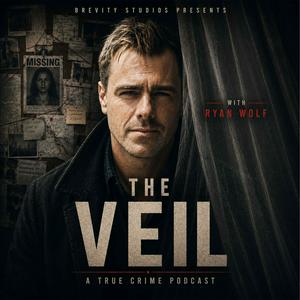
About The Veil
The Veil is a chilling true crime podcast that pulls listeners deep into the world’s darkest and most haunting cases. Hosted by Ryan Wolf, each episode is crafted like an immersive thriller - a story told not just through facts, but through atmosphere, tension, and detail that makes you feel as though you’re standing inside the crime scene itself.These are not urban legends or ghost stories; every case is real, every victim and every clue drawn from documented fact.From unsolved murders to bizarre disappearances, infamous trials to cold cases that still whisper through history, The Veil strips back the layers of time and rumor to confront the unsettling truths hidden beneath.With an eye for detail and a voice that guides you through the shadows, Ryan brings both journalistic rigor and cinematic storytelling to each 30-minute episode. What emerges is an experience that is at once gripping and unnerving, reminding us that the scariest stories are not fiction at all.Pull back The Veil - but beware. Because sometimes, when we lift it, we don’t like what we find. Hosted on Acast. See acast.com/privacy for more information.
Podcast websiteListen to The Veil, Sold a Story and many other podcasts from around the world with the radio.net app
Get the free radio.net app
- Stations and podcasts to bookmark
- Stream via Wi-Fi or Bluetooth
- Supports Carplay & Android Auto
- Many other app features
Get the free radio.net app
- Stations and podcasts to bookmark
- Stream via Wi-Fi or Bluetooth
- Supports Carplay & Android Auto
- Many other app features

The Veil
Scan code,
download the app,
start listening.
download the app,
start listening.
The Veil: Podcasts in Family
 Australia