
Listen to this podcast in the app for free: Download for free in the App Store
radio.net
Sleep timer
Save favourites
317 episodes
44. Does Social Media Make ADHD Worse? You’ve Saved Hundreds of ‘That’s Me’ Reels and Nothing’s Changed
21/10/2026 | 20 mins.Only 5% of the most-watched ADHD videos tell you what to do next. The misleading ones get millions more views.
You’ve saved hundreds of them. They all say the same thing: that’s me.
So does social media make ADHD worse? A listener asked me exactly that, and halfway through asking, she lost her own train of thought. I get into the question underneath it. Not what the reels make you feel, but what they’ve actually changed. Plus a 10-minute sort for the saved folder on your phone that you can do tonight.
And why one piece of anonymous feedback changed the whole direction of this podcast.
New here? Start with these episodes
More on moving past ‘that’s me’: ADHD and Survival Mode: How to Stop Trying Harder and Actually Thrive (with Rachel Few)
The lipoedema surgery I mention: The Real Cost of Lipedema Surgery in Australia
References
Sieferle, K., Guidi, T., Dorr, F., & Bitzer, E. M. (2025). Quality and perception of ADHD content on TikTok. JMIR Infodemiology.
Yeung, A., Ng, E., & Abi-Jaoude, E. (2022). TikTok and ADHD: a cross-sectional study of social media content quality. The Canadian Journal of Psychiatry.
📬 Listener Questions & Community
🎙️ Ask a Listener Question (voice)
Voice notes are preferred when possible — hearing your voice helps add context — but you’re very welcome to submit a written question instead.
Send a WhatsApp voice or written on 0403 457 313
All the top rated episodes sorted by topic
👥 Join the ADHD Mums Facebook Group
👥 Receive the episodes in your inbox
Mentioned in this episode:
Free Resources
Free Resouces43. ADHD Siblings: The Background Child Who Grew Up Beside a Brother Everyone Worried About (with Emily Jade O'Keeffe)
19/10/2026 | 30 mins.Have you ever looked at your two children — one whose needs are loud, out front, impossible to miss, and one who just gets on with it — and quietly told yourself the second one's fine? Have you ever not gone looking, because who goes hunting for a problem in the child who seems okay, when the other one is taking everything you've got?
The quiet one learns to need nothing at all. And it can cost her for years before anyone notices. Emily Jade O'Keeffe was that child — the good girl next to the brother everyone could see — and she didn't spot it in her own daughter until someone else did.
RESOURCES & REFERENCES
Free Resources
The Quiet Exclusion Kit — for the child who copes, complies, and slips under the radar — https://adhdmums.com.au/product/quiet-exclusion-kit/
After Your Diagnosis Kit — for the grown 'good girl' who's just realised it was her too — https://adhdmums.com.au/product/adhd-mum-after-diagnosis-kit/
Paid Resources
ADHD Reset Workbook — Values, Energy & Planning — for the one who learned to need nothing, working out what she actually needs now — https://adhdmums.com.au/product/adhd-reset-workbook-values-energy-planning-for-adhd-mums/
ADHD Mums Shop — https://adhdmums.com.au/shop/
Related Episodes
ADHD and Marriage: We Separated for 18 Months. Then He Got Diagnosed — with Emily Jade O'Keeffe — https://adhdmums.com.au/adhd-podcast-episodes/husband-adhd-diagnosis-saved-marriage/
Uncovering the Subtle Traits of Autistic Daughters — with Eliza Harris — https://adhdmums.com.au/podcast_episode/episode-62-uncovering-the-subtle-traits-of-autistic-daughters/
About the Guest
Emily Jade O'Keeffe is a Gold Coast broadcaster who's been number one on breakfast radio for years (102.9, weekdays 5–9am), and she hosts her own podcast, Move Over Mama, with her 14-year-old daughter Millie — interviewing people about who they were as teens and what shaped them. She grew up the eldest of five in a neurodivergent country-town family, and came to her own diagnosis as an adult, after her husband and children.
https://www.moveovermama.com/
📬 Listener Questions & Community
🎙️ Ask a Listener Question (voice)
Voice notes are preferred when possible — hearing your voice helps add context — but you’re very welcome to submit a written question instead.
Send a WhatsApp voice or written on 0403 457 313
Send a SMS voice or written on 0403 457 313
👥 Join the ADHD Mums Facebook Group
👥 Receive the episodes in your inbox
Mentioned in this episode:
Free Resources
Free Resouces42. You Decided It for Them: RSD, Mind-Reading and the Rejections That Never Happened
14/10/2026 | 12 mins.She mentioned a friend called Kel. That was it. That was the whole thing. Twelve seconds, and you'd filed her under no vacancy, decided your kids didn't match, and worked out she already had a Tuesday person.
Then the term ended and you didn't sign up again, and she probably has no idea any of it happened. This episode is about the forecast you make in the first few seconds, and whether it was ever true.
Related Episodes
Every RSD episode in one place → https://tr.ee/RSD
Navigating School Pick-Up & Social Settings — how ADHD and autistic mums read social situations, how neurotypical people do, and how to bridge the gap → https://adhdmums.com.au/product/surviving-school-pick-up/
References:
Erhardt & Hinshaw 1994; Blachman & Hinshaw 2002.
📬 Listener Questions & Community
🎙️ Ask a Listener Question (voice)
Voice notes are preferred when possible — hearing your voice helps add context — but you’re very welcome to submit a written question instead.
Send a WhatsApp voice or written on 0403 457 313
Send a SMS voice or written on 0403 457 313
👥 Join the ADHD Mums Facebook Group
👥 Receive the episodes in your inbox
Mentioned in this episode:
Free Resources
Free Resouces41. RSD and Masking: Why Criticism Sticks and Praise Slides Straight Off
12/10/2026 | 15 mins.Nine good comments in the performance review. One 'area for growth'. Three days later you can still quote the one, word for word. You couldn't name a single one of the nine.
That's ADHD rejection sensitivity, and the usual fixes don't touch it. Don't take it personally. Keep a praise folder. You've tried. There's a reason the nine never land, and it's not that you're too sensitive.
More episodes on RSD
If this one hits, listen next: Why You Can't Accept Kindness: Masking, Surface Acting and the Wall That Blocks Love In
Free Resources Available here
References
Mylett et al. (2026). Social camouflaging in adults with ADHD. Research in Neurodiversity.
McKinney et al. (2024). Camouflaging in neurodivergent and neurotypical girls. JCPP Advances.
Wicherkiewicz & Gambin (2024). Camouflaging, life satisfaction and depression in women with ADHD. J Autism Dev Disord.
Swann, De La Ronde & Hixon (1994). Authenticity and positivity in marriage and courtship. JPSP.
Kwang & Swann (2010). Do people embrace praise even when they feel unworthy? PSPR.
📬 Listener Questions & Community
🎙️ Ask a Listener Question (voice)
Voice notes are preferred when possible — hearing your voice helps add context — but you’re very welcome to submit a written question instead.
Send a WhatsApp voice or written on 0403 457 313
All the top rated episodes sorted by topic
👥 Join the ADHD Mums Facebook Group
👥 Receive the episodes in your inbox
Mentioned in this episode:
Free Resources
Free Resouces40. ADHD Hyperfocus or Real Passion? 3 x Tests to Tell the Difference (Before You Buy the Pilates Reformer)
07/10/2026 | 23 mins.You did Pilates every week for a year. Then you bought the reformer so you'd never have to drive there again. You haven't done Pilates since.
Now there's a new idea that won't leave you alone, and it feels exactly like the last one did on day one. So how do you know if this one's real?
That's the ADHD hyperfocus question a listener sent in. She's been a teacher for 27 years. For the last few years something's been building in her: she wants to start a neurodivergent-affirming school. She's even gathered a small group who want in. But she's asking whether it's her real direction, or just another collection of ADHD ideas.
I didn't feel qualified to answer that. I've moved house more times than I'd like to admit, and I once had a magnificent pros and cons list for a move to acreage. Every reason on it was true. Two years later, we're moving back to the beach.
So I went looking for a better way to tell a hyperfocus from a real passion than checking how strongly you feel it. The feeling is where most of us go first. It's also the one thing that can't give you the answer.
There's the graveyard of hyperfocuses: the garden beds, the online course with no modules done, the podcast that got two episodes. Most of us read that pile as a verdict on our character. It might be the most useful data you've got. Then there's the advice ADHDers get about new ideas, like 'finish what you start before you start something new'. That one was never going to work for a brain that makes this many ideas.
And there are three tests to try before you quit the job, or buy the gear.
Related episodes:
When You Keep Starting the Same Thing – And It Never Gets Finished
Tis the Season to Overspend: ADHD Mum vs. Impulse Shopping
Free guides: I gave away 16 guides I used to charge for. Grab the one that fits at adhdmums.com.au/resources
📬 Listener Questions & Community
🎙️ Ask a Listener Question (voice)
Voice notes are preferred when possible — hearing your voice helps add context — but you’re very welcome to submit a written question instead.
Send a WhatsApp voice or written on 0403 457 313
All the top rated episodes sorted by topic
👥 Join the ADHD Mums Facebook Group
👥 Receive the episodes in your inbox
References
Hoogman M, Stolte M, Baas M, Kroesbergen E. Creativity and ADHD: a review of behavioral studies, the effect of psychostimulants and neural underpinnings. Neuroscience & Biobehavioral Reviews, 2020.
White HA, Shah P. Uninhibited imaginations: creativity in adults with attention-deficit/hyperactivity disorder. Personality and Individual Differences, 2006.
Mentioned in this episode:
Free Resources
Free Resouces
More Health & Wellness podcasts




Trending Health & Wellness podcasts



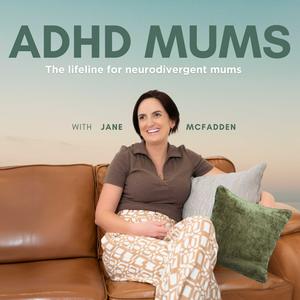
About ADHD Mums
Being a mum is hard enough. Being a mum with ADHD — or raising neurodivergent kids — is a whole different level.
ADHD Mums is the unfiltered, science-meets-reality podcast hosted by Jane McFadden — an Autistic and ADHD mum with a Master's in Neuroscience and Psychology and certification as an ADHD and Autism assessor. This isn't another polished parenting show with 'ten easy tips'. It's real stories, confessions we're not supposed to say out loud, and the research that explains why so many of us are running on empty.
Every week you'll hear:
🎙️ Confessions — raw, anonymous truths from mums navigating rage, burnout, and survival.
🧠 Expert insights — from clinicians, researchers, and policy leaders on ADHD, autism, and mental health.
💬 Advocacy in action — exposing ADHD medication shortages, NDIS red tape, and the hidden costs mothers carry.
With over 1 million downloads from around the world, the podcast has influenced ADHD reforms in Australia, been featured in national media, and pushed politicians to answer the questions mothers are asking.
If you've ever screamed in the car, forgotten every form until the night before, or wondered if you're the only one falling apart — this podcast is your proof that you're not broken, you're just telling the truth.
New episodes weekly. Join the Facebook group: facebook.com/groups/adhdmumspodcast
Podcast websiteListen to ADHD Mums, Into Deep and many other podcasts from around the world with the radio.net app
Get the free radio.net app
- Stations and podcasts to bookmark
- Stream via Wi-Fi or Bluetooth
- Supports Carplay & Android Auto
- Many other app features
Get the free radio.net app
- Stations and podcasts to bookmark
- Stream via Wi-Fi or Bluetooth
- Supports Carplay & Android Auto
- Many other app features
ADHD Mums
Scan code,
download the app,
start listening.
download the app,
start listening.
 Australia