

Listen to this podcast in the app for free: Download for free in the App Store
radio.net
Sleep timer
Save favourites
125 episodes
95. How to travel without killing your savings
09/10/2026 | 42 mins.Travel is supposed to be one of the things money gives you more freedom to enjoy. But when a holiday can cost $15,000 instead of $5,000, how do you keep seeing the world without feeling like every trip is sending your finances backwards?
In this episode, Dave and Hayden compare the simple principles and slightly more extreme hacks they use to keep travel costs down, from letting flight deals influence the destination to shared bathrooms, camping, house sitting and even taking annual leave to stay home.
In this episode we'll discuss:
✈️ Why Hayden thinks a typical one-to-three-week trip can be roughly one-third flights, one-third accommodation and one-third everything else, and why that puts the biggest savings opportunities in two obvious places.
💸 How spending $5,000 instead of $15,000 on a trip can change what remains available to invest, and why delaying the most expensive destinations can be different from giving them up altogether.
⚡ Why the best low-cost airline deals can disappear within hours, and why flexible travellers may get better value by letting the deal influence the destination instead of starting with a fixed itinerary.
🏨 What paying an extra $50 for your own bathroom reveals about how quickly comfort upgrades can become automatic, even when you barely use the room.
🏕️ How hostels, pods, campsites and house sitting can make expensive destinations more
accessible without turning every holiday into a bare-bones endurance test.
🧠 Why "travel inflation" can work a lot like lifestyle inflation, and how gradually expanding your comfort zone can change what feels acceptable to spend.
🏡 Why Dave sees taking annual leave and staying home as a legitimate travel hack, especially if holidays are becoming the only escape from a working year you do not enjoy.
📅 Why booking flexible accommodation early, checking prices again later and travelling outside peak periods can sometimes matter more than obsessing over small daily purchases.
🔥 How financial independence, semi-retirement and flexible work can create another kind of travel advantage: the ability to jump on cheap dates and inconvenient times other people cannot use.
The thread through all of it is not that cheap travel is automatically better. It is that travel spending is another lifestyle choice where flexibility, timing and knowing what you actually value can matter just as much as the headline price. The more deliberately you make those trade-offs, the easier it can be to keep travel in the plan without quietly turning it into another form of lifestyle inflation.
Questions, disagreements or your own scenario: hello@aussiefirepod.com or reach out on socials at Strong Money Australia and Pearler.
Follow us on Instagram
Watch on Youtube
Ask a Question
FI Case Study Request Form
Pearler
Strong Money Australia
Original Aussie FIRE e-book
Dave's books on Amazon and Spotify
Disclaimer:
Any advice is general and does not consider your financial situation needs, or objectives, so consider whether it's appropriate for you. You should also consider seeking professional advice before making any financial decision.
Pearler is an Authorised Representative 1281540 of Sanlam Private Wealth Pty Ltd AFSL 337927. Read the FSG available from https://pearler.com/financial-services-guide
Hosted on Acast. See acast.com/privacy for more information.94. Can you just live off high yield?
02/10/2026 | 36 mins.If the goal is to live off your portfolio one day, why bother selling investments at all? Could you simply build a portfolio that throws off enough income to cover your spending, ignore the 4% rule and leave the assets themselves alone? It sounds neat. But once you look past the appeal of regular cash flow, the trade-offs get more interesting.
Dave and Hayden explore what a higher-yield FIRE portfolio could actually look like, why income investing can feel so psychologically appealing, and where chasing yield can start creating problems.
In this episode we'll discuss:
💰 Whether living purely off investment income could offer an alternative to regularly selling assets under a more traditional FIRE withdrawal strategy.
📈 Why total return still matters, even when a portfolio's dividend or distribution yield looks attractive on its own.
🧠 Why receiving regular investment income can feel easier than selling shares, especially once your portfolio becomes your main source of spending money.
🇦🇺 Why Australian shares have traditionally offered more income than US shares, and how that can shape the way local investors think about retirement portfolios.
🏠 How rental property, commercial property, peer-to-peer lending, savings accounts, shares and ETFs could all play different roles in a higher-yield portfolio.
🧾 Why tax settings can influence the appeal of income versus capital growth, while also making it risky to build an entire investing approach around today's rules.
📊 Why a 6% portfolio yield is not the same thing as a free extra 2% compared with a 4% withdrawal rate, particularly if higher income comes with lower long-term growth.
🏢 How listed investment companies can smooth income differently from index funds, and why the way they generate distributions can vary considerably.
⚠️ Why high-yield assets can bring their own risks, from loan defaults and property cycles to debt-heavy REITs cutting or freezing distributions.
🔄 Why Dave has moved away from a strong yield bias towards a more balanced mix of growth and income, while Hayden is reconsidering where income might fit in his own approach.
The broader tension is simple: reliable income can make a portfolio easier to live with, but yield is only one part of the return you receive. For long-term investors, the interesting question is not whether income or growth is universally better. It is how the trade-off fits the life the portfolio is meant to fund.
Questions, disagreements or your own scenario: hello@aussiefirepod.com or reach out on socials at Strong Money Australia and Pearler.
Follow us on Instagram
Watch on Youtube
Ask a Question
FI Case Study Request Form
Pearler
Strong Money Australia
Original Aussie FIRE e-book
Dave's books on Amazon and Spotify
Disclaimer:
Any advice is general and does not consider your financial situation needs, or objectives, so consider whether it's appropriate for you. You should also consider seeking professional advice before making any financial decision.
Pearler is an Authorised Representative 1281540 of Sanlam Private Wealth Pty Ltd AFSL 337927. Read the FSG available from https://pearler.com/financial-services-guide
Hosted on Acast. See acast.com/privacy for more information.93. Q&A: Optimising CGT, home bias and when spouses don't agree
25/09/2026 | 41 mins.Retiring overseas might sound like a straightforward FIRE move. But what happens when your portfolio was built around Australia, changing tax residency could create a tax event, your partner has a completely different appetite for risk, or you finally start selling ETFs you have been buying for years?
In this listener Q&A, Dave and Hayden tackle three questions that show just how quickly a simple investing strategy can get more complicated once real life enters the picture.
In this episode we'll discuss:
🌏 Why home country bias exists in Australian portfolios, and whether it still makes sense if you plan to live somewhere else.
💸 What changing your Australian tax residency could mean for a portfolio you have spent years building.
🧾 Why simply holding investments through an overseas brokerage account may not remove the Australian tax considerations discussed in the episode.
🤝 What happens when one partner is comfortable riding out market crashes and the other is much more cautious about equities.
📉 Why your theoretical risk tolerance and your actual reaction to a large market fall may be
two very different things.
🏠 Why some investors can view highly leveraged property as "safe" while seeing share market volatility as risky.
⚖️ How couples with different risk tolerances might find a middle ground without forcing either person into a strategy they cannot live with.
🔥 Why getting to financial independence does not necessarily require massive investment risk or spectacular returns, particularly during the earlier wealth-building years.
📊 When you sell part of an ETF holding, how do you know which of the parcels you bought over the years you are actually selling?
🧮 Why choosing which ETF parcel to sell can ultimately become a question of when you pay tax, not simply how much you sell.
The thread through all of it: FIRE can look beautifully simple in a spreadsheet. Then tax residency, relationships, leverage, market crashes and eventually selling your investments turn up. Understanding those trade-offs before they matter can make the real-world version of the plan a lot easier to navigate.
Questions, disagreements or your own scenario: hello@aussiefirepod.com or reach out on socials at Strong Money Australia and Pearler.
Follow us on Instagram
Watch on Youtube
Ask a Question
FI Case Study Request Form
Pearler
Strong Money Australia
Original Aussie FIRE e-book
Dave's books on Amazon and Spotify
Disclaimer:
Any advice is general and does not consider your financial situation needs, or objectives, so consider whether it's appropriate for you. You should also consider seeking professional advice before making any financial decision.
Pearler is an Authorised Representative 1281540 of Sanlam Private Wealth Pty Ltd AFSL 337927. Read the FSG available from https://pearler.com/financial-services-guide
Hosted on Acast. See acast.com/privacy for more information.92. How your upbringing shapes your relationship with money
18/09/2026 | 44 mins.How much of your relationship with money was shaped before you were old enough to earn any?
In this episode, Dave and Hayden look back at their own childhoods and unpack how financial stress, family circumstances and the people around us can shape our beliefs about money. They explore everything from frugality and risk-taking to ambition, scarcity and the feeling that there is never quite enough.
This is a more personal episode of Aussie FIRE. It is not about finding the perfect investment strategy. Instead, it is about understanding where some of our money habits might come from.
In this episode:
🏠 How growing up in lower-income households shaped Dave and Hayden’s early views of money, security and wealth
💰 Why financial hardship can build strong saving habits, while sometimes making it harder to feel comfortable taking risks
🛟 How having a family financial safety net can change the risks someone feels able to take with careers, businesses and investing
🧠 Why money stress can stick around even after your financial position improves
🐛 Hayden’s “money worm”, the voice that keeps asking what could go wrong, even when things are going well
📈 How different childhood experiences influenced when Dave and Hayden became interested in investing and building wealth
💼 Why Hayden chose to reduce some of the risk of starting a business by working extremely hard elsewhere at the same time
🍔 How financial stress can make short-term comfort more appealing, even when it costs more over the long run
👨👩👧 Why people raised in the same household can develop completely different attitudes towards spending, saving and risk
🎯 When financial motivation can turn into compulsion, including the FIRE community’s familiar “one more year” problem
The big takeaway? Your upbringing can influence how you think about money, but it does not write the whole story. Personality, experience and the people around you matter too. Understanding where your habits come from can help you decide which ones still serve you, and which ones might be worth questioning.
Questions, disagreements or your own scenario: hello@aussiefirepod.com or reach out on socials at Strong Money Australia and Pearler.
Follow us on Instagram
Watch on Youtube
Ask a Question
FI Case Study Request Form
Pearler
Strong Money Australia
Original Aussie FIRE e-book
Dave's books on Amazon and Spotify
Disclaimer:
Any advice is general and does not consider your financial situation needs, or objectives, so consider whether it's appropriate for you. You should also consider seeking professional advice before making any financial decision.
Pearler is an Authorised Representative 1281540 of Sanlam Private Wealth Pty Ltd AFSL 337927. Read the FSG available from https://pearler.com/financial-services-guide
Hosted on Acast. See acast.com/privacy for more information.91. Work optional at 34 with Anthony Nguyen
11/09/2026 | 47 mins.Anthony Nguyen spent around a decade building towards financial independence. But when he got close to his target, he did something many people struggle to imagine: he stopped early.
After years in commercial banking, Anthony took a career break, stepped away from the corporate world, and discovered that financial independence wasn't really about doing nothing. It was about creating the freedom to do more meaningful work, build stronger relationships and design life on his own terms.
In this episode we'll discuss:
💸 How Anthony went from feeling the Sunday scaries in commercial banking to Googling "how do I not work forever?" and discovering the FIRE movement
💸 Why he moved away from individual shares and towards ETFs after learning some painful early investing lessons
💸 Why property investing never appealed to him, despite growing up in Sydney surrounded by the belief that property should be the default path
💸 Renting forever by choice: how minimalism, travel and geographic freedom shaped Anthony's view of housing
💸 The 50% savings rate he adopted early in his career, and how salary increases went straight into investments instead of lifestyle upgrades
💸 Why Anthony didn't wait until reaching 25 times his annual expenses before stepping away from work
💸 The impact of Die With Zero, and why good health, time and financial stability pushed him to bring his plans forward
💸 Why the first year of freedom wasn't simply endless travel, cycling and hobbies — and how boredom and isolation forced him to rethink what a good life actually looked like
💸 Anthony's version of a perfect day: meaningful work, meaningful relationships and some form of physical activity
💸 Why FIRE didn't remove work from his life — it helped him discover work he actually wanted to do
💸 Going from full-time banking to no work, then part-time work, freelancing and eventually creating content and building a cycling community
💸 The loneliness nobody talks about after leaving a 9-to-5, and why Anthony had to deliberately rebuild social connection and routine
💸 His current portfolio approach, with most of his net worth in ETFs and smaller allocations to individual shares and crypto
💸 Why he no longer treats the 4% rule as a hard target, and how even modest income from meaningful work can change the maths dramatically
💸 The psychological shift that comes from earning your first dollar outside a salary — and why Anthony believes people often underestimate their ability to earn again after leaving corporate life
💸 Why he's now giving himself permission to spend more, rather than automatically investing every spare dollar
💸 Anthony's question for keeping lifestyle creep in check: "What is my enough?"
💸 His practical suggestion for anyone getting close to FI but unsure about quitting: check whether your employer offers a career break and test the lifestyle before making the leap permanent
The thread through all of it: financial independence can solve the money problem, but it doesn't automatically solve questions around purpose, identity, relationships or how to spend your time.
For Anthony, stepping away from corporate life wasn't the end goal. It gave him the space to work out what he actually wanted his life to look like.
Questions, disagreements or your own scenario: hello@aussiefirepod.com or reach out on socials at Strong Money Australia and Pearler.
Follow us on Instagram
Watch on Youtube
Ask a Question
FI Case Study Request Form
Pearler
Strong Money Australia
Original Aussie FIRE e-book
Dave's books on Amazon and Spotify
Disclaimer:
Any advice is general and does not consider your financial situation needs, or objectives, so consider whether it's appropriate for you. You should also consider seeking professional advice before making any financial decision.
Pearler is an Authorised Representative 1281540 of Sanlam Private Wealth Pty Ltd AFSL 337927. Read the FSG available from https://pearler.com/financial-services-guide
Hosted on Acast. See acast.com/privacy for more information.
More Business podcasts
 The Diary Of A CEO with Steven BartlettBusiness, Education, Society & Culture
 Straight Talk with Mark BourisBusiness, Careers, Education
 Australian Finance PodcastBusiness, Education, Investing
 The Money PuzzleBusiness, Business News, Investing, News
 Get Started InvestingBusiness, Education, Investing
 ABC Business DailyBusiness
 The Money Café with Alan KohlerBusiness, Investing
 ChanticleerBusiness, Business News, Investing, News
 A Bit of OptimismBusiness, Careers, Education, Self-Improvement
 Kohler MediaBusiness, Comedy, History
Trending Business podcasts
 2GB WeekendsBusiness
 The Psychology of Money with Morgan HouselBusiness
 Australian Property PodcastBusiness
 Open Book with Anthony ScaramucciArts, Books, Business, Entrepreneurship
 Take on TomorrowBusiness, Careers, Management
 Humans of AgricultureBusiness, Careers, Personal Journals, Society & Culture
- Aussie FIRE | Financial Independence Retire EarlyBusiness, Investing
About Aussie FIRE | Financial Independence Retire Early
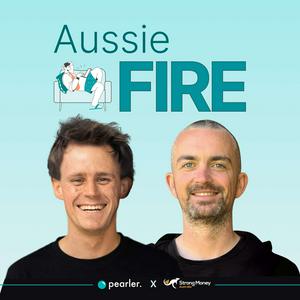
The Aussie FIRE podcast is the ultimate guide to Financial Independence for Australians. Having started life as an e-book, then an audiobook, it's now reached its final form: a podcast that will keep on giving.The Aussie FIRE audiobook is brought to you by Pearler, Australia's favourite long-term investing community; and Dave Gow, the brains behind Strong Money Australia. Each episode explores a different aspect of Financial Independence, so stay tuned for new releases!https://pearler.comhttps://strongmoneyaustralia.com/DISCLAIMER: We’re big fans of sharing experiences and talking about money. However, please note that any advice is general, and does not consider your financial situation, needs, or objectives.Consider whether it's appropriate for you, and if in doubt, speak to a licensed financial adviser. Hosted on Acast. See acast.com/privacy for more information.
Podcast websiteListen to Aussie FIRE | Financial Independence Retire Early, The Diary Of A CEO with Steven Bartlett and many other podcasts from around the world with the radio.net app
Get the free radio.net app
- Stations and podcasts to bookmark
- Stream via Wi-Fi or Bluetooth
- Supports Carplay & Android Auto
- Many other app features
Get the free radio.net app
- Stations and podcasts to bookmark
- Stream via Wi-Fi or Bluetooth
- Supports Carplay & Android Auto
- Many other app features
Aussie FIRE | Financial Independence Retire Early
Scan code,
download the app,
start listening.
download the app,
start listening.
Aussie FIRE | Financial Independence Retire Early: Podcasts in Family
 Australia