
Listen to this podcast in the app for free: Download for free in the App Store
radio.net
Sleep timer
Save favourites
67 episodes
50. The Infinite Company (w/ Dave Wright and Brian Solis)
27/08/2026 | 43 mins.We're incredibly honored to be joined by Dave Wright, Chief Innovation Officer at ServiceNow, and Brian Solis, ServiceNow's Head of Global Innovation, digital anthropologist, and nine-time author. Together, Dave and Brian run ServiceNow Futures and have just published Infinite: How Visionary Leaders Transform Today's Businesses into AI-Forward Companies (Wiley, 2026).
This is an awesome episode, where we have the luxury of talking to quite literal titans of industry about applied AI. We start with the concept of the 'workflow,' the graph-structure of business logic — designed, as Dave puts it, for the limitations of people and the scarcity of resources, and now confronting an abundance of intelligence. From there we work our way to the tantalizing concept at the core of their book, an 'infinite company,' a company that is technically enabled to such an extent that it can continously, progressively, reinvent itself.
Marek pushes the concept to its limits: can an infinite company generate synthetic demand? Can it get infinitely big? And when does it tip into a true dark enterprise, agents making executive decisions about what to build and why? For Brian and Dave, the answer leaves a path open for humans as leaders, workers, and collaborators, who function to destabilize the linear, incremental self-improvement of agentic systems and reroute business into new and unexpected places.
At the core of our conversation: Brian Solis & Dave Wright, Infinite: How Visionary Leaders Transform Today's Businesses into AI-Forward Companies(Wiley, 2026). See: infinitecompany.ai49. Garden (w/ Anna Greenspan)
12/08/2026 | 52 mins.We're joined by Anna Greenspan: philosopher, Associate Professor at NYU Shanghai, where she co-directs the Center for AI and Culture, and author of Shanghai Future and China and the Wireless Undertow. Longtime listeners will recognize her twice over — as co-editor of Machine Decision is Not Final and as the author of Capitalism's Transcendental Time Machine.
The occasion is Greenspan's new research: a philosophy of the artificial built through the garden. If AI is now something "grown, not built," the garden raises the question of agency immediately — anyone who tries to make one learns that the thing the garden gardens is the gardener. Greenspan is surveying seven aesthetic garden traditions, and here we tour a few.
References:
Samuel Butler, Erewhon (1872), esp. "The Book of the Machines"
Anna Greenspan, Bogna Konior, Benjamin Bratton and Amy Ireland (eds.), Machine Decision is Not Final: China and the History and Future of Artificial Intelligence (Urbanomic, 2024)
Anna Greenspan, Shanghai Future: Modernity Remade (Hurst/Oxford University Press, 2014)
Anna Greenspan, China and the Wireless Undertow: Media as Wave Philosophy (Edinburgh University Press, 2023)
Immanuel Kant, Critique of the Power of Judgment (1790) — the third critique, source of the beautiful and the sublime
Baruch Spinoza, Ethics (1677) — parallelism of mind and body; sad passions and joy
Mou Zongsan (牟宗三), New Confucian philosopher; translated Kant into Chinese, argued the supersensible is accessible through practice
Xiong Shili (熊十力), Mou's teacher; philosophy of contraction and expansion drawn from the I Ching
Nikolai Kondratiev, "The Long Waves in Economic Life" (1925; English translation 1935)
Joseph Schumpeter and the neo-Schumpeterians; Carlota Perez
Thomas S. Mullaney, The Chinese Typewriter: A History (MIT Press, 2017) and The Chinese Computer: A Global History of the Information Age (MIT Press, 2024)
Peter Hall, Cities in Civilization (1998)
Keiji Nishitani, Religion and Nothingness; the ikebana essay ("The Japanese Art of Arranged Flowers")
Benjamin Bratton, The Stack: On Software and Sovereignty (MIT Press, 2015)
Gilbert Simondon — invoked by Marek on technological individuation
Sharawadgi — from William Temple, Upon the Gardens of Epicurus (1685)
The ha-ha; Horace Walpole, On Modern Gardening (1770)
David J. Chalmers, "What We Talk to When We Talk to Language Models" (2025)48. Indifference Engine (w/ Wassim Alsindi & Paul Dylan-Ennis)
22/07/2026 | 56 mins.We're joined by Paul Dylan-Ennis and Wassim Alsindi, two of crypto's sharpest in-house critics, who arrived at the same place from opposite directions.
Paul is a lecturer at University College Dublin, author of Absolute Essentials of Ethereum, an early speculative realist (co-founder of Speculations), and a member of the Silviculture Society, the informal cypherpunk body that keeps check on the Ethereum Foundation.
Wassim is a chemical physicist turned record-label operator turned MIT Media Lab researcher, founder of 0x Salon in Berlin, and a self-described "deradicalized Bitcoin maximalist." Hell yeah.
We start with Wassim's essay 'Open Swords,' which insists that open source has to die. The utopian horizon of the cypherpunks (Tim May's Crypto Anarchist Manifesto, Eric Hughes' clarion call, Barlow's Declaration) has been repurposed into systems of closure, with Palantir, Anduril, Helsing, and the corporate AI monoliths built on the backs (and skulls) of open source development.
We go hard on the idea of the cypherbunk in general, into computational counter-politics, Nick Land's Crypto-Current, and Wassim's critical concept of necro-primitivism (Bitcoin as an indifference engine that cannot care about anything outside its thermoeconomic event horizon, now awaiting its quantum-computing civil war.)
References:
Wassim Alsindi, "Open Swords" (Akisoma)
Timothy C. May, "The Crypto Anarchist Manifesto" (1988)
Eric Hughes, "A Cypherpunk's Manifesto" (1993)
John Perry Barlow, "A Declaration of the Independence of Cyberspace" (1996)
Wassim Alsindi, "The Necroprimitivist Manifesto" (2021) & the Indifference Engine project
Nick Land, Crypto-Current: Bitcoin and Philosophy (Šum edition)
Anna Greenspan, Capitalism's Transcendental Time Machine (2000)
Paul Dylan-Ennis, Absolute Essentials of Ethereum (Routledge, 2024)
Paul Dylan-Ennis, Continental Realism (Zero Books, 2011)
Hannu Rajaniemi, The Quantum Thief (2010)47. Invocation (w/ E. Elias Merhige and Gavin Gamboa)
08/07/2026 | 1hE. Elias Merhige is the experimental filmmaker behind Begotten (1989) and its sequels Din of Celestial Birds (2006) and Polia & Blastema: A Cosmic Opera (2022), as well as Shadow of the Vampire and Suspect Zero.
Gavin Gamboa is a composer, pianist, and video artist who wrote the music for Polia & Blastema and works in local-first "digital gardens" and the piano repertoire.
What began as their shared film becomes, here, a way into a single question Elias poses at the top: what is being born through us - and is that thing digesting us on its way out?
From there the conversation moves through desire and digestion as the engine of creation, and what happens when the interval between the wound and the poem collapses to nothing. Merhige treats AI as atavistic rather than alien: a dark mirror, an artificial unconscious, a "necromantic bureaucracy" of dead expressions made responsive, and reads the manuscript and the personal library as older machines through which the dead already speak.
Gamboa holds a more skeptical line, defending manual effort and drawing on Marshall McLuhan's "auto-amputation" and his own experiments training models on his audio.
The guests & their workGavin Gamboa: composer, pianist, video artist gavingamboa.net
E. Elias Merhige: filmmaker; his 1989 debut Begotten anchors the "Begotten trilogy" - Begotten on Wikipedia
Polia & Blastema: A Cosmic Opera (2022) — premiere Q&A with all three (Vimeo)
Books & essays citedThomas Moynihan, “The GASTRULATION of GEIST: or, an Extended Meditation upon the World-Historical Connection Between Digestion and Simulation,” Vast Abrupt, 8 February 2018, link.
Kate Crawford, "Eating the Future: The Metabolic Logic of AI Slop," e-flux
Federico Campagna, Technic and Magic: The Reconstruction of Reality (Bloomsbury, 2018), Bloomsbury46. Building Doors (w/ Yancey Strickler)
29/06/2026 | 1h 2 mins.We're joined by Yancey Strickler: writer, cofounder and former CEO of Kickstarter, and the person behind a string of projects that try to give creative life a workable economic form: Bentoism, The Creative Independent, Metalabel, the Dark Forest Collective, and now Artist Corporations and the Dark Forest Operating System. The episode is timely. We recorded in late May, days before Governor Jared Polis signed the Colorado Artist Company Act into law on June 2, 2026 - the country's first "A Corp," a company type where the artist keeps majority control, intellectual property reverts to its maker if the company dissolves, and an artistic mission sits above profit. More than 4,000 creators have already signed up, and several states are drafting their own versions.
Where this show usually works by critique, Strickler builds working alternatives and writes them into law. Our running question throughout: when criticizing the system is the admired move, is building something real the more radical act, or does anything built inside the system end up serving it?
Yancey Strickler's projects
Yancey Strickler — ystrickler.com
Bentoism — bentoism.org
The Creative Independent — thecreativeindependent.com
Metalabel — metalabel.com
New Creative Era (Strickler's podcast with Joshua Citarella) — metalabel.com
Artist Corporations & the lawArtist Corporations — artistcorporations.com
The Colorado Artist Company Act (SB 26-133), annotated full text — artistcorporations.com/law/annotated
Strickler's TED talk, "Forget hustle culture. Behold the Artist Corporation" (2025) — ted.com
News coverage of the signing: The Colorado Sun · The Art Newspaper · ARTnews
Frieze, "Can A-Corps Save the Struggling Artist?" (skeptical take, also previews DFOS) — frieze.com
The private internet, AI & IPDark Forest Operating System (DFOS) — app.dfos.com · protocol spec at protocol.dfos.com · code on GitHub
Strickler on DIDs, the AT Protocol and Bluesky ("Antienshittification") — ystrickler.com
Holly+ (Holly Herndon's voice model / licensing experiment) — holly.plus
Books & ideas citedThis Could Be Our Future: A Manifesto for a More Generous World (Viking, 2019) — thiscouldbeourfuture.com · Penguin Random House
"The Dark Forest Theory of the Internet" (essay, 2019) — original on ystrickler.com · The Dark Forest Anthology of the Internet (Metalabel, 2024) — Goodreads
Samuel W. Franklin, The Cult of Creativity: A Surprisingly Recent History (University of Chicago Press, 2023) — press.uchicago.edu
Venkatesh Rao's "cozyweb," — Ribbonfarm
More Technology podcasts







Trending Technology podcasts















About Disintegrator
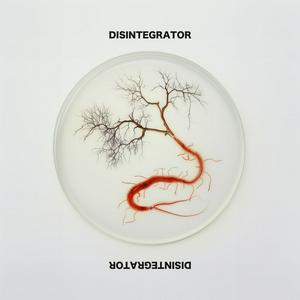
What does it mean to be human in an age where experience and behavior are mediated and regulated by algorithms? The Disintegrator Podcast is a limited series exploring how Artificial Intelligence affects who we are and how we express ourselves. Join Roberto Alonso Trillo, Marek Poliks, and Helena McFadzean as they speak to the artists, philosophers, scientists, and social theorists at the forefront of human-AI relations. Disintegrator is produced by Rubén Bañuelos.
Podcast websiteListen to Disintegrator, Search Engine and many other podcasts from around the world with the radio.net app
Get the free radio.net app
- Stations and podcasts to bookmark
- Stream via Wi-Fi or Bluetooth
- Supports Carplay & Android Auto
- Many other app features
Get the free radio.net app
- Stations and podcasts to bookmark
- Stream via Wi-Fi or Bluetooth
- Supports Carplay & Android Auto
- Many other app features

Disintegrator
Scan code,
download the app,
start listening.
download the app,
start listening.
 Australia