
Listen to this podcast in the app for free: Download for free in the App Store
radio.net
Sleep timer
Save favourites
1994 episodes
What are the biggest risks to global health?
23/10/2026 | 11 mins.In the news:
A report in the Lancet outlines the biggest risks to human health worldwide with obesity topping the list. But there are some more surprising risks identified.
The TGA has approved a broader scope of use of a medicine for medical abortion care and miscarriage.
A study has quantified the baseline prevalence of low testosterone in the United States military, ahead of the planned annual screening of men over the age of 30.
References
The Lancet: 21st century global threats to health are not what you think
TGA: MS-2 Step (mifepristone and misoprostol)
Testosterone Screening Thresholds in Active-Duty US Male Service MembersE-scooter and e-bike injuries adding to hospital burden
23/10/2026 | 9 mins.The first ever report from the Australian Institute of Health and Welfare that quantifies these injuries was released this week.
It shows what many clinicians are already seeing in emergency rooms and surgeries. So what can be done to reduce the impact of these e-devices?
Guest/s
Professor Martin Wullschleger, Director of Trauma, Gold Coast Health and chair of RACS Queensland Trauma Committee
References
E-scooter and e-bike injuries and deaths in Australia: national trends and data limitationsCancer survivors should be checked for cardiovascular disease
23/10/2026 | 9 mins.A new study shows people who survive cancer have a build up of plaque in their arteries, and a higher risk of heart disease.
The treatments that are used for their cancer are thought to be the cause. So what can be done to manage these new health risks?
Guest/s
Dr Cheng Hwee Soh, Honorary Senior Fellow at the Baker Department of Cardiometabolic Health, University of Melbourne and Group Leader, Imaging Research laboratory, Baker Institute
References
Coronary Plaque Burden and Plaque Composition in Long-Term Cancer Survivors: A Comparative CCTA StudyMedicines discontinued in hospital, putting patients at risk
23/10/2026 | 8 mins.In hospital regular medications are sometimes paused while the patient recovers from other illnesses and procedures.
But a new study about discontinuation of diabetes medication shows it is not reintroduced quickly once the person is discharged. Could better information transfer facilitated by a hospital pharmacist help prevent this?
Guest/s
Dr Tamara Milder, endocrinologist and Researcher, Medicines Intelligence Research Program, UNSW
References
Hospitalisation Is a Strong Risk Factor for Discontinuation of Sodium-Glucose Cotransporter 2 Inhibitors for Type 2 DiabetesMailbag: menopause treatment
23/10/2026 | 2 mins.A look at some of the Health Report correspondence this week.
You can email us at healthreport@abc.net.au
More Health & Wellness podcasts








Trending Health & Wellness podcasts
















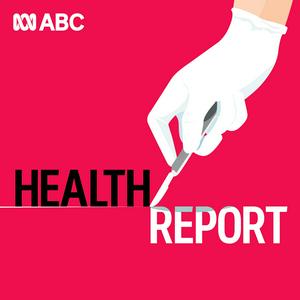
About Health Report - Separate stories podcast
Covering the health stories that make a difference. Dr Norman Swan and Dr Preeya Alexander dissect the latest and breaking news in the medical world.
Podcast websiteListen to Health Report - Separate stories podcast, On Purpose with Jay Shetty and many other podcasts from around the world with the radio.net app
Get the free radio.net app
- Stations and podcasts to bookmark
- Stream via Wi-Fi or Bluetooth
- Supports Carplay & Android Auto
- Many other app features
Get the free radio.net app
- Stations and podcasts to bookmark
- Stream via Wi-Fi or Bluetooth
- Supports Carplay & Android Auto
- Many other app features

Health Report - Separate stories podcast
Scan code,
download the app,
start listening.
download the app,
start listening.
Health Report - Separate stories podcast: Podcasts in Family
 Australia