
Listen to this podcast in the app for free: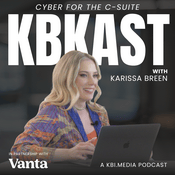 Download for free in the App Store
radio.net
Sleep timer
Save favourites
446 episodes
Episode 392 Deep Dive: John Jester | Recovery Isn’t Enough - Business Continuity in the Agentic Era
26/10/2026 | 43 mins.Getting data back after an attack used to be the finish line. Now boards want proof the business keeps running while it happens. KB sits down with John Jester, Chief Revenue Officer at Veeam, to talk about that shift.
John explains why some companies pay ransoms even when they could recover, because recovery was simply too slow. He also covers why AI agents with too much access now cause more problems than attackers do. In one forum he ran, two-thirds of the Fortune 500 CISOs in the room had reported a data leak to their board or a regulator. And he makes the case for precision recovery: undoing a single agent’s mistakes without rolling back everything.
About John:
John Jester is Veeam’s Chief Revenue Officer (CRO) and is responsible for the company’s go-to-market (GTM) growth strategy and helping build upon Veeam’s position as the #1 provider of Data Resilience, spanning Cloud, Virtual, Physical, Hybrid, SaaS, and Kubernetes.
John joined Veeam from a successful tenure at Google Cloud, where he helped build the GTM organization through his leadership of the Customer Experience function. In this role, he drove cloud adoption and business value for customers, supporting Google Cloud’s growth to over $23B ARR.
Prior to Google, John spent 20 years at Microsoft leading sales organizations and reimagining the GTM across the customer lifecycle. His most recent role was Corporate Vice President of Worldwide Customer Success, where he established a new organization to drive adoption of Microsoft’s cloud services. Throughout his career, John has worked closely with partners and sees them as integral to crafting solutions for customers.
John earned his bachelor’s degree in electrical engineering and a master’s degree in business administration from George Mason University.
Keywords: business continuity, cyber resilience, ransomware recovery, AI agents, AI governance, precision recovery, data leakage, shadow AI, Veeam, Coveware, Securiti AI, CISOFrom The Field at DASH 2026 | Olivier Pomel & Alexis Lê-Quôc on Betting Datadog on One Platform
23/10/2026 | 42 mins.In this episode of From The Field, recorded at DASH by Datadog in New York City, KB sits down with both of Datadog’s co-founders.
First up is Olivier Pomel, Co-founder and CEO. He talks through the new security launches, including AI Guard and Bits AI for security, and explains why an observability background gave Datadog its right to win in security. He also covers why Datadog rebuilds acquisitions on its own platform instead of bolting them on, and why he expects security tooling to consolidate the way observability did.
Then KB is joined by Alexis Lê-Quôc, Co-founder and CTO. He argues that AI has shrunk the gap between disclosure and exploit from weeks to hours. He explains why detection now has to be agentic, and why deciding which assets matter is still a human call. He also makes the case that lasting change comes from the teams on the ground.Episode 391 Deep Dive: Skip Mann | Held to a Higher Standard - What Lenovo Learned From Constant Scrutiny
21/10/2026 | 37 mins.KB sits down with Skip Mann, Lenovo’s Vice President of Enterprise Security Strategy, Assurance and Trust, to talk about how a company working across 180 markets and thousands of suppliers proves it can be trusted.
They start with why nobody at that scale can verify everything, and why Skip says trust has to rest on evidence rather than assumptions. From there they get into why attackers don’t care how security teams are split up, and what customers should ask to see before trusting any vendor.
KB asks how a company with deep roots in China handles government scrutiny, and Skip explains why Lenovo welcomes it, from the EU Cyber Resilience Act to repeated CFIUS reviews by the US government.
They finish on supply chain resilience, how to do due diligence without drowning in scorecard tools, and the new trust questions AI is raising.
About Skip:
Skip Mann, Vice President, Enterprise Security Strategy, Assurance, & Trust Chief Security Office & Chief AI Office, Lenovo
Skip Mann oversees four integrated functions – strategy and alignment, governance and assurance, trust and advocacy, and CSO operations – driving enterprise-wide security outcomes across Lenovo’s cyber, physical, supply chain, product, and responsible AI domains to advance resilience, regulatory alignment, and stakeholder trust.
With more than 34 years in the security profession and 18 years in executive leadership, Skip is recognized as a thought leader in enterprise risk, organizational resilience, and security transformation. He is known for developing high performing teams and advancing converged, risk-informed security programs across global enterprises.
Prior to joining Lenovo, Skip held senior roles within the US Department of Homeland Security and U.S. Department of Defense, including the US Army Headquarters in Washington D.C., United States Africa Command, United States European Command, and the Central United States Registry.
Keywords: trust, assurance, supply chain security, supply chain resilience, third-party risk, due diligence, vendor risk management, GRC, certifications, NIST, ISO, EU Cyber Resilience Act, CRA, ENISA, EU AI Act, CFIUS, national security, geopolitics, converged security, physical security, operational resilience, Secure by Design, CISA, public-private partnership, coordinated vulnerability disclosure, AI governance, responsible AI, Lenovo, CISO, board, KBKastEpisode 390 Deep Dive: Michael Pastor | Nobody Will Blame the AI - Liability, Reasonable Care and Your Vendor Contracts
19/10/2026 | 42 mins.KB sits down with Michael Pastor, Dean for Technology Law Programs at New York Law School and former General Counsel of New York City Cyber Command, to talk about who is accountable when AI gets it wrong.
They start with Mythos-class tools and what they mean for the legal standard of reasonable security. Michael argues the test is effectiveness and what your people can validate, not cost, and that "I trusted the technology" won't survive discovery.
From there they get into whether AI could help settle disputes between counterparties, how courts might handle highly technical cyber cases, and why Michael wants to retire the phrase "human in the loop" in favour of real oversight by people with context.
They finish on contracts - what general counsel should demand from AI vendors now, why renewals are about to get harder, and why Michael is still optimistic about where it all lands.
About Michael:
Michael Pastor is a Professor of Law from Practice. He serves as New York Law School's Dean for Technology Law Programs, the Director of the James Tricarico Jr. Institute for the Business of Law and In-House Counsel, and Co-Director of the Innovation Center for Law and Technology. He teaches the In-House Counsel Experience Seminar and Drafting Contracts: Technology Transactions.
Professor Pastor previously served as the General Counsel of the New York City Department of Information Technology and Telecommunications (DoITT) and the New York City Cyber Command (NYC3).
Keywords: reasonable security, standard of care, AI liability, general counsel, legal counsel, technology contracts, AI vendor contracts, vendor management, audit rights, breach notification, human in the loop, human oversight, NYDFS, cybersecurity regulation, vulnerability management, Mythos, AI validation, contract renewal, privacy by design, security by design, New York City Cyber Command, CISO, board, KBKastEpisode 389 Deep Dive: Omar Santos | Attackers Already Have It - What New Frontier Models Mean for Your Security Strategy
14/10/2026 | 43 mins.In the first weeks of March, Omar Santos got early access to the model that became Anthropic’s Mythos. About an hour of testing was enough to convince him cybersecurity had changed for good.
Omar, a Distinguished Engineer in AI Security Engineering at Cisco and co-chair of the Coalition for Secure AI, says his bigger worry is how fast everyone else is catching up. Open weight models are closing in on the frontier labs, so attackers no longer need access to Mythos to find and exploit vulnerabilities.
KB and Omar get into why Cisco won’t send a finding to engineering without proof of an active exploit, how a public open source fix gives attackers a ready-made recipe, and why a library a student abandoned years ago could be running inside your patient records system. Omar wants defenders to go further than finding and fixing faster. That means refactoring code, adding compensating controls, and turning the risk register from an annual exercise into something that runs continuously.
About Omar:
Omar Santos is a Distinguished Engineer at Cisco, focused on AI security, cybersecurity research, incident response and vulnerability disclosure. He co-chairs the Coalition for Secure AI (CoSAI) and the FIRST PSIRT Special Interest Group, sits on the board of OASIS Open, and chairs the OpenEoX and CSAF technical committees, where his work led to CSAF becoming an ISO standard. He also led the DEF CON Red Team Village for several years.
Omar has written more than 25 books, 21 video courses and over 50 research papers, and holds multiple patents. Before Cisco, he served in the United States Marines.
Keywords: Mythos, Anthropic, Project Glasswing, frontier AI, open weight models, AI security, AI in cybersecurity, vulnerability management, zero days, exploit development, open source security, software supply chain, SBOM, OpenEoX, CSAF, CodeGuard, Coalition for Secure AI, CoSAI, Cisco, compensating controls, eBPF, secure by design, zero trust, incident response, threat hunting, continuous assessment, risk register, GRC, CISO, board, KBKast
More Business podcasts







Trending Business podcasts
















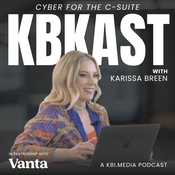
About KBKAST
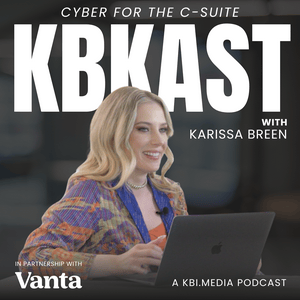
Unlike every other security podcast, we don’t get stuck down in the technical weeds. Our remit is to speak with experts around the globe at the strategic level – how security technology can improve the experience and risk optimisation for every organisation.
The Voice of Cyber® - In Partnership with Vanta
Podcast websiteListen to KBKAST, The Diary Of A CEO with Steven Bartlett and many other podcasts from around the world with the radio.net app
Get the free radio.net app
- Stations and podcasts to bookmark
- Stream via Wi-Fi or Bluetooth
- Supports Carplay & Android Auto
- Many other app features
Get the free radio.net app
- Stations and podcasts to bookmark
- Stream via Wi-Fi or Bluetooth
- Supports Carplay & Android Auto
- Many other app features

KBKAST
Scan code,
download the app,
start listening.
download the app,
start listening.
KBKAST: Podcasts in Family
 Australia