
Listen to this podcast in the app for free: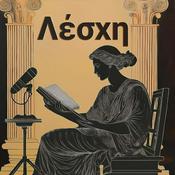 Download for free in the App Store
radio.net
Sleep timer
Save favourites
52 episodes
A New "Green and Yellow" of Odyssey 11, with Richard Hunter and Rebecca Laemmle
07/10/2026 | 54 mins.Richard Hunter and Rebecca Laemmle join me in the Lesche to discuss their new commentary on Odyssey Book 11, in the Cambridge Greek and Latin Classics ("Green and Yellow") commentary series.
Ancient texts
Homer, Odyssey (general) and Iliad (esp. Book 9 and Book 23)
Aristophanes, Frogs
Plato /Platonic eschatological accounts/underworlds, esp. the Myth of Er in in Republic 10
Timon of Phlius (Hellenistic philosopher)
Vergil, Aeneid
Seneca, Medea
Lucian, Dialogues of the Dead
Pausanias, Description of Greece (description of Polygnotus' Nekuia painting at Delphi; view a reconstruction here)
Homeric scholia
Other works
Albert Camus, "The Myth of Sisyphus"
Christopher Nolan's The Odyssey
About our guests
Richard Hunter is Regius Professor of Greek Emeritus in the University of Cambridge and a Fellow of Trinity College. He has published extensively in the fields of Greek and Latin literature; his recent books include The Measure of Homer (Cambridge, 2018), (with Rebecca Laemmle) Euripides, Cyclops (Cambridge, 2020), and Greek Epitaphic Poetry: A Selection (Cambridge, 2022), both in the Cambridge Greek and Latin Classics series. His essays are collected in On Coming After: Studies in Post-Classical Greek Literature and its Reception (2008) and The Layers of the Text (2021). He is a Fellow of the British Academy.
Rebecca Laemmle is Professor of Greek Literature at the University of Cambridge and a Fellow of Pembroke College. Her award-winning doctoral thesis was published as Poetik des Satyrspiels (2013). She co-edited, with Richard Hunter, Euripides, Cyclops (Cambridge, 2020) in the Cambridge Greek and Latin Classics series and has published widely in both English and German on ancient literature and its reception.
________________________________
Thanks for joining us in the Lesche!
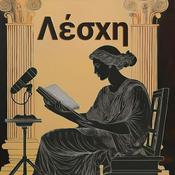
Podcast art: Daniel Blanco
Theme music: "The Song of Seikilos," recomposed by Eftychia Christodoulou using Sibelius
This podcast is made possible with the generous support of Brown University’s Department of Classical Studies and the John Nicholas Brown Center for Advanced Study.
Instagram: @leschepodcast
Email: leschepodcast@gmail.com
Suggest a book using this formA New Anacreontic Poem on Stone, with Andrej Petrovic
09/09/2026 | 46 mins.Andrej Petrovic joins me in the Lesche to discuss a new verse-inscription from Teos (in Turkey) discovered in 2013 by Musa Kadıoğlu, director of the excavations at Teos. Together with Mustafa Adak (Professor of Greek Language and Literature, University of Akdeniz) and Christian Marek (University of Zurich), Andrej has co-authored a monograph with edition, commentary, and interpretative essays on the inscription (publication details TBD).
Ankara University press release announcing the discovery (in Turkish)
Harvard Gazette article on the new monumental portrait statue from Sardia
American Society for Greek and Roman Epigraphy (ASGLE)
Ancient authors/works
Theognis of Megara/the Thegonidea, esp. lines 19-20 (the σφραγίς, 'seal') and line 460, πολλάκις ἐκ νυκτῶν ἄλλον ἔχει λιμένα.
Semonides of Amorgos
The "Sosthenes inscription"
The "Mnesiepes inscription"
The "Salmacis poem"/"Pride of Halicarnassus"
Modern scholarship
Adak, M. and Thonemann, P. 2022. Teos and Abdera: Two Cities in Peace and War. Oxford Studies in Ancient Documents. Oxford University Press.
Bernsdorff, H. 2021. Anacreon of Teos: Testimonia and Fragments. Oxford University Press.
Bowie, E. 2012. "An early chapter in the history of the Theognidea"
West, M. L. 1974. Studies in Greek Elegy and Iambus, ch. III "On the history of the Theognidean Sylloge"
See also esp. Diskin Clay's 2004 Archilochus Heros: The Cult of Poets in the Greek Polis (Center for Hellenic Studies), which contains many translated ancient testimonia. BMCR review here.
About our guest
Andrej Petrovic is a specialist in Greek literature, epigraphy, and religion. Born in Yugoslavia and trained in Serbia and Germany, he held academic positions in Munich, Heidelberg, and Durham (UK) before becoming Professor of Classics at the University of Virginia. He edits Greece and Rome and serves as president-elect of the American Society for Greek and Latin Epigraphy. He has published books on Simonidean verse-inscriptions, co-authored (with Ivana Petrovic) Inner Purity and Pollution in Greek Religion, and written some 50 articles on archaic and classical epigram and text materiality. He has held Humboldt, Mellon, and CHS fellowships.
________________________________
Thanks for joining us in the Lesche!
Podcast art: Daniel Blanco
Theme music: "The Song of Seikilos," recomposed by Eftychia Christodoulou using Sibelius
This podcast is made possible with the generous support of Brown University’s Department of Classical Studies and the John Nicholas Brown Center for Advanced Study.
Instagram: @leschepodcast
Email: leschepodcast@gmail.com
Suggest a book using this formMigration and the Early Greek World
01/07/2026 | 48 mins.Naoise Mac Sweeney joins me in the Lesche to discuss her ERC-funded multi-year project "Migration and the Making of the Ancient Greek World" (MIGMAG). Read more about the project here.
The first major output is a volume titled Local Migration and the Making of the Ancient Greek World (c.1200-550 BCE), edited by MIGMAG team members Naoíse Mac Sweeney, Jana Mokrišová, and Francesco Quondam.
Naoise refers briefly to Euripides' tragedy Ion in the episode.
The book she recommends at the end of the episode is Richard Powers' 2018 novel The Overstory.
About our guest
Naoíse Mac Sweeney is Professor of Classical Archaeology (Greek) at the University of Vienna. Her work focuses on the construction of identity and cultural interaction in the Iron Age to Classical Greek world, with a particular focus on Anatolia. A subsidiary strand of her research considers the intersection of modern politics and reception. She is the author of books including Community Identity and Archaeology (2011), Foundation Myths and Politics in Ancient Ionia (2013), Troy: Myth, City, Icon (2018) and, most recently, The West: A New History of an Old Idea (2023).
________________________________
Thanks for joining us in the Lesche!
Podcast art: Daniel Blanco
Theme music: "The Song of Seikilos," recomposed by Eftychia Christodoulou using Sibelius
This podcast is made possible with the generous support of Brown University’s Department of Classical Studies and the John Nicholas Brown Center for Advanced Study.
Instagram: @leschepodcast
Email: leschepodcast@gmail.com
Suggest a book using this formDream Interpretation, from Homer to Aristotle
17/06/2026 | 51 mins.Mirjam E. Kotwick joins me in the Lesche to discuss her new book The Ancient Interpretation of Dreams: Early Greek Hermeneutics and Its Sources, which is hot off the (Princeton University) press.
For more on Katerina Evangelatou's 2015 production of Rhesus, as part of the Epidaurus-Athens Theatre Festival, see this article by Scott Andrew Cally in Didascalia.
Ancient works
Homer, Odyssey: Penelope's dream in Book 19
Aeschylus, Libation Bearers (Clytemnestra's dream)
Aristophanes, Wasps
Dissoi Logoi
Antiphon's lost work on dream interpretation
Hippocratic Corpus de Victu / On Regimen
Derveni Papyrus
Aristotle, On Dreams and On Divination in Sleep
Artemidorus, Oneirokritika
Modern works
Billings, Joshua, and Moore, Christopher (eds.). 2023. The Cambridge Companion to the Sophists. Cambridge University Press.
Ford, Andrew. 2003. The Origins of Criticism: Literary Culture and Poetic Theory in Classical Greece. Princeton University Press (mentioned for concept of "critical scenes")
About our guest
Mirjam E. Kotwick is Associate Professor of Classics at Princeton University. She has published articles and monographs on Greek philosophy and literature and their textual traditions, including Alexander of Aphrodisias and the Text of Aristotle’s Metaphysics and Der Papyrus von Derveni. Her most recent book is The Ancient Interpretation of Dreams: Early Greek Hermeneutics and Its Sources (Princeton University Press, 2026).
________________________________
Thanks for joining us in the Lesche!
Podcast art: Daniel Blanco
Theme music: "The Song of Seikilos," recomposed by Eftychia Christodoulou using Sibelius
This podcast is made possible with the generous support of Brown University’s Department of Classical Studies and the John Nicholas Brown Center for Advanced Study.
Instagram: @leschepodcast
Email: leschepodcast@gmail.com
Suggest a book using this formLuck (and Lucklessness) in Ancient Greek Thought
03/06/2026 | 47 mins.Daniel Schillinger joins me in the Lesche to discuss his new book Luckless: The Idea of Luck in Ancient Greek Thought, which recently appeared with Oxford University Press.
Find out more about Daniel's work here: https://www.danielschillinger.com/
Ancient authors and texts
Sophocles, Oedipus Rex
Euripides, Trojan Women (and Hippolytus)
Thucydides
Aristotle, Physics, Nicomachean Ethics, Poetics (Daniel's book also contains a chapter on the Eudemian Ethics)
Other works/authors
Machiavelli, Discourses on Livy; The Prince
Martha Nussbaum, The Fragility of Goodness: Luck and Ethics in Greek Tragedy and Philosophy
Arlene Saxenhouse, work on tragedy (see esp. her 1988 "The tyranny of reason in the world of the polis, in The American Political Science Review 82: 1261-1275)
H.P. Stahl, Thucydides: Man's Place in History
Leo Strauss, On Thucydides' War of the Peloponnesians and the Athenians," chapter in The City and Man
Bernard Williams, Moral Luck
Adam Parry's scholarship on Thucydides
And others: Arendt, Freud, Kant, Nietzsche, Rawls...
About our Guest
Daniel Schillinger is a Lecturer in Political Science at Yale University, where he teaches in the Directed Studies Program and offers seminars on Greek political thought. He is also a Senior Fellow of the Yale Center for Civic Thought and a recipient of the Lux et Veritas teaching prize.
________________________________
Thanks for joining us in the Lesche!
Podcast art: Daniel Blanco
Theme music: "The Song of Seikilos," recomposed by Eftychia Christodoulou using Sibelius
This podcast is made possible with the generous support of Brown University’s Department of Classical Studies and the John Nicholas Brown Center for Advanced Study.
Instagram: @leschepodcast
Email: leschepodcast@gmail.com
Suggest a book using this form
More Arts podcasts








Trending Arts podcasts
















About Lesche: Ancient Greece, New Ideas
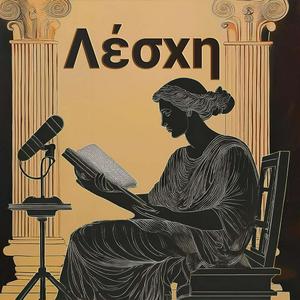
In Greek antiquity a lesche (λέσχη) was a spot to hang out and chat. Here Brown University professor Johanna Hanink hosts conversations with fellow Hellenists about their latest work in the field.
Podcast websiteListen to Lesche: Ancient Greece, New Ideas, ill-advised by Bill Nighy and many other podcasts from around the world with the radio.net app
Get the free radio.net app
- Stations and podcasts to bookmark
- Stream via Wi-Fi or Bluetooth
- Supports Carplay & Android Auto
- Many other app features
Get the free radio.net app
- Stations and podcasts to bookmark
- Stream via Wi-Fi or Bluetooth
- Supports Carplay & Android Auto
- Many other app features

Lesche: Ancient Greece, New Ideas
Scan code,
download the app,
start listening.
download the app,
start listening.
 Australia