
Listen to this podcast in the app for free: Download for free in the App Store
radio.net
Sleep timer
Save favourites
397 episodes
Now hiring: Farm Operations Manager at Little Big Dairy Co - Dubbo NSW
26/10/2026 | 21 mins.Little Big Dairy Co is growing!
We're working with them to find 2 x roles: a Farm Operations Manager and, separately, an Executive Assistant to the CEO.
They run three businesses in one: a 1,000-hectare fodder operation, a herd of registered Holsteins, and an on-farm factory. Two new roles have opened as a result.
We are sitting down with Campbell Chesworth (director and Nuffield Scholar) to explain what the business is building, who they need, and why these roles have no uncapped potential.
Seen the ad? This is your sign to apply.
👉 Apply now HERE!
Chapters
01:31 Campbell’s three-month sabbatical that became a career in the family business
04:11 Nuffield takeaways: circularity, confidence, and people as the biggest investment
07:00 Developments: Eight new robotic milkers, a new freestall barn and an effluent upgrade
09:57 Is ag tech replacing jobs or creating better ones in Dairy?
11:30 The Farm Ops Manager role: about the farm
13:36 What a great hire looks like in this role
14:15 The EA role: working alongside CEO Emma Elliott across accounts, HR and operations
17:18 Boots on the ground: a family that works beside its team
18:20 Why now: succession, building systems, and the move into butter and cottage cheese
20:00 Final word: throw your hat in
Who they’re after
Farm Ops Manager: eager to learn, takes initiative, and owns problems from fault to fix. You’ll work alongside Campbell, Steve and the farming team.
Executive Assistant: can-do attitude, keen to take on responsibility, and ready to learn the business from one of the sharpest operators in Australian dairy.
Ready? Apply here
Proudly brought to you by Rabobank
The future of Australian agriculture depends on the next generation of farmers, producers and agribusiness leaders.
That's why Rabobank is committed to supporting young farmers with more than finance. Through industry insights, specialist agribusiness expertise, networking opportunities and long-term partnerships, Rabobank supports the next generation as they build their skills, knowledge and connections.
Rabobank is committed to supporting farming businesses as they plan for the future and transition across generations.
Visit rabobank.com.au to learn more.From District Vet to Full-Time Farming with Elle Moyle
19/10/2026 | 15 mins.In this episode of Humans of Agriculture, Oli Le Lievre sits down with Elle Moyle, a Zanda McDonald Award finalist, veterinarian and farmer with Pathfinder Angus in Western Victoria.
Elle reflects on her path from working as a district vet, including international biosecurity work, to returning to the family farming business and building her own agricultural interests.
A big part of the conversation is Elle’s experience with the Zanda McDonald Award. While she made the final three but didn’t win, the experience helped build her confidence, expand her network and create relationships that continue to shape her career.
Elle also shares what she has learnt about building genuine professional relationships, the value of putting yourself forward for opportunities, and what is happening at Pathfinder Angus as the family business continues to grow.
In this episode:
Elle’s move from veterinary work to full-time farming
Her experience as a Zanda McDonald Award finalist
Why you don’t have to win to get enormous value from the award
Building confidence, networks and long-term professional relationships
The growth of Pathfinder Angus and Elle’s role in the family business
Why Elle encourages others to put themselves forward
Applications for the Zanda McDonald Award are open from 1 October to 31 October 2026.
Chapters
00:00 Elle Moyle’s journey and the Zanda McDonald Award
02:11 From veterinary work to full-time farming
04:00 Veterinary and biosecurity work
05:21 Why Elle applied for the Zanda McDonald Award
06:15 Lessons from being a finalist
07:34 Building a lasting network
10:04 Learning from industry leaders
11:12 The growth of Pathfinder Angus
12:23 Why more young agricultural professionals should apply
13:45 What’s ahead for Pathfinder Angus
Proudly brought to you by Rabobank
The future of Australian agriculture depends on the next generation of farmers, producers and agribusiness leaders.
That's why Rabobank is committed to supporting young farmers with more than finance. Through industry insights, specialist agribusiness expertise, networking opportunities and long-term partnerships, Rabobank supports the next generation as they build their skills, knowledge and connections.
Rabobank is committed to supporting farming businesses as they plan for the future and transition across generations.
Visit rabobank.com.au to learn more.Tom & Mick: Building a Wagyu Business, Managing Market Cycles and Leading with Purpose with Anna Speer
14/10/2026 | 45 mins.Welcome to the Tom & Mick Show! This week, Tom & Mick sit down with Anna Speer, whose career has taken her from teaching and AgTech to leadership roles with AuctionsPlus, Australian Agricultural Company, Woolworths and now Stone Axe.
Anna shares what she’s learnt about building strong teams, making commercial decisions and creating long-term value, while unpacking how Stone Axe is building a vertically integrated Wagyu business from conception through to consumption.
In this episode:
Anna’s unconventional career through agriculture and AgTech
What private equity brings to an agricultural business
How vertical integration can reduce exposure to market volatility
Using 10-year herd modelling to make better decisions today
Managing rising feed, fuel and labour costs
Why building your own brand isn’t always the best strategy
Wagyu genetics, premium markets and future growth
Building teams and adapting your leadership to different people
Chapters
00:00 Introduction and catching up with Anna Speer
03:01 Anna’s career through agriculture and AgTech
07:49 From Woolworths to Stone Axe
12:39 Private equity and commercial decision-making
19:29 Wagyu genetics and growing Stone Axe
26:14 Managing market cycles and supply chains
31:20 Herd modelling and planning 10 years ahead
36:00 Consumer trends and Wagyu’s premium market
40:04 Managing rising input costs
44:40 Branding, Angus and supply chain partnerships
50:17 Leadership and building better teams
Proudly brought to you by Rabobank
The future of Australian agriculture depends on the next generation of farmers, producers and agribusiness leaders.
That's why Rabobank is committed to supporting young farmers with more than finance. Through industry insights, specialist agribusiness expertise, networking opportunities and long-term partnerships, Rabobank supports the next generation as they build their skills, knowledge and connections.
Rabobank is committed to supporting farming businesses as they plan for the future and transition across generations.
Visit rabobank.com.au to learn more."Have another Crack": Why the 2nd time round is the trick for Bryce Neyland
05/10/2026 | 21 mins.What happens when you step outside your own patch and spend time learning from some of the best operators in agriculture?
2026 Australian Zanda McDonald Award winner Bryce Neyland joins Oli after completing his mentoring trips across New Zealand and Australia. Bryce shares what he learned about risk, resilience, investment and leadership, and why seeing how other businesses operate has challenged the way he thinks about his own career and family farming business.
Importantly, Bryce didn’t win the first time he applied. He reflects on what changed between applications, the value of getting clear on where you want to go, and why sometimes the best thing you can do is put your hand up and have another crack.
In this episode:
What Bryce learned travelling through Australian and New Zealand agriculture
Why New Zealand challenged his thinking about productivity and getting more from what you have
What resilient Australian farming businesses do differently
How leading businesses think about investment, risk and long-term decision-making
Why Bryce is now thinking differently about planning for tough seasons on the family farm
Learning to expect pressure rather than being surprised by it
Why getting outside your own "sandbox" matters for personal and professional growth
What changed between Bryce's first unsuccessful Zanda application and ultimately winning the Award
Why the alumni network may be one of the Award's greatest opportunities
Bryce's advice for anyone considering putting their hand up
Applications for the Zanda McDonald Award are open from 1 October to 31 October 2026.
If you’re involved in agriculture, want to keep learning and are curious about where you could take your career, Bryce’s advice is pretty simple: get your application in and have a crack.
Chapters
00:00 Catching up with Bryce
02:15 Life as the 2026 Zanda McDonald Award winner
03:11 The Australian and New Zealand mentoring trips
05:20 What New Zealand agriculture taught Bryce
06:32 Productivity versus resilience
08:04 How great businesses think about investment and risk
10:34 Bringing the lessons back to the family farm
11:30 Leadership, negotiation and personal development
13:27 Learning to expect pressure
14:39 What successful dryland farming businesses taught Bryce
17:00 Why apply for the Zanda McDonald Award?
19:01 Bryce didn't get through the first time
20:18 "I only know what I know"
22:04 What changed between Bryce's two applications
23:31 Bryce's advice to future applicants
Proudly brought to you by Rabobank
The future of Australian agriculture depends on the next generation of farmers, producers and agribusiness leaders.
That's why Rabobank is committed to supporting young farmers with more than finance. Through industry insights, specialist agribusiness expertise, networking opportunities and long-term partnerships, Rabobank supports the next generation as they build their skills, knowledge and connections.
Rabobank is committed to supporting farming businesses as they plan for the future and transition across generations.
Visit rabobank.com.au to learn more.I'm Certainly Not One of Those Farmers Happy to Take a 3% Return - Stafford Ives-Heres (Rabobank Partner Ep)
28/09/2026 | 35 mins.Fourth-generation beef producer Stafford Ives-Heres is building Shanford Park on Tasmania's north-west coast with one eye firmly on the generations still to come.
From starting with 10 cattle and working cray boats to fund his growth, to succession, leasing land and questioning whether owning more country always makes commercial sense, Stafford shares how he's thinking about building a family business that's valuable enough to be taken on, not simply sold.
We chat about:
Growing up at Shanford Park and being the last of four kids to become interested in farming
Starting with 10 cattle as a teenager
Working cray boats along Tasmania's remote west coast
Using off-farm income to build livestock ownership
Why the family moved from dairy into beef
The beginnings of Tasmanian Seaweed Fertilisers
Separating family businesses to make succession work
Growing livestock numbers through ownership, leasing and share farming
Why Stafford questions the need to own every hectare
Building equity and optionality for the next generation
Creating pathways into agriculture without owning land
Why professional development and strong networks matter
Chapters
00:00 The realities of regional connectivity
05:09 Meet Stafford Ives-Heres
06:17 Farming on Tasmania's north-west coast
10:21 Starting with 10 cattle
12:15 Leaving farming for the cray industry
16:24 Lessons from working at sea
18:01 From dairy farming to seaweed fertiliser
23:40 Separating businesses and navigating succession
25:36 Growing the beef business
28:29 Having children and thinking generations ahead
31:04 Playing the long game with land and scale
32:22 Professional development, equity and what's next
36:18 Leasing land and creating pathways into agriculture
39:05 Rabobank's Executive Development Program
Proudly brought to you by Rabobank
The future of Australian agriculture depends on the next generation of farmers, producers and agribusiness leaders.
That's why Rabobank is committed to supporting young farmers with more than finance. Through industry insights, specialist agribusiness expertise, networking opportunities and long-term partnerships, Rabobank supports the next generation as they build their skills, knowledge and connections.
Rabobank is committed to supporting farming businesses as they plan for the future and transition across generations.
Visit rabobank.com.au to learn more.
More Business podcasts





Trending Business podcasts













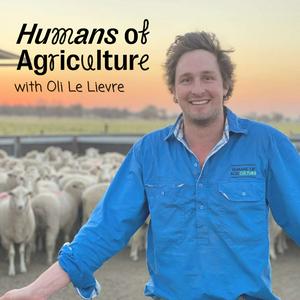
About Humans of Agriculture
Humans of Agriculture brings you inside the conversations, careers and stories shaping agriculture. Hosted by Oli Le Lievre, the podcast gives listeners access to the people, ideas and experiences you might not otherwise get close to.
Podcast websiteListen to Humans of Agriculture, A Bit of Optimism and many other podcasts from around the world with the radio.net app
Get the free radio.net app
- Stations and podcasts to bookmark
- Stream via Wi-Fi or Bluetooth
- Supports Carplay & Android Auto
- Many other app features
Get the free radio.net app
- Stations and podcasts to bookmark
- Stream via Wi-Fi or Bluetooth
- Supports Carplay & Android Auto
- Many other app features

Humans of Agriculture
Scan code,
download the app,
start listening.
download the app,
start listening.
Humans of Agriculture: Podcasts in Family
 Australia