
Listen to this podcast in the app for free: Download for free in the App Store
radio.net
Sleep timer
Save favourites
1222 episodes
Adult ADHD Explained: The Symptoms, Struggles and Solutions with Dr Kieran Kennedy
27/10/2026 | 1h 14 mins.Is ADHD really about being distracted, forgetful or lazy? Or is there something much more complex happening beneath the surface?
In this episode of Better Than Yesterday, Osher Günsberg sits down with psychiatrist and adult ADHD specialist Dr Kieran Kennedy, author of 'This Explains Everything: A Psychiatrist’s Guide to Navigating Adult ADHD', for an honest and insightful conversation about what it really means to live with ADHD.
Drawing on his own experiences with neurodivergence, Osher explores ADHD from a different perspective: what's it like to love, live or work with someone whose brain operates differently? Together, Osher and Kieramn unpack the hidden exhaustion of ADHD masking, why seemingly simple tasks can feel impossible, and how forgetfulness, procrastination and impulsivity can create tension in relationships.
They also explore the rise in adult ADHD diagnoses, misconceptions about medication, the connection between ADHD and addictive behaviours, and practical strategies for managing symptoms. Kieran also explains why understanding ADHD isn't about making excuses, but about replacing shame and frustration with empathy, responsibility and effective support.
Whether you have ADHD yourself, suspect you might, or share your life with someone who does, this conversation offers a refreshing perspective on neurodiversity and practical ways to make everyday life, and relationships, a little easier.
LINKS
Follow Kieran on Instagram
Kieran Kennedy's book 'This Explains Everything: A psychiatrist's guide to navigating adult ADHD' is available now
Sign up to the Better Than Yesterday newsletter
Watch episodes of Better Than Yesterday on YouTube
Watch full stories recorded live at Story Club on YouTube
Listen to the Story Club podcast
Get tickets for our next Story Club show
Get Osher's latest books here
Send a pic of what you're looking at to sendosheremail@gmail.com
See omnystudio.com/listener for privacy information.What Were They Thinking?: Putting Humanity First
25/10/2026 | 13 mins.Something a little different on this episode, in the wake of the shocking attack on independent MP Helen Haines last week.
Political violence is on the rise and there's growing division in our community - that's the danger of dehumanising people who see the world differently, or have a different background.
Instead of rushing to judgment and fuelling polarisation, we should be asking “What were they thinking?”
It's a simple questions that could help us rediscover empathy, understanding and common ground in a time when the way we treat one another matters more than ever.
LINKS
Show your support for Helen Haines: Save The Children fundraiser
Sign up to the Better Than Yesterday newsletter
Watch episodes of Better Than Yesterday on YouTube
Watch full stories recorded live at Story Club on YouTube
Listen to the Story Club podcast
Get tickets for our next Story Club show
Get Osher's latest books here
Send a pic of what you're looking at to sendosheremail@gmail.com
See omnystudio.com/listener for privacy information.From Australian Idol to Wicked: The Lessons Rob Mills Learned the Hard Way
20/10/2026 | 1h 3 mins.What does it take to build a career in entertainment, overcome self-doubt and learn to back yourself? In this episode of Better Than Yesterday, Osher Günsberg sits down with Rob Mills for an honest, funny and reflective conversation about the lessons he's learned throughout his career, from his early days on Australian Idol to becoming one of Australia's leading musical theatre performers.
Rob opens up about the fear of not being good enough, how he learned to embrace uncomfortable challenges, and how committing to the work helped him grow into the performer he is today. He shares the story of being cast in the Australian production of Wicked, including the nerve-racking audition that nearly made him walk out, and explains why embracing embarrassment, asking for help and continually developing new skills are essential to personal and professional growth.
The conversation also explores the realities of working in the performing arts, from the uncertainty of a freelance career to the discipline required to keep improving. Rob also reflects on mental health, the importance of normalising conversations about how we're really feeling, and why men in particular need to become more comfortable opening up and seeking support.
Beyond the stage, Rob and Osher discuss the changing music industry, the challenges facing live entertainment, and why streaming has made it harder for artists to build sustainable careers. And as he considers the next chapter of his life, Rob also reflects on fatherhood, mentoring younger performers and finding new ways to channel his energy and experience.
This is a conversation about ambition, vulnerability, creativity and the courage to keep showing up — even when it seems terrifying.
LINKS
Follow Rob on Instagram (plus find his latest tour dates)
Sign up to the Better Than Yesterday newsletter
Watch episodes of Better Than Yesterday on YouTube
Watch full stories recorded live at Story Club on YouTube
Listen to the Story Club podcast
Get tickets for our next Story Club show
Get Osher's latest books here
Send a pic of what you're looking at to sendosheremail@gmail.com
See omnystudio.com/listener for privacy information.Should a 24yr old living at home pay rent? Q&A Monday
18/10/2026 | 22 mins.Should a 24yr old man living at home pay rent?
How long is too long to hold a door open for someone?
Why did you take SO LONG to say the names on Idol?
These questions and more came in this week - ask yours here: sendosheremail@gmail.com
This week’s playlist “Do you have to dance like that?”
Tickets for Dec 6th Story Club show Ft: Clare Cavanagh, Mark Humphries, Gen Fricker, Charlotte Mortlock and Hannah Ferguson are here
Better Than Yesterday YouTube
See omnystudio.com/listener for privacy information.What Every Parent Needs to Know About Raising Boys in 2026 with Dr Justin Coulson
13/10/2026 | 1h 6 mins.What does it really mean to raise good men in today’s world?
In this important and timely conversation, psychologist, author and parenting expert Dr Justin Coulson joins Osher Günsberg to explore the challenges of raising boys in an age of social media, online influencers and increasingly distorted ideas about masculinity. From the impact of smartphones and the pursuit of online status to the troubling messages boys are exposed to about women, relationships and pornography, Justin explains why parents need to pay closer attention to what their sons are seeing, hearing and learning online — and how those influences can shape their behaviour.
Justin also shares practical ways to help boys develop empathy, self-control, confidence and a strong moral compass. He explains why healthy masculinity is about using strength to make others feel safer and stronger, why connection matters more than constant correction, and how parents can create opportunities for meaningful conversations about respect, consent and responsibility. They also explore the importance of positive male role models, helping boys find purpose through meaningful challenges, and preparing teenagers to make better decisions when faced with peer pressure.
If you’re raising boys, navigating the teenage years or wondering how we can help the next generation of men grow into kind, respectful and capable adults, this is a conversation worth having.
LINKS
Justin's book 'Boys: Building strong young men from the inside out' is out now
Follow Justin on Instagram
More from Justin Coulson
Sign up to the Better Than Yesterday newsletter
Watch episodes of Better Than Yesterday on YouTube
Watch full stories recorded live at Story Club on YouTube
Listen to the Story Club podcast
Get tickets for our next Story Club show
Get Osher's latest books here
Send a pic of what you're looking at to sendosheremail@gmail.com
See omnystudio.com/listener for privacy information.
More Society & Culture podcasts




Trending Society & Culture podcasts






















About Better Than Yesterday with Osher Günsberg
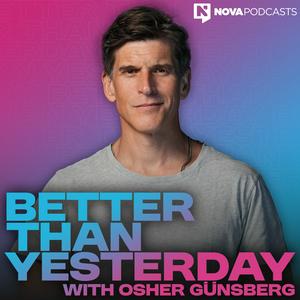
With every new day comes the opportunity to grow. Hosted by Osher Günsberg - a best-selling author, podcaster, TV host, husband, dad, stepdad, electric mobility enthusiast and part-time climate worrier. This podcast is here to help make today better than yesterday. Since 2013, the show has set out to improve life for you and the people you love. Sometimes it’s authentic conversations. Sometimes we’ll unpack the news or hear how Osher deals with life as a sober person with a different brain. But you’ll always hear something you need to hear (and laugh while you do). Listen to feel less alone, build better habits and discover some solution-based approaches for when life gets tricky.
Podcast websiteListen to Better Than Yesterday with Osher Günsberg, Conversations and many other podcasts from around the world with the radio.net app
Get the free radio.net app
- Stations and podcasts to bookmark
- Stream via Wi-Fi or Bluetooth
- Supports Carplay & Android Auto
- Many other app features
Get the free radio.net app
- Stations and podcasts to bookmark
- Stream via Wi-Fi or Bluetooth
- Supports Carplay & Android Auto
- Many other app features

Better Than Yesterday with Osher Günsberg
Scan code,
download the app,
start listening.
download the app,
start listening.
Better Than Yesterday with Osher Günsberg: Podcasts in Family
 Australia