
Listen to this podcast in the app for free: Download for free in the App Store
radio.net
Sleep timer
Save favourites
760 episodes
Still arguing with AI over a bad first draft? Try these 4 tips
25/10/2026 | 13 mins.Do you still have a prompt formula saved somewhere, maybe an acronym from an Instagram reel that promised better answers from AI? You paste it in, swap a few words, hit send, and what comes back still misses the mark.
Years of typing a few keywords into a search box have shaped how we talk to AI, and that habit might be costing you time and patience.
In this How I AI episode, Neo and I look at why prompt formulas took off, what has changed since, and how to brief AI so you get better work back with far less back and forth.
What you’ll learn:
Why prompt formulas became so popular, and why they matter far less now
What AI memory changes about the way you brief it
The old search habit that quietly works against you
A better way to give AI the background it needs
How to get AI to question your idea, not just your draft
Practical AI tools for productivity and focus
Real-world AI workflows used by high performers
How to use AI at work without burning out
Smart shortcuts for managing time and mental load
Connect with Neo Aplin on LinkedIn (https://www.linkedin.com/in/neoaplin/) and via inventium.ai (https://inventium.ai), where he leads Inventium's AI training and upskilling work with organisations and teams.
Find out more about Inventium AI’s training programs at inventium.ai
How I AI with Dr Amantha Imber and Neo Aplin explores how high performers are using AI at work to boost productivity, make better decisions and reduce overwhelm.
Want more practical ways to put AI to work? You can now follow How I AI separately on Spotify or Apple Podcasts so you never miss an episode.
My latest book The Energy Game is out now. You can order a copy here: https://amzn.to/48ID29M
Connect with me on the socials: Linkedin (https://www.linkedin.com/in/amanthaimber)
Instagram (https://www.instagram.com/amanthai)
If you are looking for more tips to improve the way you work and live, I write a weekly newsletter where I share practical and simple to apply tips to improve your life. You can sign up for that at https://amantha.substack.com/
Visit https://www.amantha.com/podcast for full show notes from all episodes.
Get in touch at amantha@inventium.com.au
Credits:
Host: Amantha Imber
Sound Engineer: Martin Imber
See omnystudio.com/listener for privacy information.REPLAY: Feel like you’re always behind? Chris Guillebeau has a fix for your time anxiety (Part 1)
21/10/2026 | 24 mins.**REPLAY**
Do you ever get the sense that no matter how much you do, you’re still running out of time? Like there’s something you should be doing, but you can’t quite figure out what it is?
In this episode of How I Work, we sit down with New York Times bestselling author Chris Guillebeau to talk about a feeling so many of us carry but rarely name: time anxiety. From guilt over unread emails to the pressure to leave a legacy, Chris shares the practical strategies that helped him stop chasing time - and start living with more calm and clarity.
** Free your team from time-consuming procurement tasks. Discover smart business buying, where unmatched selection meets AI-driven tools to simplify complex processes so you can focus on what matters most. Learn more at Amazon.com.au/howiwork **
In this episode:
What time anxiety is—and why so many of us feel it without even realising
How Chris let go of the pressure to leave a legacy
A weekly “time decluttering” ritual that can clear your calendar
Why “just prioritise better” is the worst advice
The bold email strategy Chris swears by (even if it ruffles a few feathers)
Why leaving 10–15 minutes of buffer time between commitments can change everything
Key Quotes:
“You have to decide for yourself what is enough.”
“It’s not about being an email ninja - it’s about understanding what matters.”
Connect with Chris on Instagram, X (Twitter), and LinkedIn and his website, Listen to his podcast Side Hustle School, and check out his latest book Time Anxiety.
More from How I Work
If drawing clearer lines between work and the rest of your life is something you want to go deeper on, I have put together a Spotify playlist of my favourite How I Work episodes on exactly that. Listen to the playlist here.
My latest book The Energy Game is out now. You can order a copy here: https://amzn.to/48ID29M
Connect with me on the socials: Linkedin (https://www.linkedin.com/in/amanthaimber)
Instagram (https://www.instagram.com/amanthai)
If you are looking for more tips to improve the way you work and live, I write a weekly newsletter where I share practical and simple to apply tips to improve your life. You can sign up for that at https://amantha.substack.com/
Visit https://www.amantha.com/podcast for full show notes from all episodes.
Get in touch at amantha@inventium.com.au
Credits:
Host: Amantha Imber
Sound Engineer: The Podcast Butler
See omnystudio.com/listener for privacy information.Your prompts are stuck in 2025. Here are 5 fixes
18/10/2026 | 12 mins.Some prompts have been with you for a year or more. They open with a grand persona for the AI, add a few rules in capital letters, and finish with a request to think it all through. They worked well once, and lately the results feel slightly off.
The AI models have changed, and a few of the habits we picked up in 2024 and 2025 now work against us.
In this How I AI episode, Neo and I walk through five ways good prompting has changed as of October 2026. You will come away with a simple way to tighten up the prompts you rely on most.
What you’ll learn:
What a persona really changes in an AI response
When a goal and a finished example beat step-by-step instructions
Why asking AI to think through its answer can backfire
How to add emphasis without boxing the AI in
What a good checklist looks like before AI hands work back
Practical AI tools for productivity and focus
Real-world AI workflows used by high performers
How to use AI at work without burning out
Smart shortcuts for managing time and mental load
Connect with Neo Aplin on LinkedIn (https://www.linkedin.com/in/neoaplin/) and via inventium.ai (https://inventium.ai), where he leads Inventium's AI training and upskilling work with organisations and teams.
Find out more about Inventium AI’s training programs at inventium.ai
How I AI with Dr Amantha Imber and Neo Aplin explores how high performers are using AI at work to boost productivity, make better decisions and reduce overwhelm.
Want more practical ways to put AI to work? You can now follow How I AI separately on Spotify or Apple Podcasts so you never miss an episode.
My latest book The Energy Game is out now. You can order a copy here: https://amzn.to/48ID29M
Connect with me on the socials: Linkedin (https://www.linkedin.com/in/amanthaimber)
Instagram (https://www.instagram.com/amanthai)
If you are looking for more tips to improve the way you work and live, I write a weekly newsletter where I share practical and simple to apply tips to improve your life. You can sign up for that at https://amantha.substack.com/
Visit https://www.amantha.com/podcast for full show notes from all episodes.
Get in touch at amantha@inventium.com.au
Credits:
Host: Amantha Imber
Sound Engineer: Martin Imber
See omnystudio.com/listener for privacy information.REPLAY: Why you feel busy all the time (even when you’re not), with Laura Vanderkam
14/10/2026 | 36 mins.**REPLAY**
What would you do with four extra hours a day? Probably say you don't have them. But according to Laura Vanderkam, one of the world's leading thinkers on time, they're already there. You're just not seeing them.
Laura has tracked her own time for 11 years. She's run large-scale time-tracking studies with hundreds of participants. And what she keeps finding is the same thing: the stories we tell ourselves about our time are almost always wrong. The tasks we dread feel longer than they are. The free time we insist we don't have keeps showing up in the data.
In this How I Work episode, I sit down with Laura to dig into what 11 years of time diaries actually reveal, why tracking your time for just one week can make you feel dramatically better about your life, and how to reclaim those post-dinner hours that most of us write off as dead time. Laura is a bestselling author of many books on time and productivity, and her latest, Big Time, is one of the most practical and perspective-shifting reads I've come across in a long time.
If you've ever ended a weekend convinced you had no time to yourself, this conversation will change how you see the week ahead.
** Free your team from time-consuming procurement tasks. Discover smart business buying, where unmatched selection meets AI-driven tools to simplify complex processes so you can focus on what matters most. Learn more at Amazon.com.au/howiwork **
In this episode, Laura and I discuss:
Why tracking your time for a single week raises time satisfaction scores by nearly 18%, and what's actually driving that shift
The gap between how people think they spend their time and how they actually do, particularly for those who work flexibly or check email on weekends
The concept of "golden hours" and why the four to five hours between dinner and bedtime are far more valuable than most of us treat them
How to tell the difference between a complex life and a chaotic one, and the circus metaphor that reframes what a well-run household actually looks like
The weekly planning ritual Laura swears by, including the three rings of the circus she reviews every Thursday morning
Three surprisingly small changes that can make your workday feel genuinely better, without changing jobs
Key quotes
"Four to five hours is a lot of time to just write off as unusable. The day is not over after dinner."
"Complexity and chaos are not the same thing. We're aiming for controlled complexity."
Connect with Laura Vanderkam on Instagram, X (Twitter), and LinkedIn and her website, and check out her latest book Big Time: A Simple Path to Time Abundance wherever you get good books.
More from How I Work
And if this episode resonated, I recommend my conversation with Oliver Burkeman on how to make time for the things that actually count. Check that out here.
If you want to get better at prioritising what matters, saying no to things that don't, and making more intentional choices about how you spend your time, I've put together a Spotify playlist of my favourite How I Work episodes on exactly that. Listen to the playlist here.
My latest book The Energy Game is out now. You can order a copy here: https://amzn.to/48ID29M
Connect with me on the socials: Linkedin (https://www.linkedin.com/in/amanthaimber)
Instagram (https://www.instagram.com/amanthai)
If you are looking for more tips to improve the way you work and live, I write a weekly newsletter where I share practical and simple to apply tips to improve your life. You can sign up for that at https://amantha.substack.com/
Visit https://www.amantha.com/podcast for full show notes from all episodes.
Get in touch at amantha@inventium.com.au
Credits:
Host: Amantha Imber
Sound Engineer: The Podcast Butler
See omnystudio.com/listener for privacy information.Your custom GPTs and Gems are going away. Here's how to save them.
11/10/2026 | 7 mins.Who keeps moving my buttons? You know the one. You finally learn where everything lives, and overnight the menu has been rearranged, the feature has a new name, and the thing you spent months perfecting is on a list of things being retired.
In this How I AI episode, Neo and I make sense of the latest shake-up: what is replacing GPTs and Gems, when the lights go out on each platform, and how to back up your hard work so none of it vanishes without warning. You'll leave knowing what to save, what to convert, and when.
What you'll learn:
Why GPTs and Gems are being retired
What skills are and why they're taking over
The deadlines to put in your calendar now
The first thing to do before pressing any migration button
Practical AI tools for productivity and focus
Real-world AI workflows used by high performers
How to use AI at work without burning out
Smart shortcuts for managing time and mental load
Connect with Neo Aplin on LinkedIn (https://www.linkedin.com/in/neoaplin/) and via inventium.ai (https://inventium.ai), where he leads Inventium's AI training and upskilling work with organisations and teams.
How I AI with Dr Amantha Imber and Neo Aplin explores how high performers are using AI at work to boost productivity, make better decisions and reduce overwhelm.
Want more practical ways to put AI to work? You can now follow How I AI separately on Spotify or Apple Podcasts so you never miss an episode.
My latest book The Energy Game is out now. You can order a copy here: https://amzn.to/48ID29M
Connect with me on the socials: Linkedin (https://www.linkedin.com/in/amanthaimber)
Instagram (https://www.instagram.com/amanthai)
If you are looking for more tips to improve the way you work and live, I write a weekly newsletter where I share practical and simple to apply tips to improve your life. You can sign up for that at https://amantha.substack.com/
Visit https://www.amantha.com/podcast for full show notes from all episodes.
Get in touch at amantha@inventium.com.au
Credits:
Host: Amantha Imber
Sound Engineer: Martin Imber
See omnystudio.com/listener for privacy information.
More Business podcasts








Trending Business podcasts















About How I Work
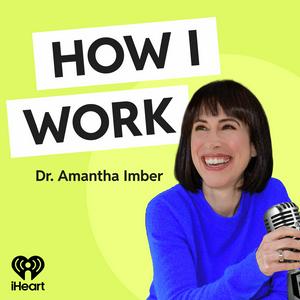
You know those annoyingly successful people who seem to have it all figured out? Time to steal their playbook. Organisational psychologist Dr Amantha Imber gets world‑class achievers to spill their secrets - the daily strategies behind their success through to life hacks and productivity hacks they’d rather keep to themselves. We’re talking practical tips for boosting your output (including clever AI tools and shortcuts that’ll make you look like a genius), managing overwhelm without losing your mind, and optimising both work and wellbeing. No motivational fluff. Just battle‑tested tactics from people who’ve cracked the code.
Podcast websiteListen to How I Work, The Diary Of A CEO with Steven Bartlett and many other podcasts from around the world with the radio.net app
Get the free radio.net app
- Stations and podcasts to bookmark
- Stream via Wi-Fi or Bluetooth
- Supports Carplay & Android Auto
- Many other app features
Get the free radio.net app
- Stations and podcasts to bookmark
- Stream via Wi-Fi or Bluetooth
- Supports Carplay & Android Auto
- Many other app features
How I Work
Scan code,
download the app,
start listening.
download the app,
start listening.
How I Work: Podcasts in Family
 Australia