

Listen to this podcast in the app for free: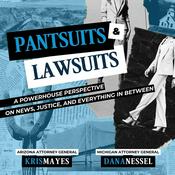 Download for free in the App Store
radio.net
Sleep timer
Save favourites
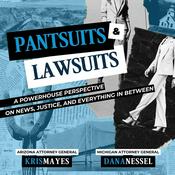
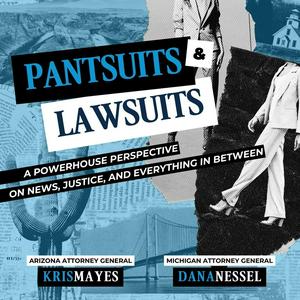
Pantsuits and Lawsuits with Attorneys General Kris Mayes and Dana Nessel
Attorneys General Kris Mayes & Dana Nessel
Latest episode
24 episodes
Crony Capitalism And The Cost To Consumers
20/04/2026 | 39 mins.When the rules change on a whim, your budget becomes collateral damage. Michigan Attorney General Dana Nessel sits down with University of Michigan economics professor Dr. Justin Wolfers to unpack why the affordability crisis is also a governance crisis: unpredictability, interventionist decision-making, and pay-to-play incentives that can quietly raise prices while weakening competition.
We dig into concrete Michigan flashpoints that make the stakes real, including the Gordie Howe International Bridge and what it means when major infrastructure and cross-border trade can be threatened for political leverage. We also talk energy policy and the cost of forcing uneconomic choices, plus the strange contradictions of blocking renewable energy like wind while global conflict pushes oil prices higher. Along the way, we connect these choices to business confidence, market stability, and the long-run foundations of growth.
Tariffs and manufacturing are a core thread, especially for automakers and suppliers that live and die by predictable supply chains. We also confront a harder question: what happens to democracy when major corporations feel too intimidated to speak publicly, even when policies hurt their bottom line? Finally, we zoom out to America’s innovation edge, the risk of scientific brain drain, and why welcoming global talent matters for pharmaceuticals, advanced manufacturing, AI, and the next generation of high-quality jobs.
Subscribe, share this with a friend who’s feeling the squeeze, and leave a review if you want more conversations like this. What’s the clearest sign you’ve seen that policy chaos is showing up in your everyday costs?Inside Data Centers: Who Pays, Who Profits, And Who Decides
06/03/2026 | 38 mins.A single hyperscale data center asking for 1.4 gigawatts can redraw the map of a state’s energy system—and your monthly bill. We unpack the real-world stakes of the AI buildout with a candid look at how utilities, regulators, and mega-customers strike deals that shape reliability, affordability, and community well-being for decades.
We walk through the mechanics of large-load growth: queue gaming that secures scarce capacity, special contracts that move behind redactions, and rate structures that can quietly shift costs from hyperscale users to households. You’ll hear why standardized large-load tariffs and hard collateral requirements matter, how transparency lets consumer advocates test utility claims, and what goes wrong when evidence is sealed. We also dig into utility incentives to build capital-intensive projects, the risk of “gold plating,” and the uncomfortable truth that regulated returns can persist even when performance lags.
The conversation turns to long-term risk. With 15 to 20-year deals on the table, rapid shifts in AI workloads, chips, and cooling could strand assets and leave communities paying for empty capacity. We outline practical guardrails: public dockets with accessible data, performance-based obligations, clawbacks on incentives, demand flexibility from data centers, and community benefits that outlast hype cycles. Along the way, we spotlight the role of state commissions versus attorneys general, why revolving doors and political money complicate decisions, and how to align tax incentives with real local gain.
If you care about fair rates, grid reliability, climate resilience, and the promises of AI, this is your roadmap to smarter policy. Subscribe, share with a friend who follows energy or tech policy, and leave a review with the guardrail you think should come first.Policy Whiplash and the Rule of Law: Attorneys General on What Happens Next
30/01/2026 | 36 mins.Rapid policy swings aren’t just political noise—they have real consequences. When funding changes overnight, clinics stall, families worry, and trust erodes. This episode looks at how state attorneys general step in to challenge unlawful actions, stabilize services, and protect the people caught in the middle.
Oregon Attorney General Dan Rayfield joins us to talk through managing early crises while also tackling the unglamorous but critical work of modernizing systems, supporting frontline staff, and defending consumers. He also explains the multistate challenge to federal tariffs and how questions of authority translate directly to everyday costs.
Former DC Attorney General Karl Racine reflects on the first travel ban, the evolution of the AG role in a more polarized era, and major accountability fights—including the emoluments lawsuit. We discuss prosecutorial ethics, officer-involved shooting investigations, and how new legal doctrines are reshaping the limits of accountability.
If you care about the rule of law, reliable public services, and institutions people can trust, this conversation offers clear-eyed insight and practical perspective. Subscribe, share, and let us know the reform you want to see next.Cleaning Up Power: Fighting Public Corruption
16/01/2026 | 38 mins.Power protects itself—until someone pulls the thread. We sit down with New Jersey Attorney General Matt Platkin to unpack how public corruption actually works, why it inflates your bills and weakens your services, and what it takes to hold powerful people to the same laws as everyone else. From the misuse of tax credits to officials running private ventures from public offices, we break down real cases, hard lessons, and the reforms that followed.
We talk candidly about the pressure that comes with prosecuting the well connected: claims of “weaponization,” media megaphones used against prosecutors who can’t respond, and the Supreme Court decisions that narrowed federal corruption tools. That’s where state attorneys general step up. Platkin explains the history behind New Jersey’s strong anti-corruption statutes, while Nessel shares Michigan’s recent overhaul of opaque earmarks—forcing sponsors to testify and face specific votes. These aren’t abstract fixes; they’re working guardrails that deter the next scheme.
The conversation turns to the hidden “corruption tax”: dark money washing through politics, utility influence that distorts rates and reliability, and FOIA gaps that breed suspicion. We explore practical solutions with broad public support: banning stock trading for officials with enforcement power, tough financial disclosures, cooling-off periods to slow the revolving door from elected official to lobbyist, robust public financing to elevate small donors, and a sustained push to overturn Citizens United. If the system looks rigged, trust dies; if the rules are clear and enforced, trust returns dollar by dollar.
If you care about honest government, pocketbook fairness, and the health of democracy, this one matters. Listen, share with a friend, and tell us the first anti-corruption reform you want to see in your state. And if you believe this work should continue, subscribe, leave a review, and help more people find the show.Taxation Without Representation
19/12/2025 | 27 mins.A district spoke, and power stalled. When voters in Arizona’s 7th chose Adelita Grijalva, the oath never came—leaving more than 800,000 people without a voice for 50 days. We take you inside the legal fight to end the delay, the constitutional questions it raised, and the very real ways a shutdown and a locked office can silence a community that did everything right at the ballot box.
Adelita shares the ground truth: pro forma sessions that swore in others but not her, long security lines without the member’s pin, no email or phones, and a stack of constituent cases with nowhere to go. From veterans benefits and immigration emergencies to Social Security help, the gears of government froze for an entire district. We talk through why that matters far beyond Arizona—because if a Speaker can pause representation, every voter is one procedural tactic away from losing their seat at the table.
We also dig into the bipartisan outrage, from conservative legal voices to longtime progressives, and why a simple, automatic swearing-in rule could prevent abuse regardless of which party holds the gavel. Then we connect the dots to the Epstein files and a discharge petition designed to force transparency, centering survivors’ rights over partisanship. Adelita explains the push for full disclosure, accountability for anyone implicated, and how Congress can reclaim its role while honoring separation of powers.
If you care about fair representation, clean process, and real services reaching real people, this story matters. Hit play, learn what changed, and see what comes next. If the conversation resonates, subscribe, share with a friend, and leave a review so more listeners can find it.
More Government podcasts
 Law ReportGovernment, News, Politics
 The Lawfare PodcastGovernment, History, News, Politics
 The National Security PodcastEducation, Government, News, News Commentary, Politics
 The DSR NetworkGovernment
 PekingologyGovernment
 FiascoGovernment, History, News, Politics
 Strict ScrutinyGovernment, News, Philosophy, Society & Culture
 The InterviewGovernment, News, Politics
 Defence & Security Podcast NetworkBusiness, Government
 The Grumpy StrategistsGovernment, News, Politics
Trending Government podcasts
 In Australia’s National Interest - Security of Critical InfrastructureGovernment
 Rethinking PalestineGovernment, News, News Commentary
 The Prodcast with Richard AedyGovernment
 A Better Peace: The War Room PodcastGovernment, History
 The AssetGovernment, History, True Crime
 Asia Pacific Defence ReporterGovernment, News, News Commentary, Politics
 Underground StrategyBusiness, Government, History
 Best Practice: Family law tips by Registrars for PractitionersEducation, Government
 Red Eye RadioDaily News, Government, News
 The Lawfare Podcast: Patreon EditionBusiness, Government, News
 The Law ShowGovernment, News, Politics
 Columnistas Página 13Government, Leisure, News, TV & Film
 سقراط مع عمر الجريسيGovernment
 WorkSafe WA podcastsEducation, Government
 LondongradDocumentary, Government, News, Society & Culture
 The Oath and The OfficeGovernment, News, Politics
- The Grumpy StrategistsGovernment, News, Politics
About Pantsuits and Lawsuits with Attorneys General Kris Mayes and Dana Nessel
Pantsuits and Lawsuits is a no-holds-barred podcast featuring Michigan Attorney General Dana Nessel and Arizona Attorney General Kris Mayes as they break down the biggest legal and political battles shaping the nation. With sharp wit and deep expertise, these two trailblazing AGs will keep you informed on what’s happening in their offices, how they’re fighting to protect your rights, and what’s at stake in the courts. From democracy and civil rights to corporate accountability, they’ll tackle it all—bringing in expert guests along the way to dig even deeper. Smart, bold, and unapologetically candid—this is the legal commentary you didn’t know you needed.
Podcast websiteListen to Pantsuits and Lawsuits with Attorneys General Kris Mayes and Dana Nessel, Law Report and many other podcasts from around the world with the radio.net app
Get the free radio.net app
- Stations and podcasts to bookmark
- Stream via Wi-Fi or Bluetooth
- Supports Carplay & Android Auto
- Many other app features
Get the free radio.net app
- Stations and podcasts to bookmark
- Stream via Wi-Fi or Bluetooth
- Supports Carplay & Android Auto
- Many other app features

Pantsuits and Lawsuits with Attorneys General Kris Mayes and Dana Nessel
Scan code,
download the app,
start listening.
download the app,
start listening.
 Australia