
Listen to this podcast in the app for free: Download for free in the App Store
radio.net
Sleep timer
Save favourites
739 episodes
Your Inner Coach With Carly Taylor
25/10/2026 | 8 mins.Most of us spend a lot of time listening to the voice in our heads, especially when it turns negative. This week Carly looks at what happens when you start answering back instead.
She explores research by psychologist Ethan Kross showing that talking to yourself using “you” or your own name helps you perform better under stress and see challenges as less threatening. She also looks at how Marcus Aurelius used his private journal to coach himself.
In this episode:
Why we listen to our negative self-talk as if it’s the truth
How using your own name creates helpful distance
The sage and the gremlin
A simple way to coach yourself in the moment
Sources:
Martyn Lloyd-Jones, Spiritual Depression: Its Causes and Cure (1965)
Kross et al. (2014), “Self-talk as a regulatory mechanism: How you do it matters,” Journal of Personality and Social Psychology
Moser et al. (2017), “Third-person self-talk facilitates emotion regulation without engaging cognitive control,” Scientific Reports
Ethan Kross, Chatter (2021)
Marcus Aurelius, Meditations
See omnystudio.com/listener for privacy information.Mega Focus and the Attention Revolution with Adam Williams
23/10/2026 | 58 mins.Your attention is being hijacked every day, and it is quietly shaping the life you get. Dr Paul Taylor and Adam Williams reveal how to spot the hidden cost of distraction, reclaim control, and start directing your attention toward what actually matters. Adam Williams, author of Mega Focus: Join the Attention Revolution, spent 30 years working inside the attention economy in advertising, innovation, promotions, and events before switching sides when he realised he was checking emails instead of being present with his daughter.That shift led him to build a practical framework for understanding why we reach for our phones, why we avoid hard things, and why so much of modern life runs on autopilot.
You will discover:
Why attention matters more than talent, intelligence, or motivation
The difference between the "builder" and the "architect" in your brain
How the "attention tax" exposes the opportunity cost of distraction
Why a quick email or "quick question" can destroy deep work for nearly half an hour
How sleep, energy, and environment shape the amount of attention you really have
The four core purchasing triggers that advertisers use to win your focus
Why boredom, discomfort, and effort are not enemies, but the raw material of creativity and progress
Paul and Adam also unpack the psychology behind social media, status signalling, happiness chasing, and the arrival fallacy, making the case that contentment beats endless pursuit every time. If you have ever felt busy but not truly effective, connected but not present, or productive but strangely off-course, this conversation will hit hard. Perfect for anyone who wants to work smarter, think more clearly, and stop outsourcing their life to algorithms, alerts, and other people's goals. If you are ready to take back control of your attention, this one belongs at the top of your queue.
Time Stamps
03:23 - From advertising to studying attention
04:06 - The moment Adam noticed his own attention problem
06:07 - Attention audits and the idea of an attention heat map
07:00 - Calculating the lifetime cost of phone use
08:15 - What attention tax really means
10:21 - Why attention matters more than talent or motivation
11:53 - The hidden cost of workplace interruptions
14:25 - What drives distraction and comfort-seeking
15:15 - The builder and architect model of attention
16:38 - Three things the fast brain tries to do
18:22 - Why busywork feels easier than meaningful work
19:23 - Remove to improve
20:26 - Who am I, what do I want, what do I do
22:22 - Conditions of happiness and the arrival fallacy
24:24 - Why chasing happiness can backfire
25:30 - Relevance, signalling, and how attention is captured
29:51 - Frequency, timing, and context in advertising
32:43 - Reclaiming attention through awareness and alignment
32:51 - The four key purchasing criteria
37:44 - How emotion beats logic in buying decisions
39:54 - Giving attention versus getting attention
40:14 - Infobesity, infomania, and digital overload
43:06 - Why many people cannot sit with their own thoughts
45:21 - The dark side of getting attention online
48:03 - Why understanding your brain helps you take back control
50:00 - Satisfaction, contentment, and goals without deferring life
51:43 - Attention as the upstream driver of thought and action
53:48 - Mega Focus as macro and micro attention management
55:10 - Perfectionism, energy, and attention tax in daily life
56:13 - The end of effort and why hard things matter
58:26 - Tools, calculators, and exercises on Adam's website
Quote:
“Attention lives upstream of everything in your life.”
Resources
Website: https://theattentionarchitect.au/
LinkedIn: https://www.linkedin.com/in/theattentionarchitect/
Support the Podcast
If you found this conversation valuable, consider subscribing and leaving a review on your preferred podcast platform. Your feedback helps us continue to bring you insightful discussions on important health topics.
See omnystudio.com/listener for privacy information.Exercise First, Drugs Second
20/10/2026 | 12 mins.What if one of the most effective treatments for depression and anxiety in young people needs no prescription, has no withdrawal and makes you stronger?
In this episode, Dr Paul Taylor unpacks a 2024 meta-analysis from Victoria University. It found that resistance training produced large reductions in depression and anxiety symptoms in people aged 26 and under. He then sets it against the largest analysis of its kind, a BMJ network meta-analysis of 218 trials and more than 14,000 people. In that analysis, walking, jogging, yoga and strength training matched therapy and outperformed SSRIs.
In this episode:
Why strength training was overlooked for decades in mental health research
The training “recipe” behind the biggest effects: sets, reps, intensity and duration
Why harder exercise and clear structure produced better results
How few young people in Australia, the UK and the US meet activity guidelines
The case for prescribing exercise before medication for young people
Key studies:
Marinelli et al. (2024). Resistance training and combined resistance and aerobic training as a treatment of depression and anxiety symptoms in young people. Early Intervention in Psychiatry. https://doi.org/10.1111/eip.13528
Noetel et al. (2024). Effect of exercise for depression: systematic review and network meta-analysis. BMJ. https://doi.org/10.1136/bmj-2023-075847
Survey data:
ABS National Nutrition and Physical Activity Survey 2023
Sport England Active Lives Children and Young People Survey 2024-25
CDC Youth Risk Behavior Survey 2025
This episode is for education, not medical advice. If you or your child takes medication, talk to your doctor before making any changes.
More at paultaylor.biz
See omnystudio.com/listener for privacy information.The Trap of Perfectionism and What To Do About It With Carly Taylor
18/10/2026 | 4 mins.See omnystudio.com/listener for privacy information.Counterpunch, reality therapy, and giving young people real tools for life with Mercedas Taaffe-Cooper
16/10/2026 | 49 mins.The biggest mistake in youth mental health? Treating kids like they’re broken instead of teaching them how to move, act, and build resilience. Mercedes Taaffe Cooper reveals why early intervention and education, not endless labels and talk therapy, are changing the game for young people. Paul and Mercedes unpack the deeper problem with the medical model, how normal adolescent struggles get turned into diagnoses, and why that can create more harm than help. Mercedes shares the personal journey that took her from elite boxing and coaching the Irish team to clinical psychology, reality therapy, and ultimately building Counterpunch, a program designed to help kids learn through action, not just conversation.
You’ll discover:
Why reality therapy and choice theory focus on doing rather than overthinking
How the "front two wheels" car analogy helps kids understand thinking, feeling, and behaviour
Why combat sports can be powerful tools for confidence, regulation, and self-awareness
How a 24-week, three-phase program moves kids from connection to leadership
Why peer mentoring is often more powerful than adult advice for adolescents
Mercedes also explains how Counterpunch works in boxing gyms and youth-facing settings, why it’s especially effective for kids who feel isolated, and how the program is now scaling online so more facilitators can deliver it. From goal-setting and embodied learning to social connection and self-efficacy, this episode makes a compelling case for giving young people practical tools before problems become crises. Essential listening for parents, coaches, teachers, and anyone working with young people who wants to create real change, not just another conversation. If you care about building confidence, resilience, and lifelong skills, this one is for you.
Timestamps
(02:11) Mercedas Taaffe Cooper’s background in boxing, coaching, psychology, and moving to Australia
(03:59) Discovering reality therapy and choice theory through research and training
(05:48) Building Counterpunch from pilot program to scalable youth model
(07:56) Reality therapy explained - focusing on action instead of just thinking
(10:19) Why action is the real engine of change for young people
(13:43) Why Mercedas rejected the medical model and built a strengths-based program
(15:05) The harm of overusing labels and diagnoses with kids
(18:05) The original research, the boxing component, and the first curriculum ideas
(20:21) Moving from government pilot to a private program in South Australia
(21:19) Taking the training online and building a replicable system
(23:03) What a Counterpunch session looks like from induction to a 24-week structure
(24:21) VSMART goals and linking values to physical progress
(26:16) The three phases - body awareness, relationships, and leadership
(27:13) Why martial arts and team sport build resilience and confidence
(32:38) Why group connection and peer mentoring matter so much
(34:15) Why combat sports work for youth communication and trust-building
(36:31) Battle in the Hills and using boxing as a progression pathway
(39:03) How embodied learning and physical challenge reinforce psychological tools
(42:11) Why boxing is used as a medium, not the end goal
(43:29) Why combat sports are different from professional violence
(45:49) Respect, manners, and life skills learned through martial arts
(47:15) Who the program is for and how youth-facing professionals can use it
(49:08) How to get involved and the four Ps for potential facilitators
(50:12) Final reflections on skills, not labels, for young people
Quote “The biggest difference between reality therapy and cognitive behavioural therapy is that it very much focuses on the doing rather than the thinking.”
Resources
Website: https://counterpunch.com.au/
LinkedIn: https://www.linkedin.com/in/mercedas-taaffe-cooper-3b3623117/
Instagram: https://www.instagram.com/counterpunch_life
Facebook: https://www.facebook.com/counterpunchAU/
YouTube: https://www.youtube.com/@counterpunchlife
Support the Podcast
If you found this conversation valuable, consider subscribing and leaving a review on your preferred podcast platform. Your feedback helps us continue to bring you insightful discussions on important health topics.
See omnystudio.com/listener for privacy information.
More Education podcasts





Trending Education podcasts













About Hardiness with Dr Paul Taylor
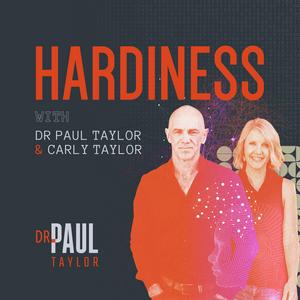
Host Dr Paul Taylor, a Psychophysiologist, Neuroscientist, Exercise Scientist, and Nutritionist interviews experts from around the world on cutting edge research and practices related to improving hardiness in your mind, body and brain to become your best self.
Podcast websiteListen to Hardiness with Dr Paul Taylor, The Jefferson Fisher Podcast and many other podcasts from around the world with the radio.net app
Get the free radio.net app
- Stations and podcasts to bookmark
- Stream via Wi-Fi or Bluetooth
- Supports Carplay & Android Auto
- Many other app features
Get the free radio.net app
- Stations and podcasts to bookmark
- Stream via Wi-Fi or Bluetooth
- Supports Carplay & Android Auto
- Many other app features
Hardiness with Dr Paul Taylor
Scan code,
download the app,
start listening.
download the app,
start listening.
Hardiness with Dr Paul Taylor: Podcasts in Family
 Australia