
Listen to this podcast in the app for free: Download for free in the App Store
radio.net
Sleep timer
Save favourites
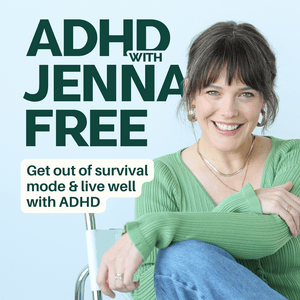
ADHD with Jenna Free
Jenna Free, Canadian Certified Counselor | ADHD Therapist & Coach
Latest episode
81 episodes
80: Why Is ADHD So Hard? What Regulation Can Change About Your Symptoms
12/10/2026 | 24 mins.You keep wondering why ADHD is so hard when everyone around you makes it look like a simple brain difference, and you're tired of wondering if you're just bad at life. If you've spent years blaming your executive functioning for the overwhelm, the procrastination, and the freeze, this episode is for you.
I'm an ADHD therapist who has ADHD, and after working with well over 1,200 people, I've seen that much of what gets called ADHD is a nervous system stuck in fight-or-flight. I walk through how hypervigilance, defensiveness, people-pleasing, and ADHD paralysis all come from the same place, and what changes when your body finally feels safe enough to let your brain do its job.
Join my free workshop, Why Is My ADHD So Hard?, on October 20th. Grab your spot here. https://jennafree.com/free-workshop
01:05 – Why ADHD Feels Overwhelming and Challenging
11:01 – ADHD Paralysis Explained as Fight, Flight, or Freeze
12:06 – Avoidance, Procrastination, and Stress in ADHD
08:27 – People Pleasing, Boundaries, and the Fawn Response
20:02 – The Benefits of Regulation for Executive Functioning
Let's stay connected!
Want to thrive with ADHD? Come hang out with me on Instagram!
Get out of paralysis, be more productive, and enjoy your life again! Join an upcoming group!79: 4 Reasons Behind ADHD People Pleasing
28/09/2026 | 23 mins.You keep saying yes when you mean no, then spend the rest of the day resentful about something you agreed to in the first place. If you've been told your ADHD people-pleasing is a boundaries problem, and that explanation hasn't actually changed anything, this episode is for you.
I break down the four explanations coaches and therapists usually give for people-pleasing and ADHD: rejection sensitive dysphoria, the automatic yes, penance for old mistakes, and chasing a quick dopamine hit. None are wrong, and none go deep enough on their own. I walk through why the fawn response takes over before you're even aware you've said yes, and what nervous system regulation for ADHD actually has to do with finally being able to say no and mean it.
If you're caught in that yes-then-resent cycle and want to work through it directly, I'm hosting a Healing People Pleasing workshop on October 9th.
00:00 – Understanding People Pleasing and ADHD
03:07 – People Pleasing as a Protective Shield Against Rejection
04:56 – The Fawn Response: Fight, Flight, Freeze, Fawn Explained
07:20 – Digging Deeper: Rejection Sensitivity and the Nervous System
21:15 – How Regulation Brings Freedom from People-Pleasing
Check out the show notes and other resources at https://jennafree.com/blog/4-reasons-behind-adhd-people-pleasing
Let's stay connected!
Want to thrive with ADHD? Come hang out with me on Instagram!
Get out of paralysis, be more productive, and enjoy your life again! Join an upcoming group!78: How to Regulate with ADHD When Tips and Tricks Don't Work
21/09/2026 | 26 mins.You've been told to take a deep breath and get regulated, and it didn't stick, so you're stuck wondering what you're missing. If tips and tricks have stopped working, this episode is for you.
I get into why nervous system regulation for ADHD isn't one action but three layers stacked together: the body, the mind, and behavior, and why skipping straight to behavior is where most people get stuck. I walk through the ADHD fight-or-flight response, whether meditation really helps, and what healing from chronic dysregulation requires when a single breath isn't enough.
For therapists, counselors, psychologists, doctors, coaches, social workers, and occupational therapists working with ADHDers who have been leaning on coping tools and external strategies without seeing the shift stick. I'm hosting a free ADHD Regulation Method training on September 21st, where we'll dive into how to do this work with your clients.
00:00 – What Does ADHD Regulation Really Mean?
05:58 – True ADHD Regulation: Nervous System Retraining
07:09 – Step 1: Teaching Your Body Safety
03:35 – The Limits of Routines, Yoga, and Meditation
22:14 – Recognizing Physical Signs of Dysregulation
Check out the show notes and other resources at https://jennafree.com/blog/how-to-regulate-with-adhd-when-tips-and-tricks-dont-work
Let's stay connected!
Want to thrive with ADHD? Come hang out with me on Instagram!
Get out of paralysis, be more productive, and enjoy your life again! Join an upcoming group!77: ADHD Time Blindness: How to Stop Fighting the Clock
14/09/2026 | 19 mins.Your relationship with time feels broken, and you've probably filed it under ADHD time blindness and left it there. If rushing, scrambling, and never having enough time has started to feel permanent, this episode is for you.
I get into why time blindness isn't one problem but two: the ADHD piece and the fight-or-flight piece stacked on top of it, and why that second layer changes more than people realize. I walk through the time scarcity mindset, why ADHD procrastination often starts with feeling like time already ran out, and my time container concept for how to manage time with ADHD without fighting the clock all day.
For clinicians working with ADHDers who have been trying to help them time-block or use these external tools to get time under control. I'm hosting a free ADHD Regulation Method training on September 21st, where we'll dive into how to do this work with your clients.
00:00 – Understanding ADHD and Time Blindness
01:20 – How Fight or Flight Distorts Time Perception
03:47 – The Scarcity Mindset Around Time
09:37 – Shifting from Task Lists to Time Containers
18:38 – ADHD Clinician Training and Final Thoughts
Related Episode
75: Scarcity Mindset in ADHD: Why Nothing Feels Like Enough
Check out the show notes and other resources at https://jennafree.com/blog/adhd-time-blindness-stop-fighting-the-clock
Let's stay connected!
Want to thrive with ADHD? Come hang out with me on Instagram!
Get out of paralysis, be more productive, and enjoy your life again! Join an upcoming group!76: 3 Reasons to Set Your ADHD Diagnosis Aside
07/09/2026 | 18 mins.You know the label. ADHD, anxiety, OCD, autism, whatever you have been diagnosed with. You know the symptom, and it still hasn't changed anything. If a diagnosis has started to feel like a wall instead of an answer, this episode is for you.
I walk through why holding a diagnosis too close, ADHD or otherwise, can quietly stop the regulation work that helps. I get into what fight-or-flight does to executive functioning, why "that's just my ADHD" can shut down a search worth continuing, and how I use the hiking trail versus the hiker to explain what can shift and what can't.
For therapists, coaches, and clinicians, learn more about this approach at the free ADHD Regulation Method training I'm hosting on September 21st.
00:00 – Why Put Aside Your ADHD Diagnosis to Improve Symptoms
02:47 – How Fight or Flight Worsens ADHD Symptoms
07:34 – ADHD Overwhelm: Diagnoses vs. Dysregulation
13:19 – Essential Tools and Supports for ADHD Regulation
15:44 – The Regulation vs. Diagnosis Analogy: Hiking With ADHD
Check out the show notes and other resources at https://jennafree.com/blog/3-reasons-set-adhd-diagnosis-aside
Let's stay connected!
Want to thrive with ADHD? Come hang out with me on Instagram!
Get out of paralysis, be more productive, and enjoy your life again! Join an upcoming group!
More Education podcasts







Trending Education podcasts

















About ADHD with Jenna Free
ADHD with Jenna Free is a podcast for adults with ADHD who are done surviving their symptoms and ready to start thriving with ADHD, without the endless tips, hacks, and workarounds that have never really fixed anything. It's also the show where therapists, coaches, and counselors come to deepen their understanding of treating ADHD in adults and learn what regulation-based care looks like in practice.
Hosted by Jenna Free, a Canadian Certified Counselor (CCC) and ADHD therapist, this show exists to give you a completely different way of understanding ADHD in adults. You're stuck, overwhelmed, and exhausted because your brain is running on fight-or-flight. Willpower was never the solution, and once you understand that, everything changes.
I'll answer questions like:
Do I have ADHD?
What is ADHD task paralysis, and how do I get unstuck?
Why is my ADHD getting worse in my 40s?
What do ADHD and perimenopause do to your brain?
How do I manage ADHD emotional dysregulation without medication alone?
Why do I procrastinate so much with ADHD?
Why don't ADHD tips and tricks ever work long-term?
What does it look like to thrive with ADHD?
What does nervous system regulation have to do with ADHD?
How do I stop feeling overwhelmed with ADHD?
How do I get trained to treat ADHD in adults using a regulation-based approach?
What does ADHD therapist training through a regulation framework actually cover?
This podcast covers the full experience of living with adult ADHD: the real science behind procrastination in ADHD and ADHD task paralysis, why ADHD and perimenopause collide in ways no one talks about, and the solution-focused conversations most ADHD podcasts aren't having. For practitioners, Jenna also gets into the clinical side: what nervous system regulation training looks like, how to apply a regulation framework with clients, and what ADHD coach certification and ADHD therapist training often omit. Jenna shares her own story throughout, what it looks like to go from chronically dysregulated to thriving, so whether you're living with ADHD or working with people who are, you can see what's possible.
This show gives adults with ADHD, newly navigating a late diagnosis, and clinicians seeking ADHD continuing education one thing: a clear path toward healing
If you're an adult with ADHD who's tired of the commiseration and ready for a show that believes your life can look completely different, or a practitioner who wants to understand ADHD at the nervous system level, you're in the right place.
Podcast websiteListen to ADHD with Jenna Free, How to Be a Better Human and many other podcasts from around the world with the radio.net app
Get the free radio.net app
- Stations and podcasts to bookmark
- Stream via Wi-Fi or Bluetooth
- Supports Carplay & Android Auto
- Many other app features
Get the free radio.net app
- Stations and podcasts to bookmark
- Stream via Wi-Fi or Bluetooth
- Supports Carplay & Android Auto
- Many other app features
ADHD with Jenna Free
Scan code,
download the app,
start listening.
download the app,
start listening.
 Australia