

Listen to this podcast in the app for free: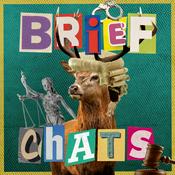 Download for free in the App Store
radio.net
Sleep timer
Save favourites
8 episodes
Why 60% of Australians Die Without a Will | With Barrister Nathan McComish
19/06/2026 | 41 mins.Wills and estates law touches almost every family at some point. But when succession planning isn’t done properly, the consequences can be devastating.
In this episode of Brief Chats, host Anna Svenson, Director and Principal Clerk of Svenson Barristers, speaks with Nathan McComish, a barrister with more than a decade of experience in wills and estates litigation.
They unpack the real legal battles that happen after someone dies, from contested wills and inheritance disputes to the growing risks created by digital documents, blended families, and rising property values.
With 60% of Australians reportedly dying without a valid will, the courts are increasingly dealing with complex disputes over estates that can easily exceed $1 million when property is involved.
Nathan shares how the law works when there is no will, what makes a will legally valid, and why inheritance disputes often become deeply emotional conflicts between family members.
This conversation explores the legal, moral and financial tensions that arise when families are forced to divide a lifetime of assets.
Get in contact with Svenson Barristers:
https://www.linkedin.com/in/anna-svenson-2610b790/
https://www.linkedin.com/company/svenson-barristers/?viewAsMember=true
https://svensonbarristers.com.au/
In This Episode
Why 60% of Australians die without a will
How courts decide who inherits when someone dies intestate
What legally makes a will valid in Australia
The rise of family provision claims
Why blended families create complex inheritance disputes
When courts can override someone’s will
The surprising legal rules around pets and inheritance
The truth about people working for decades expecting inheritance
How AI, digital documents and identity fraud are creating new legal risks
Key Topics Discussed:
Why Wills and Estate Disputes Are Increasing
Rising property values and longer life expectancy mean estates are often worth far more than families expect. What once may have been a modest home can now represent millions in assets, increasing the stakes of inheritance disputes.
The Problem of Dying Without a Will
When someone dies without a will, intestacy laws determine how assets are distributed. These laws prioritise spouses and children but can quickly become complicated in modern families.
What Makes a Will Legally Valid
A valid will in Australia typically requires:
A written document
• Signed by the person making the will
• Signed in front of two witnesses
Without these formal requirements, courts may still recognise an informal will, but doing so requires additional legal proceedings and evidence.
Family Provision Claims
Even if a will is valid, certain family members can challenge it if they believe they were not adequately provided for.
Common claimants include:
Spouses
Children
Dependents
Members of the household
The court then decides whether “adequate and proper provision” was made.
The Rise of Blended Family Disputes
One of the most common causes of litigation is the blended family dynamic.
Children from a first marriage may expect to inherit the family estate, while a surviving spouse from a second marriage may also have legal entitlement. These situations frequently lead to disputes once the “family glue” passes away.
When Promises of Inheritance Become Legal Claims
Some people spend decades working in family businesses or farms based on promises they will inherit the property.
When those promises are not honoured in a will, courts may enforce them under legal principles such as proprietary estoppel or unconscionable conduct.
The Role of Morality in Wills Law
Inheritance law isn’t purely financial. Courts often consider whether a deceased person had a moral duty to provide for certain family members.
However, fairness alone is not enough. Courts must balance:
Financial need
• Estate size
• Relationships with the deceased
• Competing beneficiaries
The Strange Cases of Wills Litigation
The episode also explores some of the unusual cases courts see, including:
DNA disputes over paternity and inheritance
• Attempts to challenge beneficiaries through illegal evidence
• Claims involving promises made decades earlier
Can You Leave Money to a Pet?
Pets legally count as property, meaning you cannot leave money directly to an animal. However, wills can include provisions where someone receives money conditional on caring for the pet.
The Emerging Risk of Fraud and AI-Generated Documents
With digital tools making document creation easier than ever, courts are starting to see cases involving:
Fake wills
• Stolen identities
• Fraudulent probate applications
As technology evolves, verifying the authenticity of legal documents is becoming increasingly important.
Key Takeaway
Estate disputes often arise not because families are greedy, but because intentions were never properly documented.
A carefully drafted will, updated regularly as life changes, remains one of the most important tools for protecting families and avoiding costly legal battles.
About the Guest
Nathan McComish is a barrister specialising in wills and estates litigation with more than 13 years of experience. His work focuses on inheritance disputes, contested wills, family provision claims, and complex estate litigation.
About the Host
Anna Svenson is the Director and Principal Clerk of Svenson Barristers, connecting leading barristers with solicitors and clients across Australia.
Subscribe to Brief Chats
If you enjoy thoughtful conversations with legal experts unpacking complex issues, follow Brief Chats for more discussions with barristers at the forefront of their fields.
Support the show: https://www.linkedin.com/company/svenson-barristers/
See omnystudio.com/listener for privacy information.The Role of Juries in Justice: Balancing Law and Community Standards
26/11/2025 | 55 mins.In this episode of Brief Chats, Anna Svenson, Director and Principal Clerk at Svenson Barristers, is joined by Barristers Philip Skehan and Caitrin Davis to unpack the history, purpose, and challenges of juries in the justice system. They explore how juries have evolved from panels of peers to representatives of the public, and how they continue to shape verdicts through the lens of community standards.
From the distinction between criminal and civil trials to the secrecy of jury deliberations and the rare nature of appeals, this conversation offers an insightful look inside one of the justice system’s most enduring institutions.
Get in contact with Svenson Barristers:
https://www.linkedin.com/in/anna-svenson-2610b790/
https://www.linkedin.com/company/svenson-barristers/?viewAsMember=true
https://svensonbarristers.com.au/
Key Takeaways
Juries are essential for applying community standards to legal decisions.
The history of juries shows a shift from peers of the accused to members of the public.
Judges apply the law; juries determine the facts of the case.
In criminal trials, juries must find guilt beyond reasonable doubt.
In civil trials, juries decide outcomes on the balance of probabilities.
Jury deliberations are confidential and protected by law.
Challenges in jury selection may arise due to perceived bias.
Media influence is a growing concern for modern juries.
Appeals on jury verdicts are rare and complex.
Juries remain a vital part of justice, upholding public confidence in the legal process.
Chapters
00:00 Introduction to Juries and Their Importance
02:54 The Evolution of the Jury System
05:54 Understanding the Role of the Jury
08:54 The Jury Selection Process
11:50 The Role of Court Associates and Jury Management
15:07 Challenges in Jury Selection
18:03 The Impact of Jury Decisions
20:52 Maintaining Jury Integrity
23:53 Conclusion and Reflections on Juries
27:56 Understanding Jury Verdicts
35:35 The Role of Judges in Jury Trials
40:58 Deliberation Dynamics and Jury Behavior
46:10 Appeals and Jury Verdicts
50:24 The Future of Juries in a Media-Rich World
Support the show: https://www.linkedin.com/company/svenson-barristers/
See omnystudio.com/listener for privacy information.The Good, the Bad and the Ugly of AI in Law — with Barrister Laurence White
12/11/2025 | 47 mins.Artificial intelligence is transforming industries worldwide — and the legal profession is no exception. In this episode of Brief Chats, Director and Principal Clerk Anna Svenson sits down with Laurence White, barrister and AI expert, to explore how machine learning and large language models are reshaping the practise of law in Australia.
From smarter research tools to alarming courtroom mishaps, they unpack the good, the bad and the downright ugly of AI in legal work. Expect real-world case examples, ethical discussions, and a sobering look at what happens when lawyers rely too heavily on artificial intelligence.
Get in contact with Svenson Barristers:
https://www.linkedin.com/in/anna-svenson-2610b790/
https://www.linkedin.com/company/svenson-barristers/?viewAsMember=true
https://svensonbarristers.com.au/
Key topics include:
How AI is helping lawyers work smarter, faster and cheaper.
The risks of hallucinations and fake citations in legal documents.
Recent Australian cases Dayal DPP v GR, May v Costaras where AI got it wrong.
What courts and regulators are now saying about responsible AI use.
Whether clients will use AI to “self-lawyer” — and what that means for the profession.
Why Listen:
If you’re a lawyer, legal student, or anyone curious about how technology is changing the justice system, this episode offers practical insights and cautionary tales from the front line of AI adoption in law.
Chapters
00:00 – Courtroom cold open — “Silence in the court!”
00:35 – Introducing Brief Chats and today’s topic: AI in the legal profession
01:30 – Meet Laurence White: barrister, FinReg specialist and early AI adopter
02:40 – How AI is being used in law firms today
04:30 – The good: speeding up research and document summarisation
07:20 – The billing dilemma — should clients pay less if AI saves time?
09:00 – The rise of the “AI-educated client”
10:30 – Why legal context still matters: the limits of chatbot advice
12:30 – The risks: confidentiality, bias and accuracy
13:50 – Accuracy studies — GPT-4 vs Lexis, Westlaw and others
16:10 – What are AI hallucinations and why are they dangerous?
19:00 – Case 1: DAYAL — fake citations and the Leap AI scandal
21:40 – Penalties for lawyers who misuse AI
22:10 – Case 2: DPP v GR — when both sides submit AI-generated fakes
24:50 – The temptation to cut corners and why supervision matters
26:05 – Justice Elliott’s warning on AI use in court in Dayal DPP v GR
27:40 – Case 3: May v Costaras — self-represented litigants and chatbot submissions
29:30 – How to spot AI-generated documents
30:30 – Final reflections: transparency, trust and the future of AI in law
Support the show: https://www.linkedin.com/company/svenson-barristers/
See omnystudio.com/listener for privacy information.Product Packaging & Makeup Dupes: Legal and Business Insights with Susan Gatford - Barrister, Trade Mark Attorney and Mediator
31/07/2025 | 30 mins.Discover how dupe culture, trademarks and copyright collide. Barrister Susan Gatford breaks down the Aldi copyright case and IP rules for look-alike products.Director and Principal Clerk of Svenson Barristers Anna Svenson sits down with Susan Gatford – barrister, mediator and trademark attorney – to unpack the rising trend of “dupes” in beauty and retail. From Instagram-fuelled hype to the landmark Aldi Australia packaging decision, learn where the legal lines are drawn and what brands should consider before copying a competitor’s look and feel.
Get in contact with Svenson Barristers:
https://www.linkedin.com/in/anna-svenson-2610b790/
https://www.linkedin.com/company/svenson-barristers/?viewAsMember=true
https://svensonbarristers.com.au/
Key Takeaways
Understand the economics that drive brands to release copycat products
Learn the difference between trademark and copyright protection in Australia
Hear how TikTok and Instagram have super-charged dupe culture
Get practical tips to protect your brand or launch a dupe ethically
Dive into the first Australian judgment finding Aldi liable for copyright infringement on packaging
Chapters
00:00 Introduction to Intellectual Property and Dupes
02:48 Understanding Copyright vs. Trademark
05:57 The Legal Landscape of Dupes in Makeup
08:51 Case Study: Aldi's Copyright Infringement
11:50 The Impact of Social Media on Dupes
15:04 Emotional Aspects of IP Infringement
17:43 Future of Dupes
Guest Spotlight - Susan Gatford
Susan is a Melbourne-based barrister who specialises in intellectual property disputes and commercial law. With qualifications as a trademark attorney, barrister and mediator, she has advised retail giants, start-ups and established labels on brand strategy, IP licensing and enforcement.
Connect: LinkedIn: https://www.linkedin.com/in/susan-gatford-91820b31/
Barrister profile: https://www.vicbar.com.au/Profile?ID=23712
Resources Mentioned
Federal Court judgment: APL v Aldi Australia (link)
IP Australia guides on trademarks and designs
ACCC consumer law overview
Support the show: https://www.linkedin.com/company/svenson-barristers/
See omnystudio.com/listener for privacy information.This will affect EVERYONE with a pet | Pets in Family Law: New legislation
03/07/2025 | 36 mins.This episode explores the evolving treatment of pets in Australian family law. Once seen purely as property, pets are now recognised for their emotional significance, leading to recent amendments of the Family Law Act 1975. Through real-life case studies our hosts unpack how pets can become the centre of disputes, and talk about how the new legal frameworks will give greater clarity to how pet ownership will be determined by the Courts.
Get in contact with Svenson Barristers:
https://www.linkedin.com/in/anna-svenson-2610b790/
https://www.linkedin.com/company/svenson-barristers/?viewAsMember=true
https://svensonbarristers.com.au/
Key Takeaways
Pets were traditionally classified as property in family law.
Recent amendments now acknowledge the emotional attachment people have to their pets.
The Roxy case showcased the emotional toll pets can have in separation disputes.
Pets are increasingly being used as bargaining chips in family law battles.
The Arena case confirmed that pets are not part of parenting orders.
Manipulating pet ownership in legal disputes can cause serious emotional harm.
New laws define companion animals and create specific ownership criteria.
Emotional connection now plays a role in determining legal ownership.
Custody disputes over pets are still not permitted as they are too legally complex, open ended and emotionally charged.
These amendments provide a framework for more nuanced legal consideration.
Chapters
00:00 – Introduction to Family Law and Pets
02:55 – The Legal Status of Pets in Family Law
05:55 – Case Studies: Pets as Bargaining Chips
08:51 – Roxy's Case: Emotional Attachment vs. Property Rights
11:53 – The Arena Case: Pets in Parenting Proceedings
14:52 – Manipulation and Weaponization of Pets in Disputes
17:50 – New Amendments in Family Law Regarding Pets
20:56 – Defining Companion Animals in Legal Terms
23:44 – Criteria for Determining Pet Ownership
26:57 – Challenges in Custody Disputes for Pets
29:50 – Reactions to the New Amendments
32:53 – Conclusion: The Future of Pets in Family Law
Support the show: https://www.linkedin.com/company/svenson-barristers/
See omnystudio.com/listener for privacy information.
More Arts podcasts







Trending Arts podcasts
 Down These Mean Streets (Old Time Radio Detectives)Arts, Performing Arts, TV & Film
 Secrets from the Green RoomArts
 Twenty Thousand HertzArts, Design, Music, Music Commentary
 Inklings Book ClubArts, Books
 Christopher Kimball’s Milk Street RadioArts, Food
 Jane Austen Bedtime StoriesArts, Books
 The Creative KindArts, Business, Visual Arts
 Take Four BooksArts, Books
About Brief Chats
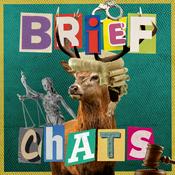
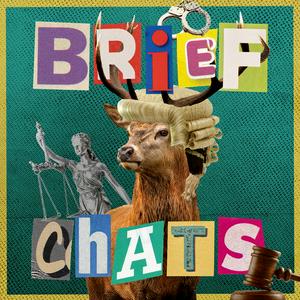
Join Anna Svenson and leading barristers as they unpack fascinating court cases, explore legal news, and dive into pop culture, offering insights for anyone curious about the legal world.
Podcast websiteListen to Brief Chats, The Bookshelf and many other podcasts from around the world with the radio.net app
Get the free radio.net app
- Stations and podcasts to bookmark
- Stream via Wi-Fi or Bluetooth
- Supports Carplay & Android Auto
- Many other app features
Get the free radio.net app
- Stations and podcasts to bookmark
- Stream via Wi-Fi or Bluetooth
- Supports Carplay & Android Auto
- Many other app features

Brief Chats
Scan code,
download the app,
start listening.
download the app,
start listening.
 Australia