

Listen to this podcast in the app for free: Download for free in the App Store
radio.net
Sleep timer
Save favourites
24 episodes
The Season 2 Finale: Disco Trees & Rich Inner Lives
23/12/2025 | 56 mins.It’s the Season 2 wrap of Glimmer Hunters - and we’re closing out 2025 the only way we know how: laughing through the chaos, obsessing over tiny joys, and celebrating the glimmers that actually land.
We swap Christmas glimmers (Lady Gaga! Year 6 graduation! Matching family pyjamas! gingerbread carnage!), unpack the strange beauty of nostalgia, and take a moment to reflect on what it’s meant to show up week after week - even when the tech tries to take us out (looking at you… “can you hear me now?”).
Plus: Renee unveils her peak Christmas final form - a spinning disco-ball Christmas tree on a mirrored turntable with spotlights - and honestly, it’s hard to return to regular life after that.
We also revisit some of Season 2’s standout moments, including:
Anna Ferguson’s refreshing take on meditation (and why it doesn’t have to be the answer to everything)
Bridget McNulty’s love of homeliness (and the deep exhale of getting your home back)
Katie Cooper (The White Flamingo) gifting us the phrase we’ll never recover from: “rich inner life”
And as we head into the holidays, we’re leaning into a new intention for the year ahead: do less… and make more room for glimmers to land.
Thank you for listening, sharing, and being part of the ride. See you in Season 3 💛
If you enjoyed the show: follow/subscribe, and (if you’re feeling generous) leave a rating or review - it genuinely helps other people find the pod.Matrescence, Micro-Joy & the White Flamingo with Dr. Katie Cooper
17/12/2025 | 54 mins.In this episode, Emily and Renee are joined by Dr. Katie Cooper - a recovering academic with a PhD in Earth Sciences turned play facilitator, and the creator of The White Flamingo, a community supporting women through the transition into motherhood.
Katie unpacks matrescence (think: adolescence, but with sleep deprivation and a tiny human to keep alive), why so many mums feel adrift without the language to explain it, and how radical honesty + play can help parents reconnect with themselves. Along the way, we talk about micro moments of joy (glimmers), perfectionism, building community in a nuclear-family world, and why we need to stop minimising our own experience with a single word: “but.”
In this episode, we cover:
What matrescence is and why it explains so much
The origin story of The White Flamingo (and the surprisingly perfect flamingo metaphor)
Why modern parenting spaces often focus on the baby… and leave the parent behind
Two powerful rules: No poo chat & No “buts” (only ands)
How play changes as we age - and how to expand your “play diet” again
Micro moments of joy you can orchestrate when life feels monotonous
Dance parties, daydreaming, and the “dose of joy” framework (D.O.S.E.)
Why comparison steals joy, and why “everything is a phase” matters more than ever
Links
Follow Katie on Instagram: @thewhiteflamingo_
Website: thewhiteflamingo.co.uk
If you enjoyed this episode, please share it with a friend, and if you’ve got 10 seconds, leaving a quick review on Apple Podcasts or Spotify helps more glimmer hunters find the show (and gives us a glimmer too 💛).ADHD Glimmers: The Hidden Superpowers of a Neurodivergent Brain
10/12/2025 | 41 mins.In this heartfelt and hilarious episode of Glimmer Hunters, Emily and Renee dive into the often-overlooked joyful side of ADHD - the glimmers, the magic, the chaos, and the unexpected superpowers of a neurodivergent brain.From sneaky barista kindness and nostalgic power outages to hyperfocus, time blindness, masking, and spontaneous kitchen dance parties, this episode is a beautiful celebration of the moments that make ADHD not just manageable - but meaningful.Emily and Renee unpack what it’s really like to live with ADHD, including the challenges of masking, the emotional weight of growing up misunderstood, and the deep creativity, empathy, humour, and connection that often come with a neurodivergent mind. They also share listener-submitted ADHD glimmers, touching on everything from hyperfocus wins to the pure relief of someone else taking over a boring task.This episode is raw, validating, funny, and deeply comforting - whether you have ADHD yourself, love someone who does, or simply want to better understand how differently (and beautifully) some brains work.In this episode, we explore:
What “ADHD glimmers” really are
Acts of kindness that hit differently
Hyperfocus, time blindness & dopamine chasing
Masking, unmasking & social exhaustion
Childhood triggers and self-trust
The creative chaos of neurodivergent thinking
Why ADHD conversations go everywhere (and we love it)
Listener-submitted ADHD glimmers
The joy of obsession, spontaneity & sideways problem-solving
If you’ve ever felt “too much,” “too scattered,” or like your brain works in a completely different rhythm - this episode is for you.Share your own ADHD glimmers with us on socials - we LOVE hearing them.Complex PTSD, Kintsugi & Glimmers: Nikki Everett on Turning Trauma Into Gold
02/12/2025 | 34 mins.In this episode of Glimmer Hunters, Renee and Emily sit down with Nikki Everett - author of Uncomfortably Comfortable, Lifeline ambassador, and passionate advocate for people living with PTSD and Complex PTSD (CPTSD).
Nikki shares her powerful story of working in palliative care, mental health and the prison system, experiencing multiple violent events, and eventually being diagnosed with Complex PTSD - a diagnosis she initially resisted. From flashbacks and dissociation to rebuilding her identity, Nikki talks honestly about what it’s like to walk “through madness to find me”.
Along the way, she explains how glimmers (those tiny moments of safety, joy or connection) became a vital part of her healing - from early morning magpies and ocean swims to journaling, plants, and Japanese philosophies like Kintsugi.
If you live with PTSD/CPTSD, love someone who does, or work in mental health, this one is a gentle but deeply validating listen.
In this episode we explore:
What Complex PTSD (CPTSD) is and how it differs from PTSD
Nikki’s experience of multiple violent incidents while working in the prison system
Dissociation, flashbacks and what’s actually happening in the brain during trauma
Naming brain parts as “characters” (Amy Amygdala, Colin Cortisol) to make trauma science less scary
How journaling unexpectedly became one of her most powerful healing tools
Discovering Kokedama and Kintsugi, and how they reshaped how she saw her “cracks”
Turning “brokenness” into a new identity - and learning to feel again after numbness
The role of glimmers in balancing triggers, negativity bias and survival mode
Reframing your story using the Hero’s Journey to move from victim to hero
Why owning your mental illness can remove shame and create deeper connection with others
Key takeaways
Knowledge is power: understanding what the brain does during triggers, flashbacks and dissociation can replace “I’m going crazy” with “my brain is protecting me”.
Tiny moments matter: glimmers in nature, animals, water and everyday life can be meaningful signposts that healing is happening.
You are not your diagnosis: Complex PTSD is not a personal failing; it’s your brain’s survival response to ongoing trauma.
Own your story: speaking openly about mental illness can remove shame - and give others permission to own their stories too.
Healing is a journey, not one magic fix: different therapies offer different “gold nuggets”; it’s okay to change approaches and advocate for what works for you.
Connect with Nikki:
Buy Nikki’s book Uncomfortably Comfortable: https://www.amazon.com.au/Uncomfortably-Comfortable-walking-through-madness-ebook/dp/B0DSLSFF4M
Learn more about Nikki & her resources: sheismental.com
Connect with Glimmer Hunters:
Listen to more episodes of Glimmer Hunters: https://bio.site/GlimmerHunters
Follow us on Instagram: @glimmerhunterspodcast
Gentle content note:
This episode includes discussion of violence, prisons, trauma, PTSD/CPTSD, nightmares and mental health struggles. Please listen at your own pace and take breaks if needed. If anything in this conversation brings stuff up for you, consider reaching out to a trusted person or mental health support in your area.
#complexPTSD #CPTSD #PTSD #trauma #healing #recovery #glimmers #triggers #glimmerhunterspodcast #NikkiEverett #UncomfortablyComfortable #Kintsugi #mentalhealth #dissociation #flashbacks #resilience #journalingS2 E7. Kitchen storage organisation is giving glimmers
26/11/2025 | 49 mins.Normally moving house, unpacking and sorting out what goes where is a pain and something we'd rather avoid doing altogether. Emily has recently moved into her new home and is knee-deep in unpacking boxes and getting everything sorted. When it came to getting the kitchen sorted, the trials of unpacking took a sparkly turn when her husband, Brendan, unlocked the joy of nailing domestic organisation for everything from the spices to the sauces. Brendan is our guest this week, and he shares with us the precise moment the kitchen went from storage-pandemonium, to becoming a little treasure trove of (neatly organised) glimmers.
Follow Glimmer HuntersInstagram: https://www.instagram.com/glimmerhunters/ Facebook: https://www.facebook.com/profile.php?...YouTube: / @glimmerhunters TikTok: / glimmer.hunters Newsletter: https://glimmerhunters.substack.com/
#glimmers #glimmerhunters #australianpodcast #fridgeorganization #kitchenorganisation#glimmerpodcast #storageglimmers #kitchenglimmers
More Education podcasts
 Finding Freedom with Peter CroneEducation, Health & Wellness, Mental Health, Religion & Spirituality, Self-Improvement, Spirituality
 The Jordan B. Peterson PodcastEducation, Science, Society & Culture
 How to Be a Better HumanEducation, Self-Improvement
 The Mel Robbins PodcastEducation, Health & Wellness, Mental Health, Relationships, Self-Improvement, Society & Culture
 6 Minute EnglishEducation, Language Learning
 Good Life ProjectBusiness, Education, Health & Wellness, Self-Improvement, Tutorials
 How Do They Afford That?Business, Education, Investing, Tutorials
 The Daily StoicBusiness, Education, Self-Improvement, Society & Culture
 Begin Again with Davina McCallEducation, Health & Wellness, Mental Health, Self-Improvement, Society & Culture
 The Jefferson Fisher PodcastEducation, Relationships, Self-Improvement, Society & Culture
Trending Education podcasts
 The Art of AccomplishmentBusiness, Education, Health & Wellness, Management, Mental Health, Self-Improvement
 Growth Mindset Psychology: The Science of Self-ImprovementEducation, Philosophy, Science, Self-Improvement, Social Sciences, Society & Culture
 Topher Field PodcastComedy, Education, News, Politics
 Making It With Jimmy Diresta, Bob Clagett and David PicciutoArts, Crafts, Design, Education, Leisure, Tutorials
 Hot WaterAlternative Health, Arts, Business, Education, Entrepreneurship, Fashion & Beauty, Health & Wellness, Religion & Spirituality, Self-Improvement, Spirituality
 Aubrey Marcus PodcastEducation
 Learning English For WorkEducation, Language Learning
 Navigating Narcissism with Dr. RamaniEducation, Relationships, Self-Improvement, Society & Culture, True Crime
 The Oddi PoddiBusiness, Education, Entrepreneurship, Relationships, Self-Improvement, Society & Culture
 Conversations with TylerEducation, Society & Culture
 Duolingo French PodcastEducation
 Easy French: Learn French through authentic conversations | Conversations authentiques pour apprendre le françaisCourses, Education, Language Learning, Places & Travel, Society & Culture
 Zero Limits PodcastEducation, Self-Improvement
About Glimmer Hunters
Discover the power of glimmers—those tiny, everyday moments that spark joy, calm, and connection.
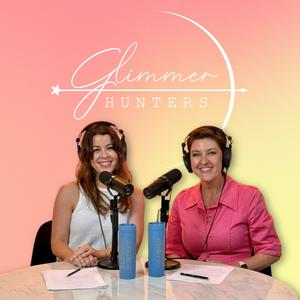
Join hosts Emily McGrorey and Reneé Ballard as they explore the science of nervous system regulation, emotional well-being, and mindfulness through stories, expert interviews, and lived experience.
If you're curious about how small moments can make a big impact, this podcast is your weekly reminder to slow down and find the good in life.
Podcast websiteListen to Glimmer Hunters, Finding Freedom with Peter Crone and many other podcasts from around the world with the radio.net app
Get the free radio.net app
- Stations and podcasts to bookmark
- Stream via Wi-Fi or Bluetooth
- Supports Carplay & Android Auto
- Many other app features
Get the free radio.net app
- Stations and podcasts to bookmark
- Stream via Wi-Fi or Bluetooth
- Supports Carplay & Android Auto
- Many other app features
Glimmer Hunters
Scan code,
download the app,
start listening.
download the app,
start listening.
 Australia