
Listen to this podcast in the app for free: Download for free in the App Store
radio.net
Sleep timer
Save favourites
100 episodes
#70 Live at the Bowens Expo: Underwater Timber and High Performance Homes with Julia Hall from Hydrowood and David from Hycon Homes - Part 1
18/10/2026 | 20 mins.Most people expect build quality to be low and accept it. Julia Hall reckons the industry shouldn't, and neither should the people buying.
Recorded live on the Circa stage at the 2026 Bowens Building + Innovation Expo, Luke and Dean kick off a three-part mini-series with Julia Hall from Hydrowood and David from Hycon Homes.
Julia explains where Hydrowood comes from: standing forests flooded when Tasmania's hydroelectric dams were built, harvested from a barge with a waterproof chainsaw, and the studies it took to prove the timber was still good and the harvest was safe. David shares how he went from apprentice to builder, into teaching building and construction, and back to building when he saw the same curriculum he'd learned decades earlier still being taught.
From there it's SIP panels explained simply, the rise of recycled and reclaimed products, and clients who now research what goes into their home before they meet the builder. Julia runs through what Hydrowood is used for, and David explains why Hycon Homes builds on ground screws, working with the ground rather than levelling it.
What you'll learn:
- How timber is harvested from underneath a dam
- Why David left building for teaching, and what brought him back
- What a SIP panel is, in plain terms
- Why recycled and reclaimed products have taken off
- What ground screws are and why Hycon Homes uses them
Chapters:
00:00 - Introduction
00:12 - Welcome to the Build Insite Podcast, live from the Bowens Expo
01:17 - Julia and Hydrowood
02:05 - Harvesting timber from under the water
02:40 - The red tape behind it
04:26 - David and Hycon Homes
05:20 - From apprentice to builder
06:58 - The biggest changes in the industry
08:19 - The turning point: builder, teacher, builder again
10:29 - What a SIP panel is
11:12 - Recycled and reclaimed products
13:01 - Clients who do their research
14:42 - What Hydrowood is used for
15:58 - Ground screws: working with the ground
18:34 - Building the system as a family
Hosts: Dean Backman & Luke Callery
Guests: Julia Hall from Hydrowood and David from Hycon Homes
Listen to the Build Insite Podcast on: Spotify, Apple Podcasts, and YouTube.
Explore more at: https://buildinsite.com.au/
Follow us on Instagram: @build.insite#69 The Case for Wool Insulation: Terra Lana with Caleb and Brad
11/10/2026 | 37 mins.Ask a builder what they like about fibreglass and the answer usually comes back the same: the price.
Back in the shearing shed at High Peak Station, just outside Christchurch, Luke and Dean sit down with Caleb and Brad from Terra Lana, the afternoon after touring the Terra Lana factory, made possible by McCormacks Australia.
Caleb covers where Terra Lana started, as a lighter retrofit product, and how the years since have gone into making the highest quality product they can. He explains how wool manages the moisture every home creates, holding that vapour in the fibre rather than the air pocket, so it keeps performing to its R value. Then what goes into a batt: oddments off the fleece, end-of-line carpet yarn that has never been walked on, and a polyester binder, thermally bonded, and backed by a long warranty.
Brad joins and takes on the hard part: shifting the habits of an industry that accepts the cheap, convenient product because on paper it meets the same code. He talks market share, the architects who value what Terra Lana stands for, and why every product they make is either biodegradable or recyclable. The crew get into the zero-waste factory, where offcuts go straight back to the start of the line and the plastic packaging comes back to be recycled into posts for vineyards and farms.
Luke raises mould and callbacks, and Brad explains how much water wool can take on before it loses its thermal properties. Caleb talks about the builders who put wool in their own homes but let the client pick fibreglass on price, and Dean makes the case for a minimum standard.
Brad finishes on what the upgrade really costs, how many sheep it takes to insulate a house, and why the difference is smaller than most builders think. His challenge to Australian builders: the product is here now through McCormacks Australia, so there's no excuse.
What you'll learn:
- What Terra Lana makes and how the business has changed over the years
- How wool manages moisture inside a ceiling or wall
- What goes into a wool batt, from fleece oddments to recycled carpet yarn
- How a zero-waste factory handles offcuts and plastic packaging
- Why Caleb says builders who switch to wool don't go back
- What the upgrade costs, and how many sheep it takes to insulate a house
Chapters:
00:00 - Introduction
00:30 - Welcome to the shearing shed at High Peak Station
02:13 - Working with New Zealand farmers
03:48 - What Terra Lana does
04:29 - Wool in products you'd never expect
06:17 - Where the business is focused now
07:27 - Wool versus fibreglass: managing moisture
08:53 - Fleece oddments and recycled carpet yarn
10:50 - Thermal bonding and the warranty
12:45 - Brad joins
13:17 - Shifting the industry's habits
16:37 - Market share and the architects
17:25 - Getting the builder on board
18:33 - A zero-waste factory
19:21 - Recycling the plastic into posts
21:06 - Earth and wool: what Terra Lana stands for
23:04 - Mould and callbacks
24:56 - Clearing up the misconceptions
26:19 - The price, and what builders put in their own homes
28:15 - Finding builders who value quality
29:08 - How many sheep it takes
29:50 - A message to Australian builders
30:55 - What the upgrade costs
33:04 - Where to find Terra Lana in Australia
33:57 - Seeing the houses perform
34:55 - The farms behind the wool
35:36 - Wrap up
Hosts: Dean Backman & Luke Callery
Guests: Caleb and Brad from Terra Lana
Listen to the Build Insite Podcast on: Spotify, Apple Podcasts, and YouTube.
Explore more at: https://buildinsite.com.au/
Follow us on Instagram: @build.insite#68 Paddock to Wool Insulation: High Peak Station with Hamish and Gemma
04/10/2026 | 15 mins.This one goes back to where the insulation starts: on the sheep's back.
After a morning touring the Terra Lana wool insulation factory, Luke and Dean head out to High Peak Station, just outside Christchurch at the foot of the Southern Alps, made possible by McCormacks Australia. Hamish and Gemma farm about 10,000 acres there, running 4,200 Perendale ewes alongside deer and beef cattle.
Hamish explains why they breed Perendales, a small, hardy, dual-purpose New Zealand sheep with a bright white, hard-wearing wool, and how every fleece gets graded on micron, brightness, whiteness and length. The top grade goes into rugs that can be dyed any colour. The next step down is just as good in quality but not as pretty, and that's the grade Hamish reckons ends up in insulation.
Gemma talks about building their home 15 years ago with young kids and asthma in the family, and why wool insulation and wool carpet were never in question. Dean shares his own story of living in a badly built, uninsulated house. Then it's on to where farming is heading: Halter collars on the cattle, phone cameras that weigh a sheep, and why young people who understand the technology now see farming as a cool industry to be in. Luke draws the same line to the trades.
Dean finishes on the hard question: why should builders move away from fibreglass? Hamish's answer is that wool closes the loop. In his view it clears the air, it's flame retardant, and it breaks down in landfill within three years. His advice to anyone choosing products: don't get sold on the story, look at where they come from and where they end up.
What you'll learn:
- Where wool insulation starts, from the paddock to the factory
- Why a hard-wearing Perendale fleece suits building products
- How a fleece is graded, and which grade ends up in insulation
- Why a family with asthma chose wool insulation and wool carpet
- How AI and wearable technology are changing livestock farming
- Hamish's case for wool over fibreglass
Chapters:
00:00 - Introduction
00:27 - Welcome to High Peak Station
01:00 - 10,000 acres of sheep, deer and cattle
01:46 - Breeding Perendales for meat and wool
02:55 - How a fleece is graded, and what goes into insulation
04:36 - Building a healthy home with wool
05:51 - Asthma and a badly built house
06:25 - Mould, and fibreglass in the roof
06:58 - Running the station: staff and working dogs
07:59 - AI and Halter collars on the farm
08:55 - Weighing sheep with a phone camera
10:21 - Genetics and EID tags
10:42 - Getting young people into farming
11:38 - The same problem in the trades
12:30 - Why wool over fibreglass
13:44 - Make a conscious choice
14:13 - Wrap up
Hosts: Dean Backman & Luke Callery
Guests: Hamish and Gemma from High Peak Station
Listen to the Build Insite Podcast on: Spotify, Apple Podcasts, and YouTube.
Explore more at: https://buildinsite.com.au/
Follow us on Instagram: @build.insite#67 Inside a Finished Foreverbreathe Home: Whio Homes at Springfield with James and Leesa - Part 2
27/09/2026 | 41 mins.Part two, and this time the house is finished, sited and lived in.
An hour out of Christchurch at Springfield, Luke and Dean walk through a 70 square metre Whio Homes build with James and Leesa Anderson. It's an adaptation of their Piwakawaka design, delivered on the back of a truck just before Christmas and livable within four days of landing.
Full Foreverbreathe spec: Terra Lana wool insulation, Magnum Board inside and out, LVL framing, a Knightons plantation eucalypt floor and thermally modified radiata cladding and decking. James explains why every fixing in the build is stainless, how a proprietary bracing panel keeps an engineer off the job, and why they stopped trying to make Magnum Board look like plasterboard and made a feature of the joins instead.
Then the numbers. Energy modelling put a Foreverbreathe three bedroom at 25 per cent less power to heat than a standard build, and overheating at 0.1 per cent of the year against 8 per cent. One small split system does the whole house. James makes the case for why this isn't Passive House: no mechanical ventilation, no chasing airtightness, natural materials doing the work instead.
What you'll learn:
- Why every nail, screw and fixing in the build is stainless
- How a finished house gets routed and trucked across the South Island at night
- What 70 square metres actually gets you, and why it isn't a tiny home
- Why they stopped fighting Magnum Board and made the joins a feature
- The energy modelling numbers behind a Foreverbreathe home
- Why Foreverbreathe doesn't chase airtightness the way Passive House does
Chapters:
00:00 - Introduction
00:20 - Springfield, an hour out of Christchurch
00:34 - A 70 square metre Piwakawaka adaptation
00:54 - Foreverbreathe spec and a Knightons eucalypt floor
01:24 - The attic space
01:38 - Terra Lana, Magnum Board and LVL
01:57 - Thermally modified decking02:20 - Delivered before Christmas on the back of a truck
02:41 - Moving houses at night and planning the route
03:46 - Getting a house to the West Coast
04:30 - Walking the house
04:51 - Gable vents and a roof space humidity vent
05:31 - Warm roof against cold roof
06:11 - The deck, the view and the client
06:45 - Ten to twelve weeks, and livable in four days
07:15 - Designing to the top of the snow load
08:26 - Why every fixing is stainless
09:47 - This is not a tiny home
10:56 - Thermally broken aluminium windows
11:09 - Bracing a big opening without an engineer
12:11 - Oil finishes against polyurethane
13:46 - Magnum Board floors, tiles and adhesives
15:00 - The V groove, and not fighting the product
17:32 - Attic storage in a small house
17:50 - What you get in 70 square metres
18:56 - A log burner for the power cuts
19:37 - Solar fitted at the yard
21:00 - When off grid beats a power connection
21:49 - One small split system for the whole house
22:06 - Full height doors
23:20 - Front doors and uPVC
24:55 - Foreverbreathe against Passive House
26:04 - The energy modelling numbers
27:14 - Why they don't chase airtightness
28:50 - Carbon, off cuts and end of life
30:46 - Wool insulation and the people installing it
31:58 - The bedrooms and the bathroom
32:40 - Hot water cylinders, inside or out
33:44 - Underfloor heating on a timber floor
38:05 - Scissor trusses and playing with volume
38:48 - Where to find Whio Homes
39:40 - What a whio actually is
Hosts: Dean Backman & Luke Callery
Guests: James and Leesa Anderson from Whio Homes
Listen to the Build Insite Podcast on: Spotify, Apple Podcasts, and YouTube.
Explore more at: https://buildinsite.com.au/
Follow us on Instagram: @build.insite#67 Modular, Transportable and Foreverbreathe: Inside Whio Homes with James and Leesa - Part 1
20/09/2026 | 27 mins.Day two of our New Zealand road trip, and this time the build site is under a canopy.
Luke and Dean head out to Whio Homes in Christchurch, made possible by McCormacks Australia. James and Leesa Anderson build high performance modular and transportable homes out of a 100 foot container barn, and every one of them goes to the Foreverbreathe specification.
They walk us through why they detail their own frames, how a finished house gets jacked up and trucked out over the fence, and how a team of five staff turns out 12 to 15 homes a year with room to more than double that on a second shift. James makes the case against building to code minimum, and explains why sealing homes up airtight has trapped the off-gassing from petrochemical products inside with the people living there.
Then it's into the detail: LVL framing, Magnum Board as the rigid air barrier, Terra Lana wool insulation, clay-based paint, wool carpets, thermally modified cladding, and the jump in cost from aluminium to uPVC to timber windows. Leesa finishes on one of their biggest challenges: convincing clients that bigger isn't better.
What you'll learn:
- Why a canopy and shipping containers can do the job of a multi-million dollar factory
- How a house leaves the yard fully finished and ready to connect on site
- What goes into a Foreverbreathe wall, floor and ceiling
- Why code minimum is the bare minimum, not the cost-effective option
- Why the window frame matters as much as the double glazing
- Why a smaller, better-performing home can be the better investment
Chapters:
00:00 - Introduction
00:42 - Day two in New Zealand: Whio Homes
01:00 - Inside the 100 foot container barn
01:24 - Detailing frames for a vertical sheet install
02:16 - Build height, transport and getting the house out
03:18 - Turnaround time and locking in selections early
04:21 - Why code minimum is the bare minimum
05:00 - Airtight homes and trapped off-gassing
05:39 - The Foreverbreathe materials list
07:19 - The dry bathroom from day one
07:53 - A small team and managing growth
08:41 - 12 to 15 homes a year, and scaling up
09:25 - Why a barn beats a multi-million dollar factory
11:02 - Piles, transport and setting the house on site
12:43 - Fully finished before it leaves the yard
13:23 - Delivered Tuesday, moved in by the weekend
14:04 - Second dwellings and granny flat enquiries
15:13 - Log burners and heating in the South Island
16:27 - Magnum Board, silica and finishes
18:04 - Cladding options
21:01 - Windows: aluminium, uPVC and timber
23:34 - Why bigger isn't better
25:03 - Floor plans and designing with the client
26:42 - Wrap up
Hosts: Dean Backman & Luke Callery
Guests: James and Leesa Anderson from Whio Homes
Listen to the Build Insite Podcast on: Spotify, Apple Podcasts, and YouTube.
Explore more at: https://buildinsite.com.au/
Follow us on Instagram: @build.insite
More Education podcasts









Trending Education podcasts






















About The Build Insite Podcast
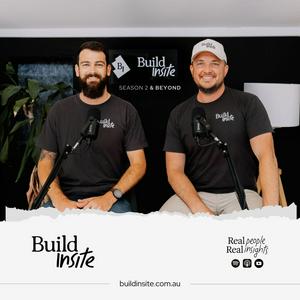
Welcome to the Build Insite Podcast – back with Season 2 and a renewed mission to bring you raw, practical building insights from across Australia and beyond.Led by a passionate team of builders and industry professionals, we explore the latest in construction techniques, design innovation, and the tools shaping modern building. But this isn’t just a trade chat — it’s a space for real stories, sharp lessons, and conversations that go beyond the build.Beginning Season 2, we’re doubling down on what matters:Smarter, healthier homesBusiness strategies that support better livingTechnology and systems that future-proof your workThe balance between building, business, and well-beingFrom high-performance homes to behind-the-scenes of iconic builds, we’re spotlighting the people, ideas, and challenges driving the industry forward. Whether you’re just starting out or leading your crew, you’ll find something valuable here — every week.Let’s build better, together.
Podcast websiteListen to The Build Insite Podcast, The Daily Stoic and many other podcasts from around the world with the radio.net app
Get the free radio.net app
- Stations and podcasts to bookmark
- Stream via Wi-Fi or Bluetooth
- Supports Carplay & Android Auto
- Many other app features
Get the free radio.net app
- Stations and podcasts to bookmark
- Stream via Wi-Fi or Bluetooth
- Supports Carplay & Android Auto
- Many other app features

The Build Insite Podcast
Scan code,
download the app,
start listening.
download the app,
start listening.
 Australia