
Listen to this podcast in the app for free: Download for free in the App Store
radio.net
Sleep timer
Save favourites
Full-Tilt Parenting: Strategies, Insights, and Connection for Parents Raising Neurodivergent Children
Debbie Reber
Latest episode
733 episodes

TPP 526: A Conversation with Jessica Slice About Her Family's Experience with PANS/PANDAS
20/10/2026 | 47 mins.Journalist and author Jessica Slice comes back to the show to share her family’s experience with PANS, or pediatric acute-onset neuropsychiatric syndrome, which began when her daughter experienced a sudden and severe change in behavior and functioning following a viral illness. Jessica recently shared her story in a viral article in New York Magazine, and today she takes us deep into what happened to her daughter, the medical dismissal her family encountered, and the long path toward getting a diagnosis and treatment. We also dig into why PANS and PANDAS remain controversial, what researchers believe may be happening in the brain, and what Jessica learned through both her family’s experience and her reporting. And importantly, we talk about what parents can do if their child experiences a sudden, dramatic onset of symptoms that they suspect could be PANS or PANDAS, including where to begin and how to advocate for care.
About Jessica Slice
Jessica Slice is a journalist, author, and podcaster. Her book, Unfit Parent: A Disabled Mother Challenges an Inaccessible World was one of NPR’s top books of 2025. She has been published in Modern Love, the New York Times, the Washington Post, the Wall Street Journal, the Atlantic, the Guardian, The Globe & Mail, LitHub, Alice Wong’s bestselling Disability Visibility, Slate, Glamour, Cosmopolitan, and more.She’s been featured in Vogue, The New Yorker, PBS, NPR, The Cut, the BBC, etc.
She is the co-author of Dateable: Swiping Right, Hooking Up, and Settling Down, This is How We Play, This is How We Talk, and the forthcoming We Belong which was co-authored with the late Judy Heumann. She lives in Toronto with her family.
Things you'll learn from this episode
How Jessica’s daughter’s sudden, dramatic loss of functioning after a routine virus ultimately led to a PANS diagnosis
Why PANS symptoms can be mistaken for psychosis, autism-related behavior, or other mental health conditions, potentially delaying appropriate care
How PANS differs from PANDAS and why infections beyond strep may be associated with sudden-onset neuropsychiatric symptoms
What researchers are exploring about immune dysfunction, the blood-brain barrier, and the basal ganglia in understanding PANS
Why controversy, conflicting medical guidance, insurance barriers, and treatment costs can make accessing care extraordinarily difficult for families
How parents can advocate for evidence-based care, evaluate trustworthy medical information, and keep pushing when their child’s sudden changes aren’t adequately explained
Resources mentioned
Life with PANS: When a Virus Causes Psychiatric Symptoms (Jessica’s story in New York Magazine)
Unfit Parent: A Disabled Mother Challenges an Inaccessible World by Jessica Slice
Jessica Slice’s website
Jessica Slice’s Whatever What Is (Substack)
Jessica on Instagram
Jessica Slice on What We Can All Learn from Disabled Parenting (Tilt Parenting podcast)
PANS/PANDAS Physicians Network Page
PANS/PANDAS Support Groups
Allison Raskin on the Made Visible podcast
Learn more about your ad choices. Visit podcastchoices.com/adchoicesYou Might Also Like: Zero Reject from Understood.org
19/10/2026 | 31 mins.Beth Gellman-Beer spent her whole career fighting for kids with disabilities — first as a student written off as “lazy,” then as a federal civil rights attorney who found her dream job protecting students like her younger self. But on one ordinary night, a phone call changed everything: Her entire office had been eliminated.
In the premiere of Zero Reject, reporter Anya Kamenetz traces Beth’s journey from an unfair fourth-grade classroom to the front lines of a sweeping overhaul at the Department of Education’s Office for Civil Rights — the agency families turn to when a school isn’t meeting their child’s needs. Anya breaks down the reduction in force that gutted OCR’s staff, what it means for the 25,000 families still waiting for a response to their complaints, and the plan to dismantle the Department of Education altogether. With fewer people to enforce the law, what happens to the students the system was built to protect?
https://lnk.to/zerorejectFD!fulltiltparenting
Learn more about your ad choices. Visit podcastchoices.com/adchoicesTPP 285a: Dr. Mona Delahooke on the Power of Brain-Body Parenting
16/10/2026 | 47 mins.Psychologist, speaker, and author Dr. Mona Delahooke talks about her new book Brain-Body Parenting, and the power in understanding and responding to children's complicated behavior as a symptom rather than a problem.
Learn more about your ad choices. Visit podcastchoices.com/adchoicesTPP 525: Amanda Diekman on Supporting Kids Going Through Burnout
13/10/2026 | 45 mins.Today I’m welcoming Amanda Diekman back to the show to talk about her new book, The Parents Handbook for Kids in Burnout: A Low Demand Approach to Healing and Thriving, and what parents need to understand when their child is experiencing burnout. Amanda will explain what burnout actually is, how it can show up differently across childhood, adolescence, and young adulthood, and why it’s so often mistaken for anxiety or depression. We talk about the signs parents may miss, what’s happening beneath the surface when a child can no longer meet the demands of everyday life, and how a low demand approach can create the conditions for healing. And importantly, Amanda shares what recovery can look like, how parents can support their child without inadvertently adding more pressure, and why healing from burnout requires us to rethink our expectations, timelines, and ideas about progress.
About Amanda Diekman
Amanda Diekman is the author of the bestseller Low Demand Parenting and also the exhausted mom of three kids who have all experienced burnout. With relentlessly hopeful determination, Amanda turns her struggles into signposts, guiding the way into true healing for burned out kids—and their parents too. She lives in Durham, NC, and spends her days homeschooling, writing, and supporting vulnerable neighbors.
Things you'll learn from this episode
How low demand parenting goes beyond simply asking less and instead centers attunement, collaboration, and responsiveness to a child’s capacity
Why burnout is a protective response to prolonged stress and how it can be mistaken for anxiety or depression
How pervasive exhaustion, loss of skills, and extreme sensitivity can signal that a child is experiencing burnout
Why burnout may progress from “I can’t do this” to withdrawal, disordered eating, self-harm, or other risky behaviors
How the three phases of burnout—from total rest to returning curiosity and recovery—can help parents understand the healing process
Why trusting a child’s signals, finding community, and holding onto hope are essential for supporting recovery
Resources mentioned
Amanda Diekman’s website
The Parent’s Handbook for Kids in Burnout by Amanda Diekman
Low-demand Parenting: Dropping Demands, Restoring Calm, and Finding Connection With Your Uniquely Wired Child by Amanda Diekman
Amanda Diekman on Instagram
Why is everything so hard? Quiz on Amanda’s website
Parent Coach Amanda Diekman on Low-Demand Parenting & Finding Connection with Your Child (Tilt Parenting podcast)
A Deep Dive Into Autistic Burnout with Jodie Clarke (Tilt Parenting podcast)
A Conversation with Dr. Megan Anna Neff About Autistic Burnout (Tilt Parenting podcast)
Learn more about your ad choices. Visit podcastchoices.com/adchoicesTPP 315a: Dr. Lori Desautels on Rewiring Our Perceptions of Discipline in Schools, and at Home
09/10/2026 | 41 mins.Dr. Lori Desautels (author, Connections over Compliance: Rewiring our Perceptions of Discipline) helps educators, parents, and adults who work with children shift the way they think about discipline by reaching for sustainable behavioral changes through brain state awareness rather than compliance and obedience. She’s actively pushing back against reactive and punitive practices that can potentially reactivate the developing stress response systems of children, and is advocating for stronger co-regulation practices and regulated brain and body states for adults.
During this conversation, we consider why there is such a powerful foundational belief that discipline and punishment go together, what happens when the traditional methods of punishment are imposed on children who are coming to school with trauma or a heightened nervous system, and why it’s so important for educators to take responsibility over their own nervous system regulation.
Dr. Lori Desautels, has been an Assistant Professor at Butler University since 2016 where she teaches both undergraduate and graduate programs in the College of Education. Lori’s passion is engaging her students through the social and relational neurosciences as it applies to education by integrating the Applied Educational Neuroscience framework, and its learning principles and practices into her coursework at Butler.
Things you'll learn from this episode:
Why there is such a powerful foundational belief that discipline and punishment go together
What happens when the traditional methods of punishment are imposed on children who are coming to school with traumas or a heightened nervous system
Why we should be moving away from the behavior management model
Why it’s so important for educators to take responsibility over their own nervous system regulation
Strategies for helping teachers (and parents) better show up for dysregulated kids
Learn more about your ad choices. Visit podcastchoices.com/adchoices
More Education podcasts








Trending Education podcasts



















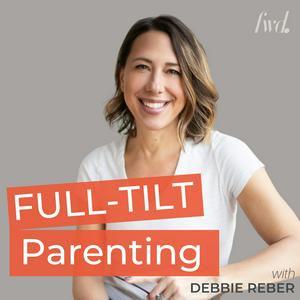
About Full-Tilt Parenting: Strategies, Insights, and Connection for Parents Raising Neurodivergent Children
Feeling overwhelmed by the complexities of raising a neurodivergent child? Full-Tilt Parenting is here to help. Hosted by parenting activist and author Debbie Reber, this podcast is your go-to resource for navigating life with ADHD, autism, learning disabilities, PDA (Pathological Demand Avoidance), giftedness, and twice-exceptional (2e) kids. With expert interviews and candid conversations, you'll discover practical solutions for things like school challenges and refusal, therapy options, and fostering inclusion, social struggles, advocacy, intense behavior, and more — all through a strengths-based, neurodiversity-affirming lens. Whether you're struggling with advocating for your child at school or seeking ways to better support their unique needs, Debbie offers the guidance and encouragement you need to reduce overwhelm and create a thriving, joyful family environment. It's like sitting down with a trusted friend who gets it. You’ve got this, and we’ve got your back!
Podcast websiteListen to Full-Tilt Parenting: Strategies, Insights, and Connection for Parents Raising Neurodivergent Children, Why Do I Feel This Way? and many other podcasts from around the world with the radio.net app
Get the free radio.net app
- Stations and podcasts to bookmark
- Stream via Wi-Fi or Bluetooth
- Supports Carplay & Android Auto
- Many other app features
Get the free radio.net app
- Stations and podcasts to bookmark
- Stream via Wi-Fi or Bluetooth
- Supports Carplay & Android Auto
- Many other app features

Full-Tilt Parenting: Strategies, Insights, and Connection for Parents Raising Neurodivergent Children
Scan code,
download the app,
start listening.
download the app,
start listening.
 Australia