
Listen to this podcast in the app for free: Download for free in the App Store
radio.net
Sleep timer
Save favourites
29 episodes
I Stopped Giving Tests. Here’s What I Do Instead
20/10/2026 | 22 mins.It started with a student writing a joke on a sticky note: “I hope we have no tests this year.”
Five years later, high school teacher Jodie Deinhammer’s science classroom remains test-free—and her students are still learning and retaining the content at a fast clip.
In this episode, host Kristin Leong talks with Jodie about why and how she replaced high-stakes testing with projects, labs, open-note checks, and daily formative assessments. She’ll offer advice on handling this major shift with parents, and explain why she listens closely to her students’ feedback. Plus, she’s got deeply vetted takeaways for teachers who are ready to rethink their approach to grading—while keeping rigor high and stress low.
Related resources:
Learn more about this episode
A Year of No Tests
Will Students Engage if there are No Grades? A Review of the Evidence
The Proven Benefits of Grading Less
The Evidence-Backed Grader
Do No Harm: Flexible and Smart Grading Practices
Why Teachers Should Grade Less Frequently
When Grading Harms Student Learning9 Simple (But Transformative) Classroom Management Shifts
06/10/2026 | 24 mins.Have you ever had a lesson get derailed by a power struggle with a student? Or is there a student in your class who you got off on the wrong foot with, and you’re not sure of the best way to repair the relationship?
In this episode of School of Practice, ELA teacher Tyler Rablin shares some of his favorite classroom management strategies—and they’re ones that you probably didn’t learn in teacher prep. From a simple change involving a squat, to three magic words that aren’t the ones you’d expect, Tyler breaks down how to shift a chaotic classroom to a calm one. And the good news? These strategies work across grade levels and subjects. And you can start using them tomorrow—no extensive prep or fancy incentives required.
Related resources:
Learn more about this episode
11 Classroom Management Tweaks You Don’t Learn in Teacher Prep
How Novice and Expert Teachers Approach Classroom Management Differently
7 Classroom Management Mistakes—and the Research on How to Fix Them
Video: 4 Subtle Shifts for Better Classroom Management
Research: Cultivating Positive Teacher–Student Relationships: Preliminary Evaluation of the Establish–Maintain–Restore (EMR) Method
Research: Foundations for Proactive & Respectful Practice in Elementary Classrooms
Literature Review: I’ve Got the Power: The Effects of Physical Positioning in the K-12 Classroom on Power DynamicsThe Extraordinary Impact of Drawing to Learn
22/09/2026 | 22 mins.Did you know that drawing can be a learning superpower—even for students who claim they’re not good at it?
Research shows that when kids attentively sketch something they’re learning about, they tap into the visual, kinesthetic, and linguistic parts of their brains. This generates rich connections across the brain’s neural network and encodes learning more deeply compared to passive learning tasks like reading or listening to a lecture.
We revisit our 2025 conversation with science educator Selim Tlili to uncover how drawing to learn works across grade levels and subjects. Plus, he’s got special tips for engaging even the most reluctant sketch artists.
Related resources:
Learn more about this episode
How Sketching Supports Learning in Science
Using Drawing as a Powerful Learning Tool
The Science of Drawing and Memory
Research: The Surprisingly Powerful Influence of Drawing on Memory
5 Popular Education Beliefs That Aren’t Backed by Research
Sketching for Science5 Common Teacher Mistakes and How to Fix Them
08/09/2026 | 24 mins.Everyone makes mistakes—including teachers.
While educators are quick to reframe student mistakes through a growth mindset lens, they’re less forgiving when it comes to their own slipups. But teacher errors often follow familiar patterns and can be a source of exceptional personal and professional growth.
In this episode of School of Practice, ELA teacher and instructional specialist Miriam Plotinsky digs into the most common teacher mistakes and identifies key strategies for quick, effective resets that get learning back on track. We’ll also hear from a few classroom teachers about their own missteps, and examine the research about how students benefit when teachers address their own mistakes head-on.
Related resources:
Learn more about this episode
6 Common Teacher Mistakes—And How To Avoid Them
Teachers’ Intellectual Humility Benefits Adolescents’ Interest and Learning
PEW: How K-12 Teachers Manage Their Workload
A Simple Way to Self-Monitor for Bias
5 Steps to Leveraging Background Knowledge in Lessons
Using Formative Assessment to Measure Student Progress
How to Engage Students the Moment They Enter the Classroom
29 High-Impact Formative Assessment Strategies
How to Avoid Rushing—a Pitfall for Even the Most Experienced TeachersHow Nicholas Ferroni is Rewiring His Classroom for Human Connection
25/08/2026 | 23 mins.Like a lot of other educators, Nicholas Ferroni is trying to find his way back to a time before technology was the default classroom mode. He thinks he was a better teacher back then—and kids acted more like kids.
Last year, Nick published a viral Instagram post in which he pledged to go back to basics in his teaching, back to “more paper, more writing, more eye contact, more conversations.” In this episode, Nick tells us how he turned the clock back, what he thinks his students have gained from less tech time, and why he’s not giving up on classroom tech completely.
Related resources:
Learn more about this episode
Should Laptops Really Go the Way of Cell Phones?
Tech-Free January
What Happened When Our School Went Tech-Free for the Day?
7 Tech Routines for Balanced Usage
More Education podcasts







Trending Education podcasts



















About School of Practice
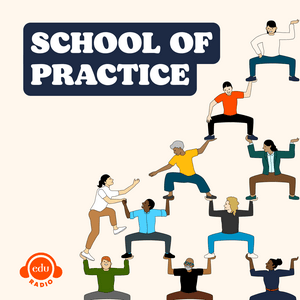
School of Practice, the first podcast from the team at Edutopia, brings you ready-to-use strategies to improve your teaching today. Join us for 15-minute episodes filled with smart, pedagogy-shifting advice—backed by research and test-driven by teachers just like you.
Podcast websiteListen to School of Practice, Humans, being. with Lael Stone and many other podcasts from around the world with the radio.net app
Get the free radio.net app
- Stations and podcasts to bookmark
- Stream via Wi-Fi or Bluetooth
- Supports Carplay & Android Auto
- Many other app features
Get the free radio.net app
- Stations and podcasts to bookmark
- Stream via Wi-Fi or Bluetooth
- Supports Carplay & Android Auto
- Many other app features
School of Practice
Scan code,
download the app,
start listening.
download the app,
start listening.
 Australia