
Listen to this podcast in the app for free: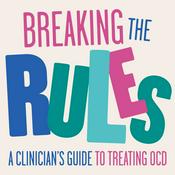 Download for free in the App Store
radio.net
Sleep timer
Save favourites
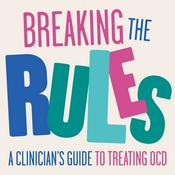
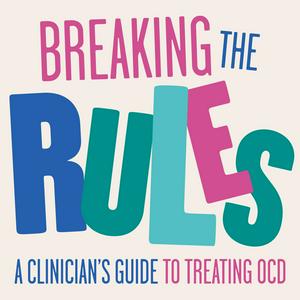
Breaking the Rules: A Clinician's Guide to Treating OCD
Dr Celin Gelgec and Dr Victoria Miller
Latest episode
85 episodes
I Think My Child Might Have OCD: What Do I Do?
21/09/2026 | 33 mins.This one's for the parents.
In this episode of Breaking the Rules, Dr Celin Gelgec and Dr Tori Miller tackle one of the most common questions they hear from families - I think my child might have OCD. Where do I even start?
The episode begins with Celin sharing a moment from a school tour with her three-year-old daughter — catching herself wondering whether her daughter's leaf-counting was a compulsion, before laughing and pulling herself back. It's a perfect illustration of what happens when you know too much. And also of the core question this episode explores: how do you tell the difference between normal childhood behaviour and something worth paying attention to?
They walk through the watch, wait, wonder principle — why not rushing in to diagnose, label, or rescue is often the most helpful thing a parent can do. They explore what normal development looks like at different ages, why the 7–12 age group is when OCD most commonly first emerges, and what the telltale signs are that something has shifted from typical childhood anxiety to something more persistent.
They also get practical — what to do if you're worried, who to talk to, and which resources are worth your time.
Warm, funny, honest, and genuinely useful. Whether you're a parent with questions, a clinician who works with families, or someone who grew up with OCD and is finally making sense of it — this one's for you.
In this episode, you'll learn:
Why context and developmental age are everything when it comes to reading your child's behaviour
The watch, wait, wonder principle — and why not rushing in is actually the most helpful thing you can do
What typical development looks like at different ages — and why so much of what looks like OCD is actually completely normal
Why the 7–12 age group is when OCD most commonly begins — and what developmental factors contribute to that
The difference between typical childhood anxiety and reassurance-seeking vs OCD-specific patterns
The telltale signs that something has shifted — frequency, intensity, impact on functioning, and family life
The one sign that's most specific to OCD: when one reassurance is never enough, and it needs to be said in just the right way
Practical next steps — GP, maternal child health, psychologist, and the community resources worth knowing about
Why your job as a parent is not to stop what's happening — it's to help them with what's happening
Resources mentioned:
Anxiety Recovery Centre of Victoria
International OCD Foundation — iocdf.org
Natasha Daniels — YouTube and parenting community
Eli Lebowitz — resources for families
New episodes of Breaking the Rules drop fortnightly. Follow or subscribe so you don't miss one.
www.melbournewellbeinggroup.com.au
Hosted on Acast. See acast.com/privacy for more information.OCD or Anxiety? It's Not a Black and White Question
07/09/2026 | 31 mins.OCD or Anxiety? It's Not a Black and White Question
The question has been coming up in supervision a lot lately. Is this OCD — or is it GAD? Specific phobia? Health anxiety? Social phobia?
It sounds like a simple diagnostic question. It isn't.
In this episode of Breaking the Rules, Dr Celin Gelgec and Dr Tori Miller dig into one of the most common and most confusing clinical challenges in the OCD space — differentiating OCD from anxiety disorders that present in similar ways. They explore why OCD and anxiety so frequently co-occur, how anxiety disorders can morph into OCD over time, and why we're increasingly seeing subclinical OCD presentations in the clinic — and why that's actually a good thing.
They also talk about what to do when you genuinely can't tell. Why the DSM is a guide, not a definitive answer. And why the most important thing you can do is take your client along with you through the process — because a diagnosis that happens to someone, rather than with them, rarely lands the way it needs to.
Celin also shares a story about a client who'd worked through most of her trigger list — and then asked if she had to do the rest. What Celin said, and why, is one of the most honest things we've put in an episode about what it actually means to be done.
In this episode, you'll learn:
Why OCD was only separated from the anxiety disorders in DSM-5 (2013) — and what that tells us about how much they overlap
The anxiety disorders most commonly confused with OCD: GAD, health anxiety, specific phobia, and social phobia
Why untreated or poorly treated anxiety disorders can morph into OCD over time — and what to watch for
Why subclinical OCD is showing up more often — and why that's worth treating early
The key diagnostic features that separate OCD from GAD in practice
How scrupulosity OCD gets missed as social phobia — and why it matters
Why you don't need to know the answer straight away — and how to take your client through the process
What discharge from OCD treatment actually looks like — and who gets to decide
New episodes of Breaking the Rules drop fortnightly. Follow or subscribe so you don't miss one.
www.melbournewellbeinggroup.com.au
Hosted on Acast. See acast.com/privacy for more information.Getting Creative with OCD Therapy: When to Go Beyond ERP
24/08/2026 | 32 mins.ERP is the gold standard for OCD. But what happens when it's not enough on its own?
In this episode of Breaking the Rules, Dr Celin Gelgec and Dr Tori Miller explore one of the most important — and least talked about — questions in OCD treatment: when and how to bring in other therapeutic modalities, and how to do it without abandoning the principles that make ERP work.
Tori shares what traditional manualized ERP actually looked like in the early days of her career — rate your SUDS, watch the clock, wait for the anxiety to come down — and how the field has shifted since the inhibitory learning model changed the way we think about exposure. Celin reflects on her experience of always working in an integrated way, and why the principles of ACT have always felt like ERP to her — because they are.
They also get honest about the moments when ERP becomes a battle. When the exposure menu turns into a war. When a client has every reason in the world not to engage — and what to do instead.
Whether you're a clinician looking to expand your toolkit or someone living with OCD who's wondered why their therapist keeps talking about values and mindfulness -
this episode will change how you think about what treatment can look like.
In this episode, you'll learn:
What traditional manualized ERP actually looked like — and how it's evolved
Why the inhibitory learning model changed everything about how we approach exposure
How ACT principles map directly onto ERP — and why urge surfing is response prevention
The question to ask before bringing in any new modality: is this ERP-friendly?
What to do when a client refuses to engage with the exposure hierarchy
How schema therapy, DBT, and imagery rescripting can be woven into OCD work without softening exposure
Why ERP has a 20% dropout rate — and what that tells us about why integration matters
When to hold the line and when to shift gears — and how to know the difference
Why getting your client's life back is always the goal, even when it doesn't look like ERP
New episodes of Breaking the Rules drop fortnightly. Follow or subscribe so you don't miss one.
www.melbournewellbeinggroup.com.au
Hosted on Acast. See acast.com/privacy for more information.Assessing OCD: The Complete Guide for Clinicians
10/08/2026 | 41 mins.Four years in, and we're going back to basics.
In this episode of Breaking the Rules, Celin and Tori walk through the full OCD assessment process from the ground up - because with new listeners joining and so much focus on treatment in recent episodes, it felt like the right time to start at the beginning.
How do you actually assess for OCD? What does a comprehensive clinical interview look like? When do you bring in psychometrics? And what happens when the OCD isn't responding to ERP the way it should?
Celine and Tori cover the full assessment process — from taking a developmental history to using the Y-BOCS, working through the DSM-5 criteria, and navigating differential diagnosis. They also discuss PANDAS and PANS: the rare but important condition where OCD is triggered by an infection, why ERP alone won't work, and how asking one simple question about recent illness can completely change a treatment pathway.
Whether you're a clinician new to the OCD space, refreshing the fundamentals, or someone who's wondered how OCD gets diagnosed — this one's for you.
In this episode, you'll learn:
Why a full developmental history is non-negotiable — even with adult clients
The two age of onset clusters for OCD and why they matter
How to use the Y-BOCS as an interview tool rather than a take-home questionnaire
Why scoring the Y-BOCS isn't enough — and what you still need to check
Jonathan Grayson's Freedom from OCD scale as an alternative for clinicians new to the space
The DSM-5 criteria for OCD explained in plain language
How to differentiate OCD from anxiety disorders, autism, OCPD, and other co-occurring conditions
What the insight specifier really means — and why good insight doesn't mean mild OCD
What PANDAS and PANS are, how to spot them, and why they require medical treatment first
How a thorough assessment sets you up seamlessly for ERP
Also featuring: a baby learning to roll over in the background.
www.melbournewellbeinggroup.com.au
Hosted on Acast. See acast.com/privacy for more information.The OCD Trap Even Therapists Fall Into
27/07/2026 | 28 mins.When Therapists Spiral Too: What OCD Taught Us About Ourselves
Can therapists get caught in the same OCD traps as their clients?
Absolutely.
In this honest and vulnerable episode of Breaking the Rules, Dr Tori Miller and Dr Dr Celin Gelgec pull back the curtain on a real moment where a late-night social media post sent Celine into an OCD-style spiral of doubt, reassurance seeking and perfectionism. What started as curiosity quickly became hours of researching, second-guessing herself and questioning everything she thought she knew.
Using this experience, they explore one of the most important concepts in OCD treatment: transference and countertransference. They discuss how therapists can unknowingly absorb a client's uncertainty, feel the urge to rescue, reassure or change course, and why recognising these reactions is essential for effective treatment.
This episode is a powerful reminder that clinicians are human too. The goal isn't to eliminate uncertainty or become the perfect therapist—it's to notice what's happening, stay grounded, and continue modelling the very skills we ask our clients to practise every day.
Whether you're an OCD clinician, a mental health professional, or someone living with OCD, this conversation offers valuable insight into perfectionism, uncertainty, and why learning to tolerate not knowing is at the heart of recovery.
In this episode you'll learn:
How therapists can become caught in the same uncertainty loops as their clients.
What transference and countertransference look like in OCD treatment.
Why noticing your own urges to rescue, reassure or "fix" can make you a better clinician.
Learn more about Melbourne Wellbeing Group:
https://melbournewellbeinggroup.com.au
Hosted on Acast. See acast.com/privacy for more information.
More Health & Wellness podcasts






Trending Health & Wellness podcasts









About Breaking the Rules: A Clinician's Guide to Treating OCD
Breaking the Rules is a show for mental health professionals designed to help you build confidence in treating Obsessive Compulsive Disorder (OCD). Effective treatment of OCD requires commitment, creativity and the recognition that things can sometimes get a little … messy. And on the show, you’ll hear from a range of leading professionals and learn everything there is to know about OCD and other related mental health concerns. This podcast is brought to you by Melbourne Wellbeing Group, a psychology practice based in Melbourne with a special focus on treating OCD. Hosted on Acast. See acast.com/privacy for more information.
Podcast websiteListen to Breaking the Rules: A Clinician's Guide to Treating OCD, On Purpose with Jay Shetty and many other podcasts from around the world with the radio.net app
Get the free radio.net app
- Stations and podcasts to bookmark
- Stream via Wi-Fi or Bluetooth
- Supports Carplay & Android Auto
- Many other app features
Get the free radio.net app
- Stations and podcasts to bookmark
- Stream via Wi-Fi or Bluetooth
- Supports Carplay & Android Auto
- Many other app features
Breaking the Rules: A Clinician's Guide to Treating OCD
Scan code,
download the app,
start listening.
download the app,
start listening.
 Australia