
Listen to this podcast in the app for free: Download for free in the App Store
radio.net
Sleep timer
Save favourites
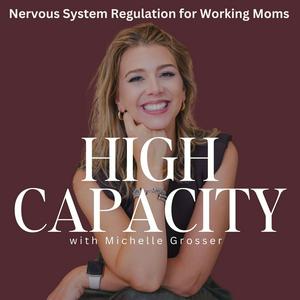
High Capacity – Nervous System Regulation, Stress Management, Burnout Recovery, Somatic Tools, Anxiety, Boundaries, Overwhelm
Michelle Grosser – Inspired by Mel Robbins, Dr. Andrew Huberman, and Dr. Becky Kennedy
Latest episode
500 episodes
493 - Why Am I Like This? Sabrina Zohar on the Patterns Running Your Life
20/10/2026 | 39 mins.You've probably caught yourself asking it. Why am I like this?!
Usually not in a kind voice. Usually at the end of a long day, after you reacted in a way you don't love and can't quite explain.
Here's what Sabrina Zohar gets at: the thing you've been calling your personality (I'm just type A, I'm just controlling, I'm just too much) is often a pattern you learned a long time ago, running on autopilot.
Sabrina is the host of The Sabrina Zohar Show and the author of a new book, Why Am I Like This? She's built a huge following teaching people to understand the patterns driving their relationships, their work, and the way they react when they're activated.
We get into two questions she says changed her life: how old do I feel, and where did I learn this. We talk about why the safe, healthy relationship can feel flat and boring (and the actual neuroscience of why). And we talk about boundaries and resentment in a way that doesn't make you the villain or the martyr.
This one is for you if you've ever watched yourself overreact and thought, I know better than this, so why do I keep doing it.
What You'll Learn:
The two questions to ask the moment you feel yourself react, that turn a blowup into information
Why a calm, consistent relationship can feel weirdly boring, and what your nervous system is actually doing
What a boundary really is (it's not a rule you hand the other person), and how the lack of one turns into resentment
How to tell your real intuition apart from an old wound wearing its clothes
--
🧠 What's your capacity pattern?
Take the free 2-minute quiz and unlock The Capacity Code — a personalized private podcast episode for your specific nervous system.
→ Take the Capacity Pattern Quiz492 - Do You Have High Cortisol? 5 Signs and What's Actually Going On
13/10/2026 | 24 mins.You're exhausted all day, and then weirdly wide awake at 10pm.
You crash at 3, patch it with caffeine, and pay for it that night.
The weight around your middle won't shed the way it used to.
You catch every cold going around and hold onto it for weeks.
If you've been quietly collecting symptoms like these, you've probably seen the internet's answer: it's your cortisol, and here's a $10 tea to "balance" it.
Cortisol has become a villain word. But cortisol isn't the enemy.
The problem was never that you have it. The problem is the shape of the curve, and when you've been running activated for months, that curve shifts and starts showing up at the wrong hours in the wrong amounts.
This week I walk through five signs your cortisol curve is off and what that actually means.
What You'll Learn:
Why you're tired in the morning and wired at night, and what it says about your cortisol curve
The 3pm-crash-to-caffeine-to-bad-sleep loop, and how it quietly feeds itself
Why "high cortisol" feels like your personality instead of a problem
The sign that looks like calm and almost never is
--
🧠 What's your capacity pattern?
Take the free 2-minute quiz and unlock The Capacity Code — a personalized private podcast episode for your specific nervous system.
→ Take the Capacity Pattern Quiz491 - Sticky Habits: Building Routines That Actually Hold with Monica Packer
06/10/2026 | 46 mins.You bought the planner. Printed the meal plan. Started the new morning routine strong, and by week two it had quietly fallen apart.
And somewhere in there you decided the problem was you.
Not disciplined enough, not consistent enough, not the kind of person who follows through.
Here's the reframe Monica Packer brought that I can't stop thinking about: it was never you. It was the method.
And most of the habit and self-improvement advice we've been handed was built for a life that looks nothing like yours.
Monica's back for her second time on the show, and this conversation goes deep on the thing underneath all of it, perfectionism.
Not the color-coded-calendar kind.
The quiet kind, where you pin your worth to your outcomes, and the woman grinding herself down and the woman too scared to start turn out to be running the same pattern.
We get into why habit advice keeps failing women specifically, how to build routines that actually hold in a real life full of interruptions and invisible labor, and the surprising thing that's expanded her own capacity this year.
If you've ever called yourself lazy or undisciplined, this one's going to set something down for you.
What You'll Learn:
Why perfectionism isn't about being tidy or type A, and how to spot the version hiding as "I'm too lazy to be a perfectionist"
The reason your habits keep falling apart, and why it's the method, not your willpower
How to build a habit with a "baseline version" that survives your worst days, not just your best ones
What invisible labor has to do with why habit advice built for men doesn't hold for you
Resources:
Monica's book, Sticky Habits, and pre-order bonuses
More from Monica: aboutprogress.com
--
🧠 What's your capacity pattern?
Take the free 2-minute quiz and unlock The Capacity Code — a personalized private podcast episode for your specific nervous system.
→ Take the Capacity Pattern Quiz490 - 5 Ways to Calm Your Nervous System in the Next 90 Seconds
29/09/2026 | 21 mins.You're feeling overwhelmed or edgy. Or maybe just depleted and exhausted.
You know you're supposed to "regulate your nervous system" but you only have a few minutes.
Here's what you do.
So this week is five ways to calm an overactive nervous system that you can actually do from anywhere in just a few minutes.
What You'll Learn:
Why a long exhale is the fastest lever you have on your own body
The reason humming or singing in the car actually takes the edge off
What to reach for when you're already activated and breathing feels useless
The one that looks like nothing and works faster than talking yourself down
--
🧠 What's your capacity pattern?
Take the free 2-minute quiz and unlock The Capacity Code — a personalized private podcast episode for your specific nervous system.
→ Take the Capacity Pattern Quiz489 - 8 Oddly Specific Signs Your Nervous System Is Dysregulated
22/09/2026 | 37 mins.The jaw that's clenched. The 3pm brain-fog crash.
Exhausted all day, then wide awake the second your head hits the pillow.
The stomach stuff no elimination diet ever explained.
Snapping at your kids over something small and hating yourself for it an hour later.
Many of the things you've been dealing with for years, are actually your nervous system trying to tell you something.
When it's dysregulated, it can't tell you in words. So it tells you in symptoms. The jaw. The crash. The short fuse.
This week, eight oddly specific signs of a nervous system stuck in a gear it was never meant to idle in.
For each one: we'll go through what it is, why it's happening in your body, and one small thing to do about it.
What You'll Learn:
Why your jaw, your shoulders, and shallow breathing are often the first place it shows
The reason you're exhausted all day and wide awake at bedtime
What causes brain fog and why you can't think your way out of it
Why you always get sick the minute you slow down
--
🧠 What's your capacity pattern?
Take the free 2-minute quiz and unlock The Capacity Code — a personalized private podcast episode for your specific nervous system.
→ Take the Capacity Pattern Quiz
More Education podcasts






Trending Education podcasts

















About High Capacity – Nervous System Regulation, Stress Management, Burnout Recovery, Somatic Tools, Anxiety, Boundaries, Overwhelm
You've built a full life. The career, the family, the responsibilities, the goals — all of it. And the fuller it gets, the more stretched thin you feel.Not because you lack the discipline or drive to figure it out.But because your nervous system was never upgraded to match the life you've built. High Capacity is the podcast for ambitious women who are done just managing their stress and are ready to actually expand what they can hold. Hosted by trial attorney turned nervous system strategist Michelle Grosser, each episode unpacks the nervous system science behind why you feel maxed out, reactive, and depleted — and gives you real tools to expand your capacity across every area of your life.This isn't just about doing less. It's about becoming someone whose nervous system can hold more — more joy, more presence, more of the life you've worked hard to build, and more of the demands that come with it — without the low-grade stress that's become your new normal.Here’s what you’ll learn:- How to expand your emotional, stress, physical, relational, and joy capacity- Nervous system-based tools that work in real life, in real time- How to identify your Capacity Pattern — the specific strategy your nervous system defaults to when you're overwhelmed — and what it means for your stress, your relationships, and your daily lifeNew episodes every Tuesday and Friday.Tuesdays bring the nervous system science and tools.Hi-Cap Fridays give you one practical move to expand your capacity in the week ahead.Take the free "What's Your Capacity Pattern?" quiz: michellegrosser.com/quiz
Podcast websiteListen to High Capacity – Nervous System Regulation, Stress Management, Burnout Recovery, Somatic Tools, Anxiety, Boundaries, Overwhelm, Begin Again with Davina McCall and many other podcasts from around the world with the radio.net app
Get the free radio.net app
- Stations and podcasts to bookmark
- Stream via Wi-Fi or Bluetooth
- Supports Carplay & Android Auto
- Many other app features
Get the free radio.net app
- Stations and podcasts to bookmark
- Stream via Wi-Fi or Bluetooth
- Supports Carplay & Android Auto
- Many other app features
High Capacity – Nervous System Regulation, Stress Management, Burnout Recovery, Somatic Tools, Anxiety, Boundaries, Overwhelm
Scan code,
download the app,
start listening.
download the app,
start listening.
 Australia