
Listen to this podcast in the app for free: Download for free in the App Store
radio.net
Sleep timer
Save favourites
148 episodes
Why AI for Good Fails and How Leaders Can Fix It
14/10/2026 | 39 mins.Even well-designed algorithms can fail and end up hurting the people they're meant to help. In this episode, Dr. Ben Green, Assistant Professor of Information and Public Policy at the University of Michigan, explains what it takes to build AI that works for humans. He shares what keeps data from being used for good, why AI regulation can't be left to AI companies, and what organizations risk losing when they hand too much of their thinking to AI.
Key Moments:
The Hidden Cost of Outsourced Thinking (03:40): Students using AI ace their homework but fall behind on exams. Ben explains why powerful AI doesn't always make people better at their jobs.
Why Algorithms Belong in the Loop (06:31): Ben argues "human in the loop" sidelines people. Flipping it to "algorithm in the loop" keeps AI in a support role for human decision-makers.
Finding the Real Problem at Boston EMS (08:09): Brought in to cut ambulance response times, Ben found the real driver was homelessness and mental health calls, which led to a new specialized team.
The Data Scientist's Most Underrated Skill (16:45): Asking questions builds trust with stakeholders and forces the humility needed to understand a problem before solving it.
Why AI Companies Can't Police Themselves (24:48): Ben calls voluntary AI safety pledges a PR move and argues for legal liability, pre-deployment testing, and a new direction for AI innovation.
Key Quotes:
“The ways in which data scientists and AI developers tend to judge whether a system is good or bad has a quite tenuous relationship with what the reality of the impacts that the system will create down the road if it's implemented.” - Dr. Ben Green
“ We need to not let these companies off the hook by placing agency on the tools. It is the companies that are building these tools and failing to safeguard them.” - Dr. Ben Green
“We need to develop an entirely new direction for developing AI systems that actually work for the betterment of humanity.” - Dr. Ben Green
Mentions:
NEW: Algorithmic Realism by Dr. Ben Green
Seeing like a State by James C. Scott
The Public is Getting Fed Up With Data Centers. Politicians Need to Take Notice
Guest Bio:
Ben Green is an Assistant Professor of Information and Public Policy at the University of Michigan. He is also a Faculty Associate at the Berkman Klein Center for Internet & Society at Harvard. Ben holds a PhD in Applied Mathematics from Harvard University, with a secondary field in Science, Technology, and Society.
Through his research, writing, and advocacy, Ben contributes practical lessons for achieving a world in which AI improves society rather than exacerbating inequality and oppression. He is the author of two books from the MIT Press: just released Algorithmic Realism: Data Science Practices to Promote Social Justice (2026) and The Smart Enough City: Putting Technology in Its Place to Reclaim Our Urban Future (2019).
Ben regularly engages policymakers and the public to promote equitable technology adoption and regulation. He has published op-eds in outlets including The New York Times, The Wall Street Journal, and The Hill, and has been quoted in newspapers such as The New York Times, The Washington Post, and the Los Angeles Times.
Hear more from Cindi Howson here. Sponsored by ThoughtSpot.What Most Companies Get Wrong About AI Strategy with Jeff McMillan, former Morgan Stanley AI Leader
30/09/2026 | 44 mins.Every leadership team is arguing about which AI model is best, but that debate is a distraction from the real problem. In this episode, Jeff McMillan, founder of McMillanAI and former head of firmwide AI at Morgan Stanley, breaks down the real bottlenecks behind enterprise AI strategy. He shares why fixing your data matters more than picking a model, why your best AI leader is probably already inside your company, and why AI eliminates tasks rather than entire jobs.
Key Moments:
Why the Chief AI Officer's Real Job Is to Teach (01:41): Jeff explains why he left Morgan Stanley: build standards and infrastructure, then get out of the way.
Your Next AI Leader Already Works for You (11:10): Hiring an outsider usually loses to teaching an A-plus insider who already knows the organization.
Why Model Choice Matters Less Than You Think (15:11): Jeff compares the AI model debate to arguing over whose car is better without ever driving it; the models are capable enough already.
How to Triage a Broken Data Foundation (17:54): Jeff's framework is to find your most critical data attributes, measure accuracy, then invest where it counts.
Why AI Eliminates Tasks, Not Entire Jobs (28:27): The companies that dominated after the Industrial Revolution reorganized work; they did not just have better tech. Jeff argues AI eliminates tasks, not jobs.
Key Quotes:
“The chief AI officer is not there to build AI for the company; they are to teach the company how to build AI.” - Jeff McMillan
“AI does not eliminate jobs; it eliminates tasks.” - Jeff McMillan
“ Don't just talk about AI, don't just prompt it. Build something that's real, that has actual measurable outcome, and then share that with the world.” - Jeff McMillan
Mentions:
McMillanAI: Everyone Is Behind
Collected Writings of Mary Parker Follett
Guest Bio:
Jeff McMillan is one of the most experienced AI leaders in financial services. As the former Head of Firmwide AI at Morgan Stanley, he led the development and deployment of AI across the entire enterprise — overseeing hundreds of GenAI use cases from concept to production.
Jeff is on faculty at Columbia Business School, where he teaches AI strategy to the next generation of business leaders. He founded McMillanAI to help organizations cut through the noise and build AI strategies that actually work.
Hear more from Cindi Howson here. Sponsored by ThoughtSpot.AI Literacy Starts in the C-Suite
16/09/2026 | 36 mins.Most AI playbooks are built for a workforce tethered to a desk, but many workers are not near a keyboard. In this episode, Beth Miles, Chief AI Officer at Advantage Solutions, breaks down how she's building an AI-ready culture across a distributed workforce of more than 60,000 teammates. She shares why AI literacy has to start with leadership, why redesigning a broken process matters more than simply automating it, and how she measures AI success well beyond adoption metrics.
Key Moments:
From Chief of Staff to Chief AI Officer (05:00): Beth explains how her chief of staff role gave her the cross-functional view needed to build Advantage's AI office.
Hands-On Keyboards: AI Training in the C-Suite (11:00): Beth breaks down 10+ hours of executive AI training, including a CEO who sat down for a coding workshop.
Inside the AI Champions Build Summit (22:00): Over 40 teammates spent five hours building AI use cases together, breaking down silos across functions.
Why You Shouldn't Optimize a Bad Process (26:00): Redesigning broken processes before automating them matters more than speed.
Adoption Is Step One, Not the Finish Line (31:00): Usage is only step one. Beth points to service excellence and time to complete as the metrics that matter.
Key Quotes:
“AI can be an accelerant, but you have to have all the mechanics and the process and the data to actually make it run really well.” - Beth Miles
“It may require moving slower now to move faster later, to actually redesign and rethink work so you’re not optimizing a bad process.” - Beth Miles
“ To lead a change, we need to understand it.” - Beth Miles
Mentions:
AI Transformation Requires Redesigning Work, Not Cutting Roles
East of Eden by John Steinbeck
Shoe Dog by Phil Knight
Guest Bio:
Beth Miles leads Advantage Solutions’ AI strategy, enablement, and governance to drive value for the company’s clients and teammates. She drives AI deployment across the enterprise, alongside the Data Office and Growth & Strategy Office. Beth joined Advantage in early 2024 and has served the last year as Chief of Staff, leading the company’s AI workstreams from diagnostic through scaled execution, driving enterprise transformation initiatives, and overseeing CEO Office operations.
Before Advantage, Beth spent more than a decade leading technology and corporate transformation at global software firms, including senior roles at Sage and Cerner (now Oracle Health). At Cerner, she drove the redesign of Cerner’s portfolio management process for their $400m R&D investment. At Sage, she led GTM execution across new revenue streams and managed a large cloud partnership, leading cross-functional teams across governance and delivery.
Hear more from Cindi Howson here. Sponsored by ThoughtSpot.3 Data and AI Books Every Leader Should Read in 2026
02/09/2026 | 1h 26 mins.In this special episode of The Data & AI Chief, host Cindi Howson sits down with three incredible authors to explore what it really takes to lead through the AI era, from scaling innovation to building AI-ready data foundations to designing systems that keep humans at the center.
Get ready for a deep dive into:
Scaling innovation and leading through uncertainty with Linda Hill, Harvard Business School Professor and author of Genius at Scale: How Great Leaders Drive Innovation
Building AI-ready data foundations with Sanjeev Mohan, Principal at SanjMo and author of Designing the AI-Driven Data Foundations
Designing accountable, human-centered AI with Harveer Singh, Co-Founder and CIO of Rizz Wireless and author of When Data Moves
Consider this your fall reading list for leading through the next phase of AI.
Check out our 2026 must-read list for data and AI leaders!
Key Moments:
Why Scaling Innovation Requires a Culture Shift (01:03): Linda Hill, author of Genius at Scale, unpacks her ABC model of architects, bridgers, and catalysts in scaling AI innovation.
The Timeless Fundamentals Behind AI-Ready Data (32:40): Sanjeev Mohan, author of Designing the AI-Driven Data Foundations, explains why data fundamentals haven't changed even as the tools have.
Why Every Data Pipeline Decision Has a Human Consequence (58:38): Harveer Singh, author of When Data Moves, shares personal stories showing the human stakes behind every data decision.
Key Quotes:
“Innovation is almost always the result of collaboration, experimentation, learning of people who are different, who have different perspectives, different expertise.” - Linda Hill
“I strongly believe that to achieve the promises of AI, we should really focus on the foundational pieces, because those things never go away.” - Sanjeev Mohan
“The more and more we are embedding these AI agents into our technology, we need to make sure that there is an accountability factor, there is a responsibility factor that is put into it before these decisions are made.” - Harveer Singh
Mentions:
Genius at Scale: How Great Leaders Drive Innovation
Designing the AI-Driven Data Foundations
When Data Moves
The AI Fairness Test Nobody Runs
Guest Bios:
Linda Hill
Linda A. Hill is the Wallace Brett Donham Professor of Business Administration at Harvard Business School and Faculty Chair of the Leadership Initiative. She is widely recognized as one of the world’s foremost experts on leadership and innovation.
Hill is the coauthor of Genius at Scale: How Great Leaders Drive Innovation (March 2026), which introduces three essential roles for leading innovation across organizations and ecosystems: architect, bridger, and catalyst. The book was shortlisted for the 2025 Thinkers50 Innovation Award. She is also the coauthor of the award-winning books Collective Genius and Being the Boss. Her TED talk on leading collective creativity has garnered more than three million views.
Sanjeev Mohan
Sanjeev Mohan is a recognized thought leader in cloud technologies, modern data architectures, analytics, and artificial intelligence. With a keen focus on emerging trends and technologies, Sanjeev hosts It Depends podcast and authors regular Medium blogs. He is also the author of Data Product for Dummies.
Formerly a Vice President at Gartner, Sanjeev was renowned for his in-depth research and strategic insights, shaping the research agenda for data and analytics globally. Over the past three years, he has led SanjMo, a consultancy specializing in technical advisory services that elevate category and brand awareness for clients.
Sanjeev is the author of Designing the AI-Driven Data Foundations, a practical guide to building modern data foundations for the AI era.
Harveer Singh
Harveer Singh is a globally recognized data, AI, and fintech leader who bridges enterprise-scale leadership with entrepreneurial execution. Across 25+ years, he has transformed financial institutions spanning banking, payments, telecom, and Web3. A recognized industry leader, Harveer's work has earned DataIQ Top 10 CDOs, American Banker Innovation of the Year, and American Asian Outstanding 50 honors.
In 2025, Harveer co-founded Rizz Wireless, an AI-native wireless company, where he serves as Co-Founder, CIO, and Board Member. He is also co-creator of RZTO, the company's Solana-based rewards token, which reimagines how loyalty and telecom rewards work and is listed on Gate.io.
Harveer is the author of When Data Moves, which challenges the tech industry to remember that data systems serve humans, not machines.
Hear more from Cindi Howson here. Sponsored by ThoughtSpot.How Vanguard is Architecting its AI Semantic Layer
19/08/2026 | 48 mins.Semantic layers and ontologies have moved from nice-to-have data modeling tools to the foundational engine required for enterprise AI. In this episode, Raman Tallamraju, Senior Director and Head of Enterprise Data Architecture and Engineering at Vanguard, breaks down how Vanguard is architecting its AI semantic layer to turn scattered institutional knowledge into reliable, agent-ready context. He shares why autonomous agents expose decades of hidden data debt, how to bridge domain-specific definitions like clients versus prospects, and how to balance building a unified semantic layer with a pragmatic, federated data operating model.
Key Moments:
Why Data Is Your Differentiator (02:36): Across four asset managers, Raman shares the one lesson that holds: data is the real differentiator in an AI-first world.
Why Semantic Layers and Ontologies Are a Priority (14:12): Autonomous agents remove the human workaround, exposing years of technical debt in data modeling that tribal knowledge used to hide.
Why Context Makes or Breaks Your AI Agents (19:18): Context is everything. Agents act confidently on wrong answers when terms like client, prospect, and lead go undefined.
Launching an AI-Ready Data Program: Where to Start (24:54): Raman advises starting with a real business use case tied to points of economic leverage, rather than trying to boil the ocean.
Why You Need a Federated Data Model (36:51): Raman explains why a single central platform isn't practical at a global firm, and the four levers he uses to earn real business ownership of data.
Key Quotes:
“If we're going to go in an AI-first world and everybody has access to the same frontier models… well, what is going to be differentiated about you? Data will be your differentiator, and the companies that bring the best data game are going to have enduring advantages over those that don't.” - Raman Tallamraju
“You want your data to be well-defined. You want your data to be trusted. You want your data to be well-connected. You want your data to be contextualized. You want your data to be consumed in a multimodal way, and you want it to be ready for humans and machines at scale.” - Raman Tallamraju
“If you're going to start with tech and you're going to go towards the shiny toys, those are good, but without the data foundations, they're going to sit in the garage. So I started calling it the Ferraris in the garage problem. Unless you get the data strategy running ahead, these Ferraris are going to run out of gas.” - Raman Tallamraju
Mentions:
The Innovator's Dilemma by Clay Christensen
57% of enterprises traced a wrong AI answer to missing business context — Credible bets portable, open-source semantic code beats proprietary metadata
Guest Bio:
Raman Tallamraju has twenty years leading enterprise technology and data strategy across four of the world’s largest asset managers — Vanguard, T. Rowe Price, Capital Group, and Fidelity. Appointed Officer and Group Vice President at T. Rowe Price, where Raman built and led a 300-person global technology organization responsible for the firm’s enterprise architecture and digital transformation. Wharton CTO Program, 2024.
Raman has operated across the full investment value chain — research and trading platforms, client experience, distribution technology, and enterprise data infrastructure — with portfolio accountability exceeding $100M. Raman’s career has been defined by taking on complex, high-stakes technology transformations and delivering measurable business outcomes: modernizing legacy estates, building scalable platforms, and creating the organizational structures that sustain them.
Hear more from Cindi Howson here. Sponsored by ThoughtSpot.
More Business podcasts









Trending Business podcasts












About The Data & AI Chief
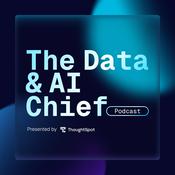
Meet the world’s top data and AI leaders transforming how we do business. Hear case studies, industry insights, and personal lessons from the executives leading the data and AI revolution.
Join host Cindi Howson, Chief Data & AI Strategy Officer at ThoughtSpot, every other Wednesday to meet the leaders and teams at the cutting edge.
[CLAIM:FI41QQVR]
Podcast websiteListen to The Data & AI Chief, A Bit of Optimism and many other podcasts from around the world with the radio.net app
Get the free radio.net app
- Stations and podcasts to bookmark
- Stream via Wi-Fi or Bluetooth
- Supports Carplay & Android Auto
- Many other app features
Get the free radio.net app
- Stations and podcasts to bookmark
- Stream via Wi-Fi or Bluetooth
- Supports Carplay & Android Auto
- Many other app features

The Data & AI Chief
Scan code,
download the app,
start listening.
download the app,
start listening.
The Data & AI Chief: Podcasts in Family
 Australia