

Listen to this podcast in the app for free: Download for free in the App Store
radio.net
Sleep timer
Save favourites
57 episodes
A police officer's journey from PTSD to recovery
02/09/2026 | 35 mins.Guest Justyn Backhouse - former police officer, author of Hidden Scars: From Crime Scenes to Crisis, The Price of Service
In this episode of Understanding EMDR, Jenny Dwyer speaks with Justyn Backhouse about the achievements of his 25-year policing career, the hidden toll of repeated trauma, and the journey from denial to recovery. Justyn shares how his secure and loving childhood led him into policing, where he found adventure and opportunities; but also traumatic events, cumulative stress, and eventually PTSD.
They discuss the culture of policing, the stigma around mental health, and why early intervention matters. Justyn explains how EMDR became a turning point in his recovery, helping him process years of unprocessed experiences and reduce the intensity of traumatic memories. The conversation also highlights the importance of family support, trusted colleagues, and honest conversations about mental health.
If you’re an EMDR therapist and interested in knowing more about how you can support police officers and other first responders, listen in to the next episode. I’ll be joined by Krystal Hawkins, a mental health social worker and EMDR consultant who has worked for many years with police in NSW, supporting them through their journey of recovery with EMDR.
Key themes in this episode
Cumulative trauma and delayed recognition of PTSD in police
Shame, stigma, and silence as barriers to healing
The role of EMDR in processing disturbing memories
Early intervention
Family, support networks, and rebuilding life after trauma
Resources
To learn more about Justyn and to follow him on social media, visit his website
https://justynbackhouse.com
EMDR Academy
This podcast is proudly sponsored by EMDR Academy Australia. For information on Dr Jenny Dwyer, training, consultation and resources visit our website and follow us on social media
https://emdracademy.com.au
https://www.linkedin.com/company/emdracademyaus/Healing versus Justice? In Her Own Words
22/07/2026 | 42 mins.In the final episode of our Healing versus Justice series, we hear directly from Dr Katie Bird. It was Katie's case, first reported by the ABC, that exposed a serious problem in the Australian legal system: victim-survivors who had received EMDR therapy were being denied justice because of misconceptions about the therapy.
Katie shares her journey through the trauma of abuse, her healing with EMDR, and her advocacy to change the law. Although her own case has concluded, her work is helping other victim-survivors come forward and challenging the outdated assumptions about EMDR that continue to influence legal decisions.
Katie also makes a compelling case that people should never have to choose between healing and preserving their legal rights. Rather than limiting access to effective therapy, she argues that the responsibility for change lies with the legal system.
If you haven't listened to the first three episodes in this series (Episodes 3, 4 and 5), they provide important background on the legal issues, how EMDR has been viewed in Australian courts, and practical guidance for EMDR therapists working with clients who may be involved in legal proceedings.
Related articles and media
The original ABC article that featured Katie's case:
https://www.abc.net.au/news/2026-03-09/mental-health-emdr-therapy-may-have-cost-katie-justice/106425114
ABC Law Report:
https://www.abc.net.au/listen/programs/lawreport/does-emdr-therapy-taint-witness-recollection/106595274
Other victim-survivors speak out:
https://www.abc.net.au/news/2026-07-01/calls-for-legal-system-to-change-approach-to-emdr-and-witnesses/106856868
Article by Hurst, Dominguez and Harvey, 2026
https://pursuit.unimelb.edu.au/articles/why-do-australian-courts-still-distrust-a-proven-trauma-therapy
Sponsors
Understanding EMDR is proudly sponsored by EMDR Academy Australia. Providing Accredited EMDR training throughout Australia and online.
For training and other resources www.emdracademy.com.auHealing versus Justice? Part 3
24/06/2026 | 18 mins.Inspired by the advocacy of Dr Katie Bird, who was denied access to justice after she had EMDR therapy, this 3-part series has explored a critical question - can EMDR therapists support their clients in healing without jeopardising their future access to justice?
In this episode, Dr Jenny Dwyer reflects on the nature of trauma, the likelihood of delayed and partial disclosure, and the circumstances that make it possible, even likely, that the legal system and EMDR may intersect for many clients.
Drawing on current discourse in the EMDR community, legal context and emerging consensus, she provides some much needed guidance for therapists. While acknowledging the real difficulties in this area, she cautions against therapists becoming unnecessarily intimidated by the legal system; and outlines a set of 'Principles for Practice' that can inform therapy and guide reflection.
Resources
This podcast is proudly sponsored by EMDR Academy Australia
For a copy of the Principles for Practice, contact us: https://emdracademy.com.au/contact-us/
Articles of interest - Challenging the false memory myths of EMDR
https://www.frontiersin.org/journals/psychology/articles/10.3389/fpsyg.2024.1366137/full
https://www.researchgate.net/publication/334584387_Lateral_Eye_Movements_Do_Not_Increase_False-Memory_Rates_A_Failed_Direct-Replication_Study#fullTextFileContent
Media coverage of EMDR and the law
ABC News 9 March 2026
https://www.abc.net.au/news/2026-03-09/mental-health-emdr-therapy-may-have-cost-katie-justice/106425114
The Law Report ABC Radio National:
https://www.abc.net.au/listen/programs/lawreport/does-emdr-therapy-taint-witness-recollection/106595274Healing versus Justice? Part 2
23/06/2026 | 57 mins.This is the second episode in our series exploring the intersection of EMDR with the Justice system. It follows a decision by the Commonwealth DPP to discontinue a case of sexual assault because the complainant had EMDR before making her report to police.
In this episode Anthony Hurst, Chair of EMDRAA, explores the way EMDR has been understood, and sometimes misunderstood in Australian courts. Beginning in the early 1990's, where EMDR was conflated with hypnosis, he leads us through cases where EMDR was an issue, and courts considered admissibility and reliability of evidence.
Anthony highlights the difference over time between states, statutes and case law, and offers his own views on what this means for EMDR therapists. He shares his current ideas about how EMDR therapists can protect our client's interests and highlights some considerations for clinical practice.
Sponsors
Understanding EMDR is proudly sponsored by EMDR Academy Australia.
EMDR Academy partners with like-minded individuals and organisations to provide innovative programs, high quality training, and support for new and experienced EMDR therapists.
For training and other resources www.emdracademy.com.auHealing versus Justice? part 1
23/06/2026 | 35 mins.This is the first of 3 episodes where we explore the intersection of EMDR with the Justice system. It follows a decision by the Commonwealth DPP to discontinue a case of sexual assault because the complainant, Dr Katie Bird, had EMDR before making her report to police. This obviously raised many issues for EMDR therapists, but most importantly, for victims/survivors.
Following publicity about the case, many EMDR therapists were concerned their clients would have to choose between Healing and Justice. Some organisations were pausing EMDR therapy if clients might make a future statement to police. We wanted to understand how the legal system makes decisions about cases like Katie's; and how EMDR therapists could help our clients heal, without risking their right to justice.
In this episode Jenny gives a brief over view of Katie's case and important concepts of "admissibility" and "reliability" of evidence in courts. Then she is joined by Harriet Murphy, a lawyer, who walks us through the Australian legal system – a user friendly overview – what happens when someone reports an alleged crime? Who makes decisions about whether the matter will be investigated, or prosecuted? What happens if it gets to court?
The links below contain resources and information relating to this case, and themes discussed in this episode:
The original ABC report about Dr Katie Bird's case:
https://www.abc.net.au/news/2026-03-09/mental-health-emdr-therapy-may-have-cost-katie-justice/106425114
An article that challenges some of the misconceptions underlying the CDPP decision:
https://pursuit.unimelb.edu.au/articles/why-do-australian-courts-still-distrust-a-proven-trauma-therapy
A Victorian County Court Fact sheet that has useful information on the criminal trial process:
https://www.countycourt.vic.gov.au/files/documents/2020-07/factsheet-6-criminal-trial-process.pdf
Further information on EMDR training and resources by
Dr Jenny Dwyer is available at https://emdracademy.com.au/
More Health & Wellness podcasts
 Feel Better, Live More with Dr Rangan ChatterjeeAlternative Health, Health & Wellness
 Nothing much happens: bedtime stories to help you sleepFiction, Health & Wellness
 Huberman LabHealth & Wellness, Life Sciences, Science
 Passion Struck with John R. MilesAlternative Health, Education, Health & Wellness, Mental Health, Self-Improvement
 On Purpose with Jay ShettyBusiness, Health & Wellness, Mental Health
 Get Sleepy: stories for sleepAlternative Health, Drama, Fiction, Health & Wellness, Kids & Family, Stories for Kids
 What's That Rash?Health & Wellness, Medicine
 The ImperfectsEducation, Health & Wellness, Mental Health, Self-Improvement
 All In The MindHealth & Wellness, Life Sciences, Mental Health, Science
 Health ReportHealth & Wellness, Medicine
Trending Health & Wellness podcasts
 Meditation OasisHealth & Wellness, Religion & Spirituality, Spirituality
 SLEEP MEDITATION with Lauren Ostrowski FentonAlternative Health, Health & Wellness, Mental Health
 The HypnotistEducation, Health & Wellness, Mental Health, Self-Improvement
 TED HealthHealth & Wellness
 The Primal PodcastHealth & Wellness, Nutrition
 Nutrition Facts with Dr. GregerAlternative Health, Health & Wellness, Nutrition
 Inner LightHealth & Wellness
 The Dr. Josh Axe ShowChristianity, Education, Health & Wellness, Nutrition, Religion & Spirituality, Self-Improvement
 Change Your Brain Every DayHealth & Wellness, Mental Health
 Sleep Wave: Sleep Meditation & Sleepy StoriesHealth & Wellness, Mental Health
 Lifespan with Dr. David SinclairHealth & Wellness
About Understanding EMDR
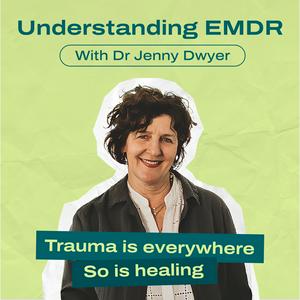
Welcome to Understanding EMDR, an Australian Podcast that explores EMDR across the world.
In this second series, host Dr Jenny Dwyer takes us on a journey of discovery as she explores the many facets of EMDR. From big picture, global themes, to intimate explorations, theoretical discussions and personal experiences. Whether you're an experienced therapist, or simply EMDR-curious, the podcast will inform, inspire and entertain you.
Jenny is a trainer and therapist with EMDR Academy Australia, and works on the Lands of the Wurundjeri people.
Podcast websiteListen to Understanding EMDR, Feel Better, Live More with Dr Rangan Chatterjee and many other podcasts from around the world with the radio.net app
Get the free radio.net app
- Stations and podcasts to bookmark
- Stream via Wi-Fi or Bluetooth
- Supports Carplay & Android Auto
- Many other app features
Get the free radio.net app
- Stations and podcasts to bookmark
- Stream via Wi-Fi or Bluetooth
- Supports Carplay & Android Auto
- Many other app features

Understanding EMDR
Scan code,
download the app,
start listening.
download the app,
start listening.
 Australia