
Listen to this podcast in the app for free: Download for free in the App Store
radio.net
Sleep timer
Save favourites
112 episodes
Polypharmacy and Medication Review | Medical English Podcast (S5E28)
22/11/2026 | 6 mins.In this episode of the Medical English Podcast, we do a deep dive into polypharmacy — a patient taking multiple medications at once — with a focus on the precise English you need for medication reviews, handovers, and documentation. You'll learn how to:
• Pronounce and use "polypharmacy," "regimen," "adherence," "interaction," and "deprescribing" with clinical confidence
• Explain a patient's medication list and any planned changes in language they can actually follow
• Translate technical terms into patient-friendly phrasing, such as "going through your tablets together" for a regimen review
• Avoid the outdated term "compliance" in favour of the more collaborative "adherence"
• Get the grammar right around "medication" as both an uncountable and countable noun
We explore the clinical context behind polypharmacy, the essential vocabulary for medication reviews, and how small, deliberate word choices support safer prescribing conversations.
This episode is perfect for doctors, nurses, pharmacists, international medical graduates, and healthcare professionals preparing for exams like the OET, who want to sharpen both their clinical English vocabulary and patient communication skills.
Enhance your practical medical English with the Medical English Collection:
https://australiabiomed.com/med
🎧 Free transcript & practice quiz for this episode:
https://australiabiomed.com/mep-s5e28/
Structured lessons, real-world case dialogues, pronunciation practice, and exam preparation — all designed for healthcare professionals who want to communicate with confidence.
Disclaimer: This podcast is for educational purposes only and does not provide medical advice.Anxiety and Anxiety Disorders | Medical English Podcast (S5E27)
18/11/2026 | 8 mins.In this episode of the Medical English Podcast, we do a deep dive into anxiety and anxiety disorders — a topic where the everyday word and the clinical word are the same, which makes drawing the line even more important.
You'll learn how to:
Use key vocabulary including "panic attack," "generalized anxiety disorder," "hypervigilance," "avoidance behaviour," and "SSRI"
Distinguish normal, protective worry from an anxiety disorder that's interfering with daily life
Explain what's happening in the body during a panic attack without dismissing very real physical symptoms
Discuss cognitive behavioural therapy (CBT) and medication in plain, reassuring language
Adapt the same explanation across three different patients: one presenting with physical symptoms, one adjusting long-term treatment, and one anxious about the diagnosis itself
We explore how the language around anxiety shifts depending on where a patient is at, and why validating real physical symptoms builds trust before you even mention the word "anxiety."
This episode is perfect for doctors, nurses, GPs and mental health teams, international medical graduates, and healthcare professionals preparing for exams like the OET, who want to sharpen both their clinical English vocabulary and patient communication skills.
Enhance your practical medical English with the Medical English Collection:
https://australiabiomed.com/med
🎧 Free transcript & practice quiz for this episode:
https://australiabiomed.com/mep-s5e27/
Structured lessons, real-world clinical communication, medical vocabulary, and exam preparation — all designed for healthcare professionals who want to communicate with confidence.
Disclaimer: This podcast is for educational purposes only and does not provide medical advice.Epilepsy and Seizure Communication | Medical English Podcast (S5E26)
15/11/2026 | 9 mins.In this episode of the Medical English Podcast, we follow a consultation with Jake, a young patient attending a follow-up appointment after his first seizure, as his doctor works through triggers, treatment, and what to do if it happens again.
You'll learn how to:
Use key vocabulary including "seizure," "aura," "trigger," "antiepileptic medication," and "status epilepticus"
Take a history that identifies warning sensations and common triggers like missed sleep or missed medication
Explain why a diagnosis of epilepsy still warrants medication even when a trigger is identified
Discuss what to do — and what not to do — if someone around the patient has a seizure
Recognise status epilepticus as a medical emergency and communicate that urgency clearly
We explore a full epilepsy follow-up consultation from history-taking through to medication planning and safety advice, and how a clear explanation turns a frightening diagnosis into something a patient feels in control of.
This episode is perfect for doctors, nurses, neurology and ED teams, international medical graduates, and healthcare professionals preparing for exams like the OET, who want to sharpen both their clinical English vocabulary and patient communication skills.
Enhance your practical medical English with the Medical English Collection:
https://australiabiomed.com/med
🎧 Free transcript & practice quiz for this episode:
https://australiabiomed.com/mep-s5e26/
Structured lessons, real-world clinical communication, medical vocabulary, and exam preparation — all designed for healthcare professionals who want to communicate with confidence.
Disclaimer: This podcast is for educational purposes only and does not provide medical advice.Explaining Anaesthesia Clearly | Medical English Podcast (S5E25)
11/11/2026 | 5 mins.In this episode of the Medical English Podcast, we do a deep dive into anaesthesia — not the clinical administration, but the precise English you need to discuss it confidently in preoperative consultations, handovers, and documentation.
You'll learn how to:
Pronounce and use "general anaesthesia," "local anaesthesia," "regional anaesthesia," "sedation," and "induction" with clinical confidence
Explain each type of anaesthesia to a patient in natural, spoken language rather than textbook definitions
Distinguish anaesthesia from anaesthetic, and understand why the difference matters in documentation
Avoid mixing up sedation and anaesthesia, which describe very different depths of consciousness
Steer clear of the classic slip between "conscious" and "conscience" in clinical notes
We explore the essential language of anaesthesia and how small, precise word choices set the right expectations for a patient before a procedure.
This episode is perfect for doctors, nurses, anaesthetic and surgical teams, international medical graduates, and healthcare professionals preparing for exams like the OET, who want to sharpen both their clinical English vocabulary and patient communication skills.
Enhance your practical medical English with the Medical English Collection:
https://australiabiomed.com/med
🎧 Free transcript & practice quiz for this episode:
https://australiabiomed.com/mep-s5e25/
Structured lessons, real-world clinical communication, medical vocabulary, and exam preparation — all designed for healthcare professionals who want to communicate with confidence.
Disclaimer: This podcast is for educational purposes only and does not provide medical advice.Syncope: Fainting, Red Flags, and Patient Conversations | Medical English Podcast (S5E24)
08/11/2026 | 8 mins.In this episode of the Medical English Podcast, we do a deep dive into syncope — the medical word for fainting — unpacking why it's so often mistaken for a seizure and which red flags separate a harmless faint from a cardiac emergency.
You'll learn how to:
Use key vocabulary including "syncope," "prodrome," "vasovagal," "orthostatic hypotension," and "arrhythmia"
Distinguish reflex, orthostatic, and cardiac syncope, and understand why cardiac causes carry the highest risk
Recognise convulsive syncope and explain why brief jerking movements don't always mean a seizure
Translate diagnostic terms like Holter monitor and tilt table test into language a patient can actually picture
Adapt the same explanation across three different patients: a first-time fainter, a long-term vasovagal patient, and someone mid-workup for a cardiac cause
We explore the clinical reasoning behind a syncope workup and how matching your language to the patient in front of you builds trust at every stage.
This episode is perfect for doctors, nurses, ED and cardiology teams, international medical graduates, and healthcare professionals preparing for exams like the OET, who want to sharpen both their clinical English vocabulary and patient communication skills.
Enhance your practical medical English with the Medical English Collection:
https://australiabiomed.com/med
🎧 Free transcript & practice quiz for this episode:
https://australiabiomed.com/mep-s5e24/
Structured lessons, real-world clinical communication, medical vocabulary, and exam preparation — all designed for healthcare professionals who want to communicate with confidence.
Disclaimer: This podcast is for educational purposes only and does not provide medical advice.
More Education podcasts







Trending Education podcasts























About The Medical English Podcast
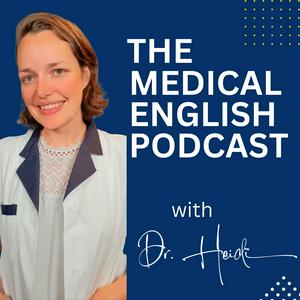
Welcome to The Medical English Podcast, designed to help healthcare professionals sharpen their English language skills. Hosted by Dr. Heidi, this podcast delves into vital medical terminology, common phrases, and specialised language across diverse healthcare settings. From patient consultations to medical conferences, we break down complex jargon, share real-life scenarios, and offer practical tips to elevate your language proficiency. Tune in and elevate your professional communication with The Medical English Podcast!
Podcast websiteListen to The Medical English Podcast, 6 Minute English and many other podcasts from around the world with the radio.net app
Get the free radio.net app
- Stations and podcasts to bookmark
- Stream via Wi-Fi or Bluetooth
- Supports Carplay & Android Auto
- Many other app features
The Medical English Podcast: Podcasts in Family
 Australia