
Listen to this podcast in the app for free: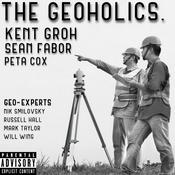 Download for free in the App Store
radio.net
Sleep timer
Save favourites
250 episodes
Episode 291 - Keegan Lumley, PLS
22/10/2026 | 1h 26 mins.What happens when professional surveying, military leadership and workforce development collide? You get one hell of a conversation with Keegan Lumley, PLS—Project Manager with Colliers Engineering & Design and Master Sergeant in the North Carolina Air National Guard.
Keegan joins us to talk about earning his PLS, leading and training Airmen, balancing advanced technology with solid surveying fundamentals, and what civilian firms can learn from the military’s hands-on approach to developing people. We also dig into the future of the profession, including the North Carolina Young Surveyors Network, Cape Fear Community College’s new Geomatics program and the apprenticeship initiative designed to create stronger pathways into surveying.
Of course, we put Keegan through Bullshit, Breakthrough or Too Soon to Tell, drop a Leica Geosystems Pro Tip and crank up “Don’t Wanna Know” by The Red Clay Strays!
This episode is about leadership, mentorship and what it truly means to develop the people and build something that lasts.
Get involved. Master the craft. Take care of your people.
#TheGeoholics #LandSurveying #Geomatics #Surveyors #WorkforceDevelopment #Leadership #Mentorship #YoungSurveyorsNetwork #MilitaryLeadership #AirNationalGuard #CapeFearCommunityCollege #SurveyingTechnology #PLS #Geospatial #PodcastEpisode 290 - Rob Dannenberg & Phoenix LiDAR
15/10/2026 | 1h 34 mins.This week, we sit down with Rob Dannenberg, President of Phoenix LiDAR Systems and an early adopter who helped push UAS and LiDAR from experimental technology into powerful, real-world mapping solutions.
We dig into what “survey-grade LiDAR” really means, where acquisition and processing workflows most often break down, and why successful results depend on far more than sensor specifications. Rob also shares his perspective on custom LiDAR integration, flexible multi-platform systems, NDAA compliance, dependable customer support, and the opportunities created by Phoenix LiDAR Systems joining Revolution Geosystems.
Then we put autonomous missions, AI-powered point-cloud classification, real-time onboard processing, next-generation positioning and the commoditization of LiDAR sensors to the ultimate test: Bullsh*t, Breakthrough or Too Soon to Tell?
Add a Leica Geosystems Pro Tip, “I Need to Know” by Arizona rockers The Black Moods and plenty of Geoholics-style conversation—and you’ve got an episode you won’t want to miss!
Tune in, buckle up and join the conversation!
#TheGeoholics #Podcast #Episode290 #PhoenixLiDARSystems #RevolutionGeosystems #LiDAR #UAS #Drones #Surveying #LandSurveying #Geomatics #Geospatial #RemoteSensing #PointCloud #NDAA #Innovation #Technology #Surveyors #LeicaGeosystems #TheBlackMoods #AddingValueAndMakingFriendsEpisode 289 - Juergen Mayer & LEICA Geosystems
29/09/2026 | 1h 3 mins.What happens when a “crazy idea” becomes the tool that changes how an entire industry works? Buckle up—we’re talking reality capture with Juergen Mayer, Head of Reality Capture Portfolio at Leica Geosystems!
From his roots in rural Austria to helping bring the BLK360, BLK2GO, RTC360, and new RTC series to market, Juergen brings a perspective shaped by surveying, business, and a passion for building things that solve real problems. We explore connected field-to-office workflows, LiveLink, catching coverage gaps before crews leave the site, and what firms should measure to see whether their technology investment is actually paying off.
And because this is The Geoholics, we ask the tough questions: Does easier scanning mean better data? Where does professional judgment fit as AI and automation advance? And can real-time visibility improve collaboration without turning into micromanagement?
We close with Bullsh*t, Breakthrough, or Too Soon to Tell?—putting AI-driven field checks, the future of terrestrial scanners, and the risks of impressive-looking point clouds in the hot seat.
Billy Joel’s “You May Be Right” sets the tone, and our Leica Weekly Pro Tip delivers a reminder every crew can use: Capture once. Verify early. Keep the project moving.
Big thanks to EMLID, TopoDOT, AllTerra Central, Leica Geosystems, David Evans and Associates, and Diamondback Land Surveying for keeping the conversations rolling!
Tune in wherever you get your podcasts!
#TheGeoholics #Geoholics #LeicaGeosystems #RealityCapture #LaserScanning #LandSurveying #Geomatics #Geospatial #PointClouds #SurveyTechnology #ConnectedWorkflows #InnovationEpisode 288 - Sean Donegan & Satelytics
22/09/2026 | 1h 9 mins.What can a satellite see that the rest of us can’t?
On Episode 288 of The Geoholics, we’re joined by Sean Donegan, President and CEO of Satelytics, to explore how AI and satellite imagery can help identify methane leaks, vegetation changes, land movement, encroachments and other risks across vast infrastructure networks.
We get into what’s hiding inside those pixels, how an alert becomes a decision, and the question every surveyor should ask: How do we verify what the technology says it found?
Plus, Sean takes on Bullshit, Breakthrough, or Too Soon to Tell? Can AI spot problems before operators know what to look for? Could satellite monitoring change the future of field inspections?
Tune in for a conversation about intelligence from space, confidence on the ground, and what it all means for the people managing our physical world. Adding value and making friends!
#TheGeoholics #GeoholicsPodcast #SeanDonegan #Satelytics #Geospatial #LandSurveying #RemoteSensing #SatelliteImagery #ArtificialIntelligence #Infrastructure #MethaneDetection #RealityCapture2026 12D Tech Forum - Day 3
16/09/2026 | 1h 39 mins.Day 3 of the 2026 12d Tech Forum delivered an incredible mix of conversations with Michelle Blicavs, Brad Cox, Luke Studdert, Joel Gregory, Mitch McPherson, Keeton Williamson-Smith and Bridget VV. We dive into advocacy for the surveying profession, accessible GNSS technology, machine control, better 3D data workflows, the story and global growth of 12d—and the life-changing impact of creating meaningful geospatial careers for neurodivergent talent.
00:01:35 Michelle Blicavs, CEO, Surveyors Australia and ITA
00:21:08 Brad Cox, Survey hardware GIS Specialist at Mangoesmapping
00:39:32 Luke Studdert, Senior Surveyor & Chief Remote Pilot at Sunrise Surveying
00:56:21 Joel Gregory, CEO and Mitch McPherson, VP at 12d Synergy
01:24:59 Keeton Williamson Smith, Lead Data Analyst and Bridget VV from Australian Spatial Analytics
Big technology, honest perspectives and one seriously inspiring finish to an unforgettable three days in Brisbane. Grab a drink, hit play and join us for the final chapter of The GEOHOLICS Down Under!
#TheGEOHOLICS #12dTechForum2026 #Geospatial #LandSurveying #Surveying #DigitalEngineering #GNSS #MachineControl #ConstructionTechnology #Neurodiversity #InclusiveEmployment #Innovation #Brisbane #Australia #AddValue #MakeFriends
More Business podcasts







Trending Business podcasts


















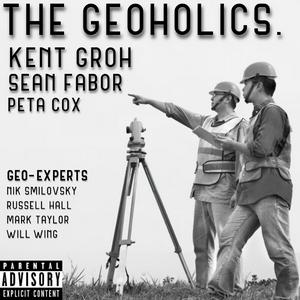
About The Geoholics
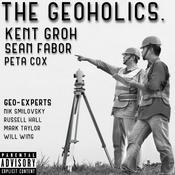
”Adding Value & Making Friends” since 2019! Our goal is to not waste your time! The group discusses a variety of topics including surveying, geospatial, geomatics, GIS, civil engineering and much much more.
Podcast websiteListen to The Geoholics, The Diary Of A CEO with Steven Bartlett and many other podcasts from around the world with the radio.net app
Get the free radio.net app
- Stations and podcasts to bookmark
- Stream via Wi-Fi or Bluetooth
- Supports Carplay & Android Auto
- Many other app features
Get the free radio.net app
- Stations and podcasts to bookmark
- Stream via Wi-Fi or Bluetooth
- Supports Carplay & Android Auto
- Many other app features
The Geoholics
Scan code,
download the app,
start listening.
download the app,
start listening.
The Geoholics: Podcasts in Family
 Australia