
Listen to this podcast in the app for free: Download for free in the App Store
radio.net
Sleep timer
Save favourites
69 episodes
Your Brain On... Testosterone
15/07/2026 | 45 mins.Testosterone for women: what the evidence actually shows vs. what social media is selling you.
Testosterone has become the hormone every midlife woman is told she is missing: the third hormone lost at menopause, the fix for brain fog, low energy, stubborn weight, and thinning muscle.
The science tells a different and more reassuring story.
In this episode, Dr. Ayesha Sherzai sits down with Professor Susan Davis, MBBS, FRACP, PhD, the clinician-researcher and academic endocrinologist who gathered much of the data and helped write the global guidelines, to separate what the research supports from what is simply being sold.
Your Brain On... Testosterone [Season 7, Episode 7]
Get our FREE NEURO Plan Brain Health Playbook: https://thebraindocs.com/playbook
In this episode:
Why testosterone does not crash at menopause the way estrogen does, and what actually changes across a woman's life
What the research shows about testosterone and memory, brain fog, and dementia risk
The real story on testosterone for muscle, bone, and anti-aging claims
Why women tend to gain a little weight on testosterone rather than lose it
The one use with genuine evidence behind it: low sexual desire after menopause that causes real distress
Why more is not better, and what high-dose testosterone actually does
What is really inside compounded creams, injections, and testosterone pellets sold at med spas
Why routine testosterone blood testing generates bills and anxiety rather than answers
Why there is no such thing as testosterone deficiency in women
How to tell an evidence-based clinician from a sales pitch
What genuinely protects a woman's aging brain, and why connection matters more than any hormone
Professor Susan Davis is a consulting endocrinologist at Monash University in Melbourne, where she directs a leading women's health research program. She has studied testosterone in women since the 1990s and is the lead author of the Global Consensus Position Statement on the Use of Testosterone Therapy for Women, endorsed by the International Menopause Society, The Endocrine Society, and menopause and obstetric societies around the world.
References:
Does testosterone crash at menopause?
Wang Y, Islam RM, Bond M, Davis SR. Testosterone and pre-androgens by age and menopausal stage at midlife: findings from a cross-sectional study. EBioMedicine. 2025;121:105972. PMID: 41106025.
Davis SR, Bell RJ, Robinson PJ, et al. Testosterone and estrone increase from the age of 70 years: findings from the Sex Hormones in Older Women Study. J Clin Endocrinol Metab. 2019;104(12):6291–6300. PMID: 31408149.
Islam RM, Bell RJ, Handelsman DJ, Robinson PJ, Wolfe R, Davis SR. Longitudinal changes over three years in sex steroid hormone levels in women aged 70 years and over. Clin Endocrinol (Oxf). 2021;94(3):443–448. PMID: 33351205.
Does testosterone improve memory or protect against dementia?
Sultana F, Davis SR, Wolfe RS, McNeil JJ, Islam RM. Associations between blood sex hormones, cognitive decline and incident dementia in community-dwelling older Australian women: a prospective cohort study. Climacteric. 2025;28(4):446–455. PMID: 40085743.
Sultana F, Islam RM, Davis SR. Associations between declining testosterone concentrations and cognitive performance in community-dwelling older Australian women: a prospective cohort study. Climacteric. 2026;29(1):46–52.
What does testosterone therapy actually do?
Islam RM, Bell RJ, Green S, Page MJ, Davis SR. Safety and efficacy of testosterone for women: a systematic review and meta-analysis of randomised controlled trial data. Lancet Diabetes Endocrinol. 2019;7(10):754–766. PMID: 31353194.
What do the global guidelines say?
Davis SR, Baber R, Panay N, et al. Global Consensus Position Statement on the Use of Testosterone Therapy for Women. J Clin Endocrinol Metab. 2019;104(10):4660–4666. PMID: 31498871.
Can a blood test diagnose low testosterone?
Wang Y, Islam RM, Hodge A, Handelsman DJ, Karim MN, Bond M, Davis SR. Associations between testosterone and pre-androgens and sexual function: findings from the Australian Women's Midlife Years Study. Fertility and Sterility. 2026.
Get our FREE NEURO Plan Brain Health Playbook: https://thebraindocs.com/playbook
Hosted by Drs. Ayesha & Dean Sherzai.
Subscribe to The Synapse (free weekly newsletter): https://thebraindocs.com/newsletter
Follow @TheBrainDocs on InstagramYour Brain On... Memory Testing
02/07/2026 | 54 mins.The neurologist who built the test that was used on the President of the United States explains what memory tests actually tell you, and why even a perfect score isn't the whole picture.
We sit down with Dr. Ziad Nasreddine, the neurologist who created the Montreal Cognitive Assessment (MoCA), to look at how memory is actually measured, why a score can be shaped by your education and how comfortable you are with tests, and what separates a quick screen from a full neuropsychological evaluation.
The conversation opens with a patient who passed a short memory screen but whose family knew something was wrong, and what a deeper test revealed. From there it moves to how the MoCA works, how it became famous after a presidential exam (and the memorization problem that followed), why your education and nerves can shift a score, and why the real progress against dementia is happening in detection and prevention, not treatment.
A memory test is not a verdict. Its value is early, honest information, and what you can do once you have it.
In this episode:
What the Montreal Cognitive Assessment (MoCA) measures, and why it was designed to catch the earliest changes rather than advanced dementia
How a quick memory screen differs from a full neuropsychological evaluation, and what a score actually represents
Why education, language, and familiarity with testing can change your score even when your cognition is fine
The story behind the MoCA becoming famous after a US presidential exam, and the memorization problem that followed
XpressO, a free at-home cognitive pre-screener, and what a green result does and does not mean
Why detection and prevention, not treatment, are where the real progress against dementia is happening right now
The difference between slowing decline and reversing it, and why a diagnosis of dementia cannot be undone
What the 2024 Lancet Commission's modifiable risk factors mean for your everyday choices
How movement and social connection show up in the data on cognitive decline
How to read a health headline: effect size, clinical versus statistical significance, and why a small change can be sold as a breakthrough
Dr. Ziad Nasreddine is a neurologist and the creator of the Montreal Cognitive Assessment (MoCA), which he first developed in 1996 and spent nine years validating. It has since been translated into more than 50 languages and is used in over 100 countries, making it one of the most widely used cognitive tests in medicine. He completed his cognitive neurology fellowship at UCLA under Dr. Jeffrey Cummings. His more recent work includes XpressO, a free at-home pre-screener, and MoCA Solo, an AI-administered version of the test.
Resources:
The MoCA (Montreal Cognitive Assessment)
XpressO (free at-home cognitive pre-screener)
Our 2026 Brain Health Retreat
Hosted by Drs. Ayesha & Dean Sherzai
Subscribe to The Synapse (free weekly newsletter): thebraindocs.com/newsletter
Follow @TheBrainDocs on InstagramYour Brain On... Friendship
25/06/2026 | 54 mins.We're more connected than ever, yet, we've never been lonelier.
We sit down with neuroscientist Dr. Ben Rein, author of Why Brains Need Friends, to look at what isolation does to the brain and body, why we badly underestimate our own social skills, and how to build real connection back into ordinary life.
The conversation opens 45,000 years ago, with a healed bone that points to one of the earliest signs of human caregiving. From there it moves to the present: why "rejection hurts because it used to kill," how chronic loneliness raises cortisol and inflammation, and why regular social connection lowers the risk of dementia, heart disease, diabetes, anxiety, and depression.
In this episode:
The 45,000-year-old skeleton (Shanidar 1) that points to the origins of human caregiving and friendship
Why "rejection hurts because it used to kill," and how that ancient circuitry still runs in the modern brain
What chronic loneliness does to cortisol, inflammation, and long-term disease risk
The research on solitary confinement and why isolation tracks with higher mortality
How regular social connection lowers the risk of dementia, heart disease, diabetes, anxiety, and depression
The commuter-train experiment that shows strangers want to connect far more than we expect
Introverts vs extroverts: the "plant watering" model for finding your own social dose
The social diet: why a healthy social life, like a healthy plate, needs variety
Why digital interaction flattens the social cues your brain evolved to read
The Dunbar number, the loss of "third places," and the young men's loneliness epidemic
One small, science-backed thing to try this week
Dr. Ben Rein is a neuroscientist, science communicator, and author of Why Brains Need Friends: The Neuroscience of Social Connection (Penguin Random House). He is chief science officer of the Mind Science Foundation, an adjunct lecturer at Stanford University, and a clinical assistant professor at SUNY Buffalo. His research focuses on the neuroscience of social interaction, and he teaches neuroscience to more than 1 million followers online.
Resources:
Why Brains Need Friends (book)
Dr. Ben Rein
Our 2026 Brain Health Retreat
Hosted by Drs. Ayesha & Dean Sherzai
Subscribe to The Synapse (free weekly newsletter): thebraindocs.com/newsletter
Follow @TheBrainDocs on InstagramYour Brain On... the MIND Diet
18/06/2026 | 1h 7 mins.Researchers found people who ate these 9 foods consistently had brains that aged 7.5 years slower.
Not a supplement stack, not a protocol, not a hack. A pattern of real food that keeps showing up across decades and across the world.
It's called the MIND diet, and it's what we're breaking down in this episode.
We explore the scoring system behind the MIND diet with a registered dietician who came to brain health through her own mother's Alzheimer's diagnosis, and who has spent 20 years helping real women in real kitchens make these changes stick.
In this episode, you'll learn:
What the MIND diet actually is: a hybrid of the Mediterranean and DASH diets built at Rush University to target brain health specifically, and why the acronym uses the word "delay," not "reversal"
The 10 brain-healthy foods and 5 foods to limit, and why the scoring system rewards you for progress, not perfection: full adherence lowered Alzheimer's risk by 53%, and even moderate adherence cut it by 35%
Why leafy greens are the single most consistent finding in the field and the one change worth making first
How berries, beans, nuts, olive oil, and omega-3s each contribute to the pattern, and why frozen and canned versions count just as much as fresh
The problem with the term "ultra-processed food": why yogurt, tofu, and soy milk get mislabeled, and how a dietician actually talks to clients about it
Why the protein conversation has gotten louder than the evidence: what 1.2 to 1.6 grams per kilogram actually looks like, and why 150 grams a day is not a universal target
Why wine was quietly dropped from the MIND diet recommendations and what the current evidence says about alcohol and brain health
Midlife as a metabolic inflection point: why perimenopause and menopause change the equation for cardiovascular and brain health, and why it is not too late to start
The 2024 Lancet Commission report adding LDL cholesterol as a modifiable risk factor for dementia, and when diet alone is not enough to manage it
A week-one assignment: one leafy green every day for seven days, then build from there
Barbie Boules is a registered dietician with more than 20 years of experience in women's health and brain health nutrition. Her mother was diagnosed with Alzheimer's in 2022, and her work bridges clinical evidence with practical, accessible meal planning for women in midlife.
Follow Barbie: https://www.instagram.com/the_cognition_dietitian
Hosted by Drs. Ayesha & Dean Sherzai
Subscribe to The Synapse (free weekly newsletter): thebraindocs.com/newsletter
Follow @TheBrainDocs on InstagramYour Brain On... Insomnia
03/06/2026 | 1h 38 mins.It's 3 AM and your brain won't shut off. About 1 in 10 adults meets the clinical definition of chronic insomnia, and most never get treated. Instead, they scroll through an endless aisle of magnesium gummies, melatonin, and $300 trackers that don't address the real problem.
We brought in a neurologist and a psychologist who never spoke to each other and landed on almost the exact same conclusions.
In this episode, you'll learn:
How the brain's glymphatic cleaning system works during sleep and why chronic insomnia is a brain health problem
Why melatonin is a darkness signal, not a sleeping pill, and how nocturnal animals prove the point
A sleep neurologist's honest 1-to-10 ratings of every sleep aid you've heard of: magnesium (2/10), CBT-I (10/10), alcohol (-10/10), and 12 more
What orthosomnia is and why your sleep tracker might be making your insomnia worse
Why perimenopause and menopause create what one expert calls "a perfect storm" for sleep disruption, and why doctors keep missing sleep apnea in women
How CBT-I works: sleep restriction, stimulus control, and why your therapist will tell you to spend less time in bed, not more
The data showing CBT-I may outperform hormone therapy for menopausal insomnia
ACT therapy for insomnia: a different approach for people who get more anxious from CBT-I
Blue light, naps, the 8-hour rule, catching up on weekends: what holds up and what doesn't
Five steps to start tonight, and why you should pick just two
Dr. Sujay Kansagra is a pediatric neurologist and sleep medicine specialist at Duke University, director of Duke's Pediatric Neurology Sleep Medicine Program, and author of "My Child Won't Sleep."
Follow Dr. Kansagra: @thatsleepdoc
Dr. Shelby Harris is a clinical psychologist and behavioral sleep medicine specialist. She treats insomnia in women during perimenopause and menopause and is the author of "The Women's Guide to Overcoming Insomnia."
Website: drshelbyharris.com
Follow Dr. Harris: @SleepDocShelby
Hosted by Drs. Ayesha & Dean Sherzai
Subscribe to The Synapse (free weekly newsletter): thebraindocs.com/newsletter
Follow @TheBrainDocs on Instagram
More Health & Wellness podcasts



Trending Health & Wellness podcasts



About Your Brain On
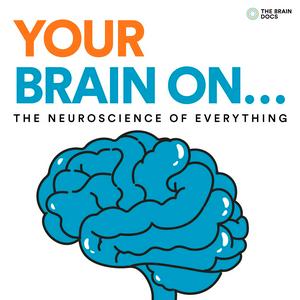
A podcast about the neuroscience of everything. From neurologists, researchers, and public health advocates Drs. Ayesha and Dean Sherzai, explore every aspect of our world through a neuroscientific lens, with science-based stories, interviews, anecdotes, and brain health facts. Equip yourself with neurologically sound answers to life's everyday health questions and learn the essentials of brain health and optimization, one topic at a time.
Podcast websiteListen to Your Brain On, Feel Better, Live More with Dr Rangan Chatterjee and many other podcasts from around the world with the radio.net app
Get the free radio.net app
- Stations and podcasts to bookmark
- Stream via Wi-Fi or Bluetooth
- Supports Carplay & Android Auto
- Many other app features
Get the free radio.net app
- Stations and podcasts to bookmark
- Stream via Wi-Fi or Bluetooth
- Supports Carplay & Android Auto
- Many other app features
Your Brain On
Scan code,
download the app,
start listening.
download the app,
start listening.
 Australia