
Listen to this podcast in the app for free: Download for free in the App Store
radio.net
Sleep timer
Save favourites
58 episodes

Exchanges with John Storey: The Trust Tax Trap
15/10/2026 | 39 mins.When tax reform moves faster than it thinks, traps will appear and adverse reactions follow.
This week on Exchanges, we sit down with John Storey, Tax Counsel at The Tax Institute and one of Australia’s most experienced tax lawyers and public policy advocates.
The big topic: Australia’s recent tax changes and the rushed reform process on discretionary trusts. John unpacks what these changes actually mean for small businesses and investors and whether a system already straining under its own complexity can absorb yet another layer of reform without serious consequences and massive cost implications.
From the unintended impacts on family businesses to the broader questions about how tax policy gets made in this country, John has an insight on this issue like no other.
To Follow John click here:
Website: https://www.taxinstitute.com.au/about-us/tax-policy-advocacy/john-storey
LinkedIn: https://www.linkedin.com/in/john-storey-a1865468/?isSelfProfile=false
Chapters
01:03 The compressed consultation process and its impact
03:38 Why the minimum trust tax is a major change
06:22 Trusts versus corporate structures under new rules
08:11 Timing and uncertainty for trust owners
09:17 Justification for the 30% baseline tax rate
11:37 Impact on middle-market small businesses
15:31 Legislative changes and the lock-in of beneficiaries
16:54 Restructuring challenges and government relief measures
18:34 The irrevocable election and its consequences
20:39 Rapid policy changes and legislative rollouts
22:07 The influence of politics and Treasury in policy design
24:46 The role of Treasury and policy piecemeal approach
28:14 Future reform prospects and the need for systemic overhaul
32:41The case for a simpler, more efficient tax system
36:49 John’s vision: abolishing tax concessions for a leaner system
Hosted on Acast. See acast.com/privacy for more information.Exchanges with Nick Tarrant: The Concession with Concessions
07/10/2026 | 31 mins.The concession with concessions is that not all Australians are getting the same help with the cost of living and age and luck are more of a determinant than need.
This week on Exchanges, we sit down with Nick Tarrant Principal Economist at the Policy Institute Australia for a conversation about the hidden disparities in Australia's state-based concessions and cost of living support. Nick unpacks the design flaws baked into our concession programs, why the current system is failing the people it's supposed to help, and what better targeting and federal coordination could actually look like in practice.
Chapters
02:18 Why do states use existing systems like tolls and public transport for relief?
03:05 Rethinking cost of living relief as part of the social safety net
04:34 Support for seniors and the flaws in means testing
07:26 Asset and income disparities in concession programs
08:54 Fairness issues in concession design and consumption-based discounts
09:13 The effectiveness of lump sum payments versus asset-based support
12:46 Targeting energy rebates more effectively
14:06 The role of government in price stabilization and support
16:09 Targeting support to those most in need and fiscal implications
18:24 State debt levels and their impact on support programs
20:49 Using taxation and debt reduction as tools for support
21:07 Successful examples of targeted support in South Australia
23:01 The importance of federal and state coordination
24:54 Addressing federal and state fiscal disparities
26:45 The potential for reform and better targeting
Hosted on Acast. See acast.com/privacy for more information.Exchanges with Saul Eslake: The Productivity Problem
27/09/2026 | 39 mins.Australia has a productivity problem, but is it as simple as saying this or is there a nuance to it?
This week on Exchanges, Evan sits down with one of Australia's most respected economists, Saul Eslake, to discuss this very question. Saul draws the link with why productivity matters more than most people realise, how it connects directly to the wages in our pockets and the cost of the lives we lead. The question this raises is: what policy measures could actually move the needle on economic growth and inflation management in Australia if productivity continues to flat line.
To follow Saul click here:
Website: https://www.sauleslake.info
LinkedIn: https://www.linkedin.com/in/saul-eslake/
Chapters
02:22 Recent trends in Australian productivity and income growth
03:50 Global perspective on productivity challenges
04:35 Misconceptions about productivity and work effort
05:37 Management's role in enhancing productivity
07:10 Measuring productivity in the care economy
08:31 Productivity trends in key industries like mining and construction
10:18 Strategies to boost productivity: regulation, innovation, and labor mobility
13:55 The impact of low interest rates and zombie firms
15:14 Job mobility and its effect on productivity
17:35 Industry-specific productivity issues and policy implications
19:58 The role of small business in productivity growth
21:21 Balancing growth and inflation control
24:43 Policy reforms for improving productivity in sectors like construction
25:44 Lessons from the Productivity Commission report
27:55 The role of monetary policy and interest rates in inflation management
30:55 Fiscal policy and government spending's impact on inflation
34:34 Achieving inflation targets through supply and demand management
36:51 What I would do if in charge: tax reform and structural policies
Hosted on Acast. See acast.com/privacy for more information.Exchanges with David Moloney: Game of Frequent Flyer Points
16/09/2026 | 34 mins.Those frequent flyer points sitting in your account? They're worth a lot more than you think if you know how to use them and burn them.
This week on Exchanges, we sit down with David Maloney for a fascinating and eye-opening conversation about the world of loyalty programs, frequent flyer schemes, and the psychology that makes them tick. David pulls back the curtain on the economics of points, why loyalty programs are designed the way they are, and the strategies savvy frequent flyers use to unlock value that most people never see.
From the behavioural psychology driving our spending decisions to the hidden ecosystems built around platform loyalty, this is a conversation that will change the way you think about every point you earn and everyone you leave on the table.
To follow David click here:
LinkedIn: https://www.linkedin.com/in/david-moloney-1a45b825/
Book: https://majorstreet.com.au/blogs/meet-our-authors/david-moloney
Consulting: https://internalconsulting.com/blog/subject_experts/practice-leader-david-moloney-global-practice-leader-financial-services-and-board-and-c-suite-level-strategy-facilitator/
Chapters
01:48 The Irrational Side of Human Behavior in Loyalty Programs
03:48 The Evolution of Loyalty Programs from Experience to Enmeshment
06:04 The Economics of Happiness and Anticipation in Rewards
08:13 The Power of Status and Hierarchy in Loyalty Programs
10:07 Strategies for Earning and Activating Points
12:06 The Impact of Platform Ecosystems on Customer Loyalty
14:02 The Future of Loyalty Programs with AI and Behavioral Insights
15:58 Playing the Loyalty Game: Tips and Strategies
17:51 The Ethical and Economic Implications of Loyalty Programs
20:10 Mastering the Game of Loyalty and Rewards
Hosted on Acast. See acast.com/privacy for more information.Exchanges with Scott Phillips: One Page Plan
03/09/2026 | 40 mins.In a financial system that seems designed to confuse, what does it actually take to build real wealth?
This week on Exchanges, I sit down with Scott Phillips for a refreshingly straightforward conversation about money, wealth, and the financial system that shapes both. Scott's new book "The One-Page Investing Plan' is a cracker as it cuts through the noise to make the case for simple financial planning and illustrates why the most effective strategies are often the ones we overlook in our search for something more sophisticated.
We explore what wealth actually means beyond the numbers, unpack the complexities of superannuation and tax policy in Australia, and ask the questions that too many people are afraid to ask about a system that affects every single one of us.
To follow Scott go here:
LinkedIn: https://www.linkedin.com/in/scott-phillips-2496134/
Instagram: https://www.instagram.com/tmfscottp/
Book: https://scottphillips.com.au/the-one-page-investing-plan/
Chapters
02:14 Why financial advice is made complex
04:08 The genesis of the simple financial plan
05:48 Defining wealth as freedom and choice
08:11 The risks and rewards of high-net-worth individuals
09:54 The importance of planning and internalizing your goals
12:03 Overcoming complexity with knowledge and confidence
14:08 The role of ETFs and simple investment strategies
15:46 The impact of superannuation and tax policies
17:56 Superannuation as a tool for wealth and retirement
20:07 Policy challenges and potential reforms
21:53 Stock picking versus ETFs in the future
23:50 The importance of low fees and passive investing
26:01 The risks of complex tax and super rules
28:05 Scott's vision for a better financial system
29:53 Final thoughts
Hosted on Acast. See acast.com/privacy for more information.
More Business podcasts







Trending Business podcasts














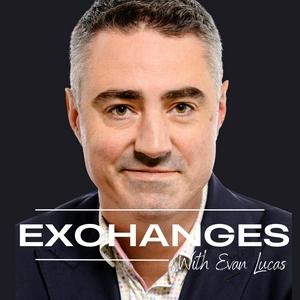
About Exchanges with Evan Lucas
Welcome to Exchanges the podcast where trends, economics, markets and financial behaviour meets everyday life.Each week, I sit down with leading thinkers, business leaders, and policymakers to unpack the ideas, data, and decisions shaping our future from inflation to housing, leadership to innovation, trends to technology through the lens of human behaviour. Hosted on Acast. See acast.com/privacy for more information.
Podcast websiteListen to Exchanges with Evan Lucas, A Bit of Optimism and many other podcasts from around the world with the radio.net app
Get the free radio.net app
- Stations and podcasts to bookmark
- Stream via Wi-Fi or Bluetooth
- Supports Carplay & Android Auto
- Many other app features
Get the free radio.net app
- Stations and podcasts to bookmark
- Stream via Wi-Fi or Bluetooth
- Supports Carplay & Android Auto
- Many other app features

Exchanges with Evan Lucas
Scan code,
download the app,
start listening.
download the app,
start listening.
 Australia

